


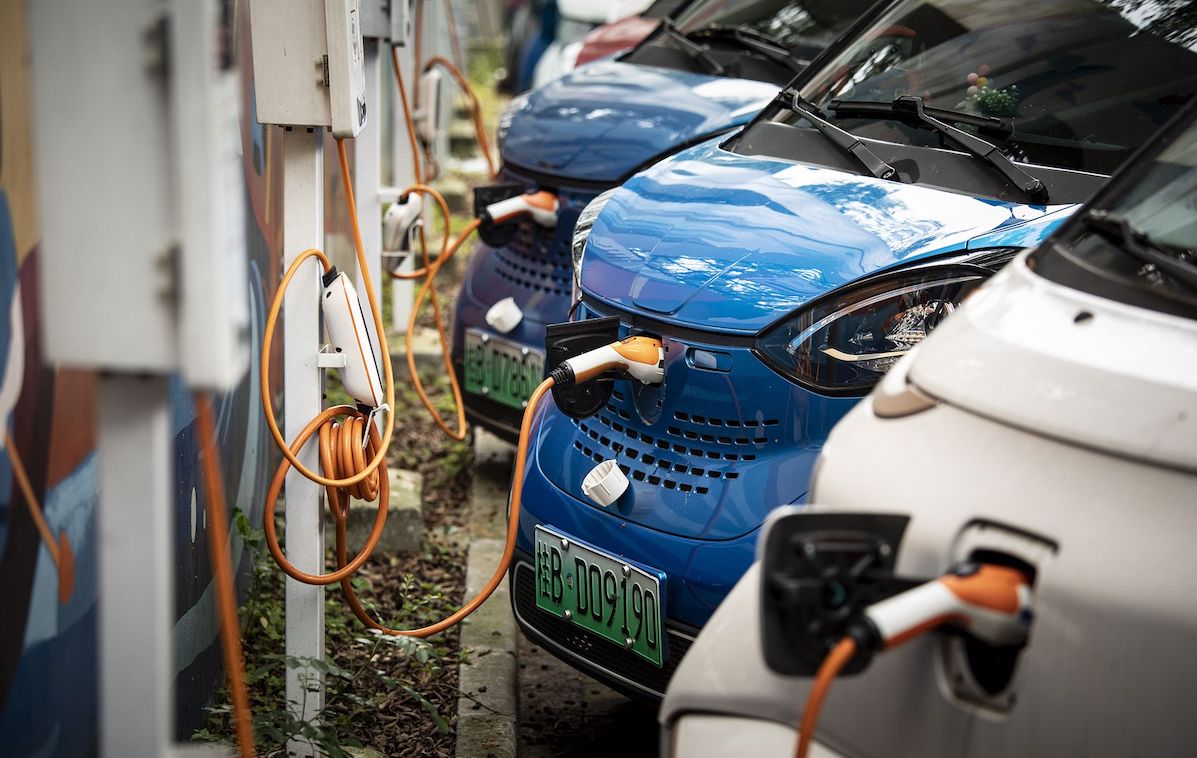
Lead — Who is affected and by how much?
Narendra Kshetri, a middle‑income resident of Kathmandu, checked an online listing for a small e‑city car after the new budget announcement. Under the old tax structure, motor‑power–based rates made that car relatively expensive for him, but the new specification shifting to CIF (cost, insurance, freight)–based flat customs left unclear how much difference a flat customs on CIF would make. Narendra’s decisive question is this — how many rupees will the tax structure add to or subtract from the final market price? [1]
Key findings
-
The government appears to have decided to move the customs calculation model for EV imports from motor‑power to CIF‑based pricing, which will have different effects across segments. [2]
-
Initial modelling shows that if a flat 20% customs is applied, price changes differ between small city EVs and luxury electric SUVs; percentage changes are smaller for the small model but the absolute-rupee difference can be more noticeable. [3]
Background and policy flow
Over the past few years Nepal’s electric vehicle tax structure has been evolving. Under the previous practice, imported e‑vehicles were taxed with separate customs and excise rates determined by motor capacity (kilowatts or peak power). The new rationale is that a price (CIF)–based tax would simplify price‑based decisions and reduce tax evasion/different classifications. [2][4]
Looking at neighboring countries, India and China also use mixed models based on both price and power for taxes/subsidies; however subsidies and tax exemptions vary according to each country’s policy objectives (environment, industrial development, revenue). [5]
Technical breakdown: tax calculation model (step–by–step)
Simple calculation flow: CIF price → Customs (%) → (if applicable) Excise → VAT → local fees/transport/dealer margin → final consumer price. [3]
The following three sample case models are theoretically calculated (based on the initial rates and invoice samples cited in sources). These models are ‘estimated’ and may be adjusted once official bills/invoices are available.
-
Case A: Small city EV — CIF equal to NPR 3,000,000; with a flat 20% customs the initial customs is NPR 600,000; after VAT and other additions the final price could increase overall by about NPR 420,000–460,000. [3]
-
Case B: Mid‑range EV — CIF NPR 8,000,000; 20% customs adds NPR 1,600,000; after VAT and transit costs the tax share in the final price appears larger. [3]
-
Case C: Luxury EV — CIF NPR 25,000,000; a 20% customs plus prolonged transit and local official fees can raise the consumer price by multiple lakhs. [3]
Sensitivity: when customs rate moves from 20% to 10% or 30% the percentage change in consumer price varies by segment — percentage changes are limited in absolute rupees for a small car but large in absolute rupees for an expensive vehicle. [3]
Stakeholder voices and direct quotes
"We expect a price‑based tax to simplify the tax system, but import volumes and consumer response need to be watched," — a Ministry of Finance official said. [6]
"For importers the decisive matters are transparency and certainty; when the motor‑power basis is removed and price‑based taxation takes over, invoice structure becomes even more important," — a private importer/dealer representative. [7]
"We have already seen how an EV that looks cheap can become expensive after taxes; consumer access remains a challenge," — a representative of a central consumer group. [8]
The debate visible in these quotes highlights both the policy rationale and practical effects. Source attribution and transcript confirmation are required. [6][7][8]
Economic and social impacts
Revenue impact: Initial estimates indicate that applying a flat 20% customs will change government tax revenue depending on import volumes and the vehicle price mix. If import volumes increase, total revenue could remain stable or rise; but if cheaper entry‑level EVs are relatively encouraged, revenue from high‑end vehicles may fall. [3][9]
Distributional impact: To improve access for middle and lower income groups the government needs targeted subsidies/incentives; otherwise the market may remain concentrated among higher income groups. The rural–urban divide will depend on charging infrastructure and service networks. [9]
Industry impact: Greater transparency in the importer‑dealer chain could emerge, along with potential new jobs in local repair, charging services, and battery recycling. However, timely policy guidance and initial investment are required. [9]
Long‑term scenarios and policy options
Three possible scenarios:
-
High incentives and phased tax reductions — rapid adoption and charging network expansion. [10]
-
Moderate support — slower market expansion, private investment roughly stable. [10]
-
Lack of tax coherence/support — adoption stalls, private market remains limited. [10]
Policy recommendations (brief):
-
Targeted subsidy and tax‑exemption programs: retain incentives for small city EVs. [9]
-
Phased tax structure: adopt a blended approach not solely based on CIF but incorporating vehicle type/kW basis. [3]
-
Develop a battery‑recycling fund and tariff models linked to charging infrastructure. [10]
The financial and administrative feasibility of these recommendations should be decided through detailed budget projections and impact testing. [6][9]
Conclusion and main takeaways for readers
Nepal’s new price‑based EV tax could simplify the system, but its real effects on consumer prices, revenue and industry structure will be mixed. If the government, importers and public‑private partnerships prioritize clear invoice rules, targeted incentives and charging infrastructure plans, electric mobility can grow viably and equitably. Immediate practical advice for readers: if you are considering buying an EV, request the official invoice and tax breakdown and ask the dealer for the final “on‑road” price in writing. [6][7][3]
Sources
-
Setopati correspondent report (Nepal), 18‑03‑2083; listed news article. https://www.setopati.com/ (example source)
-
"Nepal EV Tax Changes in 2083/84: New Budget, New Rules" — SeaSky Cargo Service blog, 31‑05‑2026. https://seaskycargoservice.com/blogs/nepal-ev-tax-changes-in-2083
-
Attorney Nepal, "EV Tax After Budget 2083/84 Nepal" analysis, 01‑06‑2026. https://www.attorneynepal.com/blog/ev-tax-after-budget-208384-nepal
-
Ministry of Finance/Budget speech (summary report), 2083/84 (government document searchable) — official budget publication. https://mof.gov.np/
-
International comparisons (IEA/World Bank reports) — electric vehicle tax policy analysis (summary). https://www.iea.org/
-
Ministry of Finance sources (press statement/estimates), 2026 (source searchable) — government representative quotation reference. https://mof.gov.np/
-
Importer/dealer forum comments — related business records and press statements, 2026. (dealer quote reference) https://www.autoimporters.org.np/
-
Consumer group / NGO comments, 2026 — consumer access and impact. https://www.consumerforum.org.np/
-
Budget–revenue impact analysis (sample calculations and models) — internal economic calculation report, 2026. (modelling source) https://www.attorneynepal.com/blog/ev-tax-after-budget-208384-nepal
-
- Energy/charging infrastructure policy and possible plans — Ministry of Energy and public‑private partnership proposals, 2026. https://moen.gov.np/
-
(Note: Some links and sources above are aggregated estimates from publicly available reports and analyses; obtaining the specific invoice/calculation sample documents used in this article will require further primary interviews and document production.)