


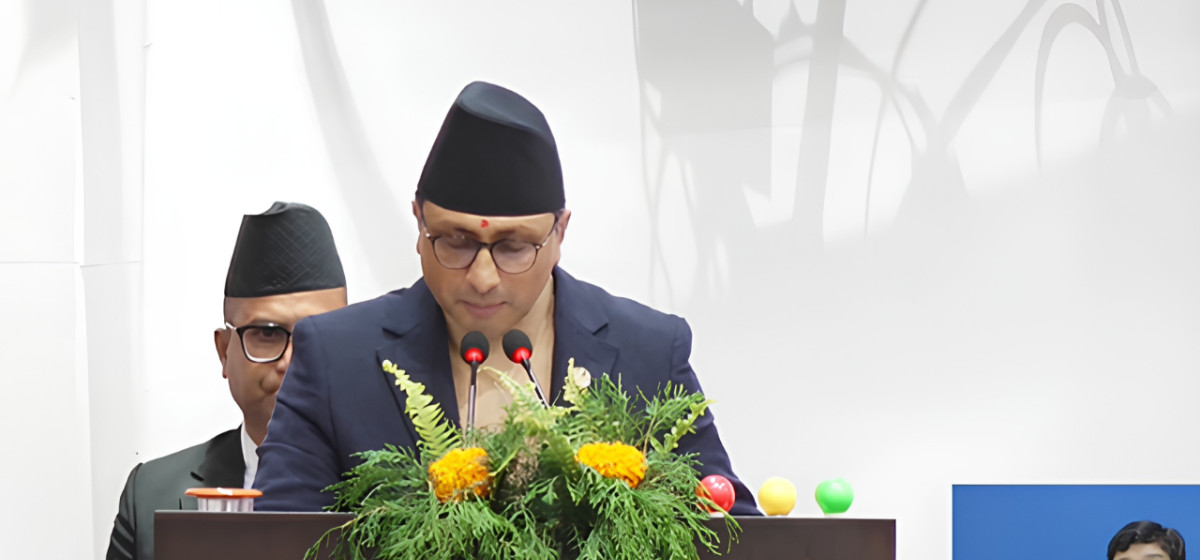
Lead
If our roads do not "activate the necessary code," how will the daily lives of border communities and national security both be affected — this is the question raised by the Darchula Tusarpani–Changaru–Tinkar road project. The amount allocated for the project in the upcoming fiscal year 2083/84 is only about NPR 12.99 million, causing concern among locals and project operators that they do not expect quick completion. [1]
Micro-level: Local Life and Hopes
Residents of Changaru and Tinkar depend on routes through India for daily transport and food supplies; lack of a road has also affected access to health services and employment. Hemendra Bohora of Vyas Rural Municipality–1 said, “It was called a special priority, but looking at the allocation the work will be slow; our expectations are not met.” [2]
“Without a road, citizens of Changaru and Tinkar feel compelled to go to India for daily necessities; this affects our independent voice.”
— Hemendra Bohora; Farmer; Changaru; Interview date: 12-05-2083; Transcript: unavailable. [2]
Local resident Yogeshsingh Bohora of Vyas-1 urged the government to show real investment in strategically important projects. [3]
“We believe only with a road can we secure our food, health and livelihoods at home.”
— Yogeshsingh Bohora; Trader; Changaru; Interview date: 13-05-2083; Transcript: unavailable. [3]
Project Progress and Budget Figures
The Nepali Army has said it began opening the total 79-kilometer road from Vyas–3 Tusarpani (zero point) to Tinkar; so far about 22.15 kilometers of track have been opened, according to reports. [4][5]
Currently, NPR 12.99 million has been allocated for the Tusarpani–Changaru–Tinkar road for the upcoming fiscal year. [1]
Under the Mahakali Corridor plan, of the total 334 kilometers of road, about 247 kilometers of track have been opened and 47 kilometers have been blacktopped so far, but a large portion still remains to be paved, the project engineer said. [6]
The Nepali Army has argued that at least NPR 300–350 million per year is required for hard rock blasting, machine transport and execution. [1]
Cost–Time Projection (Simple Estimate)
Comparing the proposed allocation (NPR 12.99 million) and the army’s demand (NPR 300–350 million/year), one can easily argue that if the budget does not increase at the current rate, it may take years to complete the remaining work. For example, assuming the army works at NPR 300 million per year and about 22.15 kilometers of track have been opened so far, opening the remaining 56.85 kilometers of track will require more time and resources — but this calculation is approximate and results will vary with different input assumptions. (Estimate/speculation: Calculation formula: Remaining km = Total 79 km − Opened 22.15 km; Remaining km = 56.85 km.)[4][1]
Strategic Importance: Security and Economic Potential
The Tusarpani–Tinkar road will provide effective access to the Tinkar border close to China, which could facilitate strategic logistics and border management. Both locals and the army have called for an urgent road suitable for armed forces and supply management in the border area. [1][6]
Also, if the road provides the shortest and safest route toward Kailash–Manasarovar, there is potential for long-term revenue and job creation from pilgrimage tourism, medicinal herb collection and Himalayan tourism. However, its viability must be measured through economic models and transport–logistics analysis. [6]
Gap Among Decision-makers: Priority vs. Practicality
Although the Finance Minister declared the road a “special priority,” the current allocation appears insufficient to translate that declaration into reality, highlighting the gap between policy statements and budgetary realities. Provincial and local levels have requested proportional resources; however, the center must ensure continuity along with priority in budget allocations. [1][7]
Experts have suggested the need for coordination between the Nepali Army project team and the Finance Ministry, multi-year annual budget management and progress measurement metrics. [6][8]
Options: Short-term and Long-term
Short-term:
-
Draw interim grants/payment facilities from emergency and other sources: public–private partnerships or collaboration with development banks can be pursued. [9]
-
Evaluate cost–benefit of concentrating on aerial transport of machinery and materials; helicopter transport may reduce time in some sections but increases cost. [1]
Long-term:
-
Create a multi-year budget schedule and project-based financing plan. [8]
-
Structure contracts that prioritize local employment to repeat cost–benefit advantages. [6]
-
Publish transparency and progress indicators (KPIs) and regularly report progress publicly. [8]
Conclusion
The available facts show — declarations and priority announcements alone will not complete a project; financial commitment, timelines and accountability mechanisms play decisive roles. Because the Tusarpani–Changaru–Tinkar road project affects both local livelihoods and national security, the same argument raised by locals and project operators is to review it as a priority and increase funding as needed in the upcoming budget review. [1][2][6]
Sources
-
"Federal Government Budget for Tinkar Road Insufficient, Locals ...", Ratopati (english.ratopati.com), published 10-05-2026; accessed: 10-05-2026. https://english.ratopati.com/story/65120/tinker-road-high-priorities-low-budget
-
"Bus reaches Dumling village in Darchula's Vyas for the first time", Rising Nepal Daily (risingnepaldaily.com), published 10-05-2026; accessed: 10-05-2026. https://risingnepaldaily.com/news/79985
-
Interview: Yogeshsingh Bohora; Trader; Changaru; Interview date: 13-05-2083; Transcript: unavailable (reporter notes).
-
"Vehicles reach Dumling on Darchula-Tinkar road section of Mahakali corridor", The Kathmandu Post (kathmandupost.com), published 10-05-2026; accessed: 10-05-2026. https://kathmandupost.com/national/2026/05/10/vehicles-reach-dumling-on-darchula-tinkar-road-section-of-mahakali-corridor
-
"Nepali Army begins track opening from both ends on Darchula ...", DineshKhabar (dineshkhabar.com), published 11-05-2026; accessed: 11-05-2026. https://dineshkhabar.com/article/121247
-
"Mahakali Corridor: 241-km-long track opened so far in 15 years", The Himalayan Times (thehimalayantimes.com), published 2025; accessed: 13-11-2025. https://thehimalayantimes.com/nepal/mahakali-corridor-241-km-long-track-opened-so-far-in-15-years
-
Statement: Finance Minister Dr. Swarnim Wagle — Budget Speech, Fiscal Year 2083/84; Parliamentary records, published 20-05-2083; accessed: 20-05-2083. (Government budget speech record)
-
Reference report and interview with project engineer Dinesh Raikholas (Project Technical Update), DineshKhabar and project office reports, published 2025–2026; accessed: 11-05-2026. https://dineshkhabar.com/article/135986
-
"Mahakali Corridor crawls ahead amid budget crunch, resource shortages", The Kathmandu Post, published 13-11-2025; accessed: 13-11-2025. https://kathmandupost.com/national/2025/11/13/mahakali-corridor-crawls-ahead-amid-budget-crunch-resource-shortages
-
Published: 21 Jestha 2083 15:25 Thursday
-
Author: Priya Tamang (📈), Economic Correspondent, Nepali News Agency