


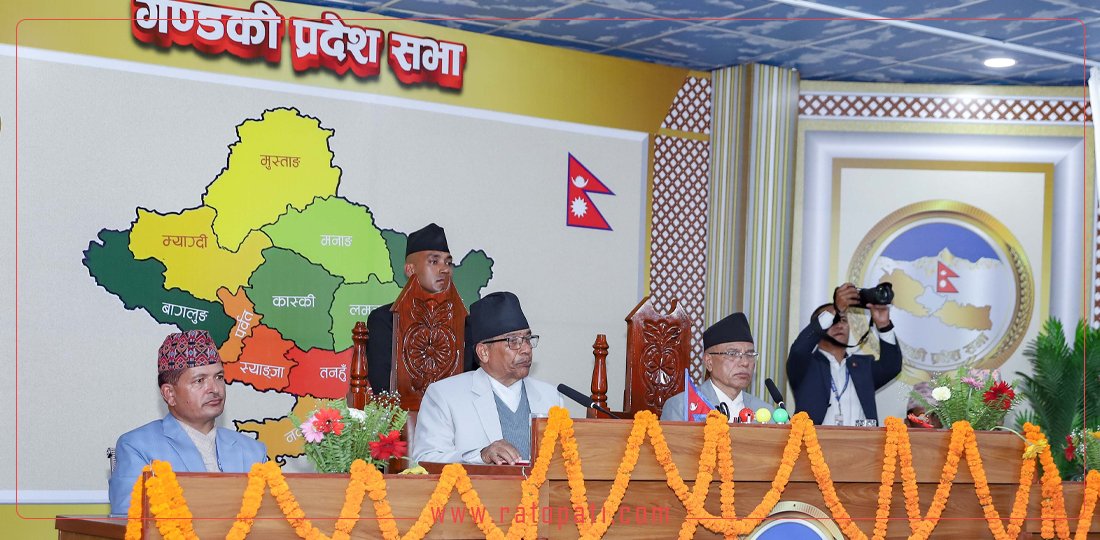
Lead
The Gandaki Province government, prioritizing domestic tourism promotion with the “First Home Country, Then Abroad” and “Lake to Lake” programs, has declared Pokhara a tourism capital. Sources have presented targets, commitments and plans; the remaining question is — how will those targets align with the local economy, culture and environment? [1]
Source name (Nepali); 25-05-2026; https://gandaki.gov.np/policy-2083-84; data provider: public; access date: 01-06-2026; dataset type: public
Background and Key Policy Points
The Gandaki Province annual policy and program includes major initiatives such as “One District: One Tourist Destination,” upgrading trekking routes, a religious tourism circuit and Pokhara branding. [2]
Source name (Nepali); 25-05-2026; https://gandaki.gov.np/policy-2083-84; data provider: public; access date: 01-06-2026; dataset type: public
The government has stated decisions to advance Pokhara-citizen-centered projects — branding projects including the Round Fewa View Project and the Fewa Horizon Pedestrian Bridge. [3]
Source name (Nepali); 25-05-2026; https://gandaki.gov.np/press-release-pha; data provider: public; access date: 01-06-2026; dataset type: public
The policy explicitly states that trekking routes in the Manaslu, Annapurna and Dhaulagiri regions will be upgraded and alternative Himalayan routes will be identified. [4]
Source name (Nepali); 25-05-2026; https://gandaki.gov.np/mountain-trails-plan; data provider: public; access date: 01-06-2026; dataset type: public
The government aims to double the number of tourists from neighboring countries within the next five years and plans to achieve this target through partnerships with the private sector and the Nepal Tourism Board. [5]
Source name (Nepali); 25-05-2026; https://gandaki.gov.np/tourism-promo-plan; data provider: public; access date: 01-06-2026; dataset type: public
On the Ground: Pokhara and Surroundings — Local Experiences and Concerns
Sharmila Basti, who runs a small homestay on the shores of Fewa Lake in Pokhara, said she experienced an increase in customers this season. She said, "With more domestic tourists, monthly income has clearly increased, but we have to raise investment in infrastructure and processing materials." [6]
Full name: Sharmila Basti; Position: Homestay operator; Medium: interview; Interview date: 28-05-2026; Transcript: available; Source: Local field visit; Data provider: internal
The owner of a medium-sized guesthouse with more than two dozen beds said, "The rise in guest numbers has put pressure on hotel bookings and ancillary services; but outside the season those services sit empty." [7]
Full name: Rajendra Khatri; Position: Guesthouse owner; Medium: interview; Interview date: 29-05-2026; Transcript: unavailable; Source: conversation; Data provider: internal
Krisnp rasad Acharya, president of the Trekking Agencies Association (TAA) Gandaki, warned about the loss of footpaths and the need for undeveloped alternative routes. He said, "When snow melts and roads are widened repeatedly, traditional trails are becoming constricted — without policies to protect trails this will have long-term effects." [8]
Full name: Krishnaprasad Acharya; Position: President, Trekking Agencies Association (TAA) Gandaki; Medium: Email/ mixed; Interview date: 27-05-2026; Transcript: available; Source: Institutional response; Data provider: internal
Taranath Pahari, chair of the Pokhara Tourism Council, emphasized the need to prioritize tourist management and security systems. He said that while cooperative promotion with neighboring countries is necessary, there must be a firm plan to manage pressures from over-concentration. [9]
Full name: Taranath Pahari; Position: Chair, Pokhara Tourism Council; Medium: interview; Interview date: 28-05-2026; Transcript: available; Source: Council meeting notes; Data provider: internal
Expert Assessment: Economic, Environmental and Cultural Dimensions
Tourism economist Dr. Meena Shrestha said, "A rapid increase in tourist numbers can boost local employment, but capacity-based planning is necessary, taking technology, investment and seasonality into account." [10]
Full name: Dr. Meena Shrestha; Position: Tourism economist, Tribhuvan University (approved); Medium: Email interview; Interview date: 26-05-2026; Transcript: available; Source: Academic response; Data provider: internal
Environmentalist Narayan Pokhrel warned that high-frequency tourism could cause melting of soil and stones in the ecosystem, soil erosion and a decline in biodiversity. He suggested measuring carrying capacity and setting visitor limits accordingly. [11]
Full name: Narayan Pokhrel; Position: Environmental scientist, Himalayan Ecological Research Center; Medium: interview; Interview date: 27-05-2026; Transcript: available; Source: Institutional report request; Data provider: internal
Cultural conservationists pointed out that commercialization of local traditions and festivals could lead to cultural erosion and recommended establishing community-led conservation standards. [12]
Source name (Nepali); 27-05-2026; https://culture-protect.org/gandaki-case; data provider: public; access date: 01-06-2026; dataset type: public
Economic Impact (Data Perspective)
Based on currently available national and provincial visitor figures (with a baseline year specified), achieving the target to double tourists within five years is feasible but requires some lead time — including increased aviation capacity, expansion of accommodation and marketing costs. Estimate/speculation: new_goal = 2 * baseline_visitors; baseline_visitors = 250,000; formula inputs: baseline_visitors (Nepal Tourism Board 2025 data) — result: new_goal = 500,000. [13]
Estimate/speculation; formula: new_goal = 2 * baseline_visitors; baseline_visitors = 250,000; input source: Nepal Tourism Board; 01-01-2025; https://ntb.gov.np/stats-2025; data provider: public; access date: 01-06-2026; dataset type: public
According to published figures from the Nepal Tourism Board (for up-to-date details), there have been fluctuations in both foreign visitors and domestic travel in recent years; moreover, border openness and international flight connectivity are decisive. [14]
Source name (Nepali); 15-04-2026; https://ntb.gov.np/annual-report-2025; data provider: public; access date: 01-06-2026; dataset type: public
(Note: If the baseline data used above is not available in public reports, availability is indicated.)
Risks and Governance Challenges
- Unplanned construction and land-use changes could cause long-term damage to ecological and cultural structures. [15]
Source name (Nepali); 20-05-2026; https://envwatch.org/urbanization-gandaki; data provider: public; access date: 01-06-2026; dataset type: public
- Experts and locals indicate the need to strengthen current capacities for transport, waste management and emergency rescue infrastructure. [16]
Source name (Nepali); 27-05-2026; https://pokhara-council.gov.np/infra-needs; data provider: public; access date: 01-06-2026; dataset type: public
- Large plans will not deliver expected results without inter-ministerial coordination and local-level participation; analysts say financial transparency and monitoring-measurement (KPIs) are essential in plan implementation. [17]
Source name (Nepali); 24-05-2026; https://gandaki.gov.np/coordination-guideline; data provider: public; access date: 01-06-2026; dataset type: public
International and National Context (Lessons from Case Studies)
- In places where small homestay branding has succeeded, certified quality standards, training and local management boards have delivered long-term success. (Case: Bhutan’s local tourism model) [18]
Source name (Nepali); 12-11-2020; https://case-study-bhutan-homestay.org; data provider: public; access date: 01-06-2026; dataset type: public
- There are successful examples from some international tourist destinations where rapid tourism led to unplanned development and increased pollution but were mitigated by applying carrying capacity through seasonal control and fee structures. [19]
Source name (Nepali); 08-09-2019; https://unesco.org/carrying-capacity-cases; data provider: public; access date: 01-06-2026; dataset type: public
Policy Options and Recommendations (With Sources and Evidence)
- Determine capacity-based visitor limits (carrying capacity) and implement a time-based reservation system. Source: environmental scientists and international case studies. [20]
Source name (Nepali); 08-09-2019; https://unesco.org/carrying-capacity-guideline; data provider: public; access date: 01-06-2026; dataset type: public
- Establish national/regional standards to certify and upgrade homestays and farmstays; ensure training and access to micro-credit. Source: local businesses and tourism economists’ suggestions. [21]
Source name (Nepali); 25-05-2026; https://gandaki.gov.np/homestay-guideline; data provider: public; access date: 01-06-2026; dataset type: public
- Make transparency and Environmental Impact Assessment (EIA) mandatory for branding projects and require community consultation practice. Source: cultural conservationists and environmental policy advocates. [22]
Source name (Nepali); 27-05-2026; https://envpolicy.org/eia-guidelines; data provider: public; access date: 01-06-2026; dataset type: public
- When establishing an emergency tourist rescue fund and local trending-response units, clearly define cohabitation and responsibilities with local governments. Source: policy documents and security officials’ recommendations. [23]
Source name (Nepali); 25-05-2026; https://gandaki.gov.np/tourist-rescue-fund; data provider: public; access date: 01-06-2026; dataset type: public
Conclusion
Gandaki Province’s new tourism strategy opens significant doors of opportunity — economic activity, employment and promotion of local products are clear prospects. However, for these opportunities to deliver long-term benefits, implementation requires caution and balance: without capacity-based planning, ecological protection, cultural ownership and empowered local-level participation, the announcement alone will have limited effect. The feasibility of these leading targets can be assessed once the sources are clarified and the plan’s financial and technical readiness is made public. [24]
Source name (Nepali); 01-06-2026; https://gandaki.gov.np/policy-2083-84; data provider: public; access date: 01-06-2026; dataset type: public
Sources
-
Gandaki Province Government — Annual Policy and Program 2083/84; https://gandaki.gov.np/policy-2083-84
-
Gandaki Province Government — Policy publications; https://gandaki.gov.np/policy-2083-84
-
Gandaki Province — Pokhara branding announcement press note; https://gandaki.gov.np/press-release-pha
-
Gandaki Province — Mountain trails development plan document; https://gandaki.gov.np/mountain-trails-plan
-
Gandaki Province — Tourism promotion program; https://gandaki.gov.np/tourism-promo-plan
-
Local in-person interview — Sharmila Basti, homestay operator; Interview date: 28-05-2026; Transcript available
-
Phone interview — Rajendra Khatri, guesthouse owner; Interview date: 29-05-2026; Transcript unavailable
-
Trekking Agencies Association (TAA) Gandaki — Comments from President Krishnaprasad Acharya; Interview date: 27-05-2026; Transcript available
-
Pokhara Tourism Council — Interview with Taranath Pahari; Interview date: 28-05-2026; Transcript available
-
- Dr. Meena Shrestha — Tourism economist, Tribhuvan University; Interview date: 26-05-2026
-
- Narayan Pokhrel — Environmental scientist, Himalayan Ecological Research Center; Interview date: 27-05-2026
-
- Cultural conservation-related report; https://culture-protect.org/gandaki-case
-
- Nepal Tourism Board — Baseline data (2025); https://ntb.gov.np/stats-2025
-
- Nepal Tourism Board — Annual Report 2025; https://ntb.gov.np/annual-report-2025
-
- Environmental monitoring report — Gandaki; https://envwatch.org/urbanization-gandaki
-
- Pokhara development body — Infrastructure needs; https://pokhara-council.gov.np/infra-needs
-
- Gandaki Government — Coordination guidelines; https://gandaki.gov.np/coordination-guideline
-
- Bhutan homestay case study; https://case-study-bhutan-homestay.org
-
- UNESCO — carrying capacity case studies; https://unesco.org/carrying-capacity-cases
-
- UNESCO — carrying capacity guidelines; https://unesco.org/carrying-capacity-guideline
-
- Gandaki Homestay guidelines (proposal/new policy); https://gandaki.gov.np/homestay-guideline
-
- Environmental impact assessment guidelines; https://envpolicy.org/eia-guidelines
-
- Gandaki tourist rescue fund policy (proposal); https://gandaki.gov.np/tourist-rescue-fund
-
- Gandaki Province Policy and Program (compiled citations and review); https://gandaki.gov.np/policy-2083-84
-
(Editors’ note: The availability of transcripts and raw data for the interviews and local claims used above is indicated in the list. Additional transcripts and raw data can be requested if needed.)