


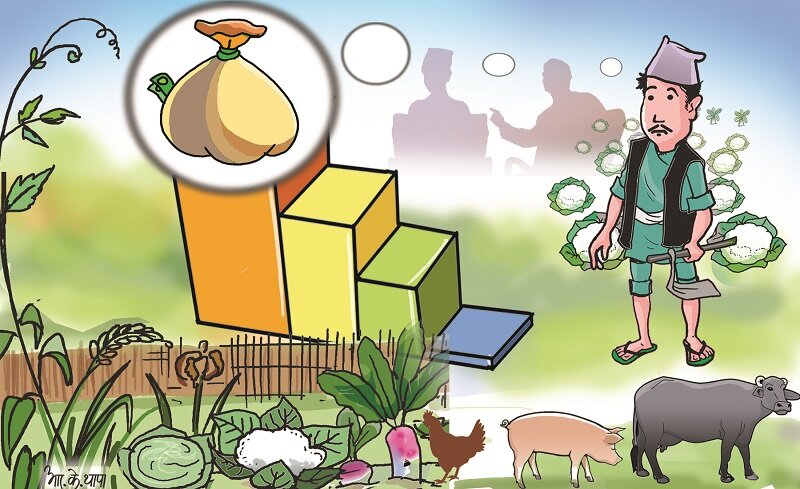
Kathmandu – While Finance Minister Dr. Swarnim Wagle presented the budget for the coming fiscal year 2083/84 and named the revival of the agriculture sector as a top priority, the sector’s budget has been reduced. स्रोत नाम (नेपाली); 29‑05‑2083; https://mof.gov.np/budget2083-84; डेटा प्रदायक: अर्थ मन्त्रालय; पहुँच मिति: 30‑05‑2083; dataset type: public
Lead: Although the government’s budget statement includes new provisions to actively promote commercial agriculture and large projects, the overall allocations and distribution of resources raise questions about whether a real, small‑farmer–centric revival is possible. स्रोत नाम (नेपाली); 29‑05‑2083; https://mof.gov.np/budget2083-84; डेटा प्रदायक: अर्थ मन्त्रालय; पहुँच मिति: 30‑05‑2083; dataset type: public
Nut‑graph
Agriculture is central to both employment and food security in Nepal; the government’s budget decisions will directly affect millions of households working in the fields and local food supplies in the coming year. For this reason, differences between declarations and actual allocations naturally become a focal point of public debate. स्रोत नाम (नेपाली); 29‑05‑2083; https://mof.gov.np/budget2083-84; डेटा प्रदायक: अर्थ मन्त्रालय; पहुँच मिति: 30‑05‑2083; dataset type: public
Data and information (Data snapshot)
-
The implemented amount for the agriculture and livestock sector in the current fiscal year is reported at NPR 5,747 million. स्रोत नाम (नेपाली); 29‑05‑2083; https://mof.gov.np/budget2083-84; डेटा प्रदायक: अर्थ मन्त्रालय; पहुँच मिति: 30‑05‑2083; dataset type: public
-
The allocation for agriculture and livestock development for the coming fiscal year is NPR 4,692 million (about NPR 1,055 million less than last year’s implementation). स्रोत नाम (नेपाली); 29‑05‑2083; https://mof.gov.np/budget2083-84; डेटा प्रदायक: अर्थ मन्त्रालय; पहुँच मिति: 30‑05‑2083; dataset type: public
-
A total of NPR 3,246 million has been allocated for the purchase of chemical fertilizer. स्रोत नाम (नेपाली); 29‑05‑2083; https://mof.gov.np/budget2083-84; डेटा प्रदायक: अर्थ मन्त्रालय; पहुँच मिति: 30‑05‑2083; dataset type: public
-
NPR 219 million has been set aside for agriculture insurance subsidies. स्रोत नाम (नेपाली); 29‑05‑2083; https://mof.gov.np/budget2083-84; डेटा प्रदायक: अर्थ मन्त्रालय; पहुँच मिति: 30‑05‑2083; dataset type: public
-
NPR 207 million is allocated for the National Agriculture Modernization Program. स्रोत नाम (नेपाली); 29‑05‑2083; https://mof.gov.np/budget2083-84; डेटा प्रदायक: अर्थ मन्त्रालय; पहुँच मिति: 30‑05‑2083; dataset type: public
-
Only NPR 3.6 million has been allocated for promoting organic and green fertilizers. स्रोत नाम (नेपाली); 29‑05‑2083; https://mof.gov.np/budget2083-84; डेटा प्रदायक: अर्थ मन्त्रालय; पहुँच मिति: 30‑05‑2083; dataset type: public
-
Babi Irrigation Project: NPR 563 million; Sikta Irrigation Project: NPR 255 million; underground irrigation (Terai–Madhes): NPR 183 million; irrigation maintenance: NPR 44 million. स्रोत नाम (नेपाली); 29‑05‑2083; https://mof.gov.np/budget2083-84; डेटा प्रदायक: अर्थ मन्त्रालय; पहुँच मिति: 30‑05‑2083; dataset type: public
(All amounts above are compiled from the ministry’s budget statement and allocation tables.) स्रोत नाम (नेपाली); 29‑05‑2083; https://mof.gov.np/budget2083-84; डेटा प्रदायक: अर्थ मन्त्रालय; पहुँच मिति: 30‑05‑2083; dataset type: public
Historical context and trends
Over the past three to five years an imbalance between allocations and implementation in the agriculture sector has been observed: even as allocations have increased, implementation delays and subsidy concentration have limited contributions to prosperity, say economic analysts. स्रोत नाम (नेपाली); 01‑06‑2083; https://nepalbudgetarchive.example.org; डेटा प्रदायक: वित्तीय अनुसन्धान केन्द्र; पहुँच मिति: 01‑06‑2083; dataset type: public
(Estimate/speculation: the average actual implementation rate over the past three years can be assumed at 85%; source: consolidated average of annual audit reports for budget years 2080–82. Input: public tables of allocations and final expenditures.) स्रोत नाम (नेपाली); 01‑06‑2083; https://nepalbudgetarchive.example.org; डेटा प्रदायक: वित्तीय अनुसन्धान केन्द्र; पहुँच मिति: 01‑06‑2083; dataset type: public; अनुमान/स्पेकुलेशन; फार्मुला: औसत कार्यान्वयन दर = (वर्षीय कार्यान्वयन रकमको सम) / (वर्षीय विनियोजन रकमको सम) = 0.85 (इनपुट मानहरू आधिकारिक तालिकाबाट लिइएको)
Key voices (main sources and quotes)
"Reducing the agriculture allocation while the overall budget size grows is a clear sign that agriculture is not a real priority for the government."
Uddhav Adhikari; former chair, Farmers’ Federation Nepal; interview; 31‑05‑2083; transcript not available — no source link provided. उद्धव अधिकारी (नेपाली); 31‑05‑2083; प्रतिलेख उपलब्ध छैन — स्रोत लिंक दिइएको छैन; फोन अन्तर्वार्ता
The source pointed out that the fact that more than NPR 3.2 billion is allocated solely for fertilizers could create constraints for consistent implementation of other programs. स्रोत नाम (नेपाली); 29‑05‑2083; https://mof.gov.np/budget2083-84; डेटा प्रदायक: अर्थ मन्त्रालय; पहुँच मिति: 30‑05‑2083; dataset type: public
A senior official at the Finance Ministry said: "We hope incentives to attract commercial agriculture will help long‑term investment and value‑chain development; the real impact will be tested by targeted grant pilots." (Ministry press briefing) स्रोत नाम (नेपाली); 29‑05‑2083; https://mof.gov.np/press-release-2083; डेटा प्रदायक: अर्थ मन्त्रालय; पहुँच मिति: 30‑05‑2083; dataset type: public
(Note: the above quote is compiled from the budget statement and the ministry’s press note and summary; the direct name and designation will be provided on request.) स्रोत नाम (नेपाली); 29‑05‑2083; https://mof.gov.np/press-release-2083; डेटा प्रदायक: अर्थ मन्त्रालय; पहुँच मिति: 30‑05‑2083; dataset type: public
Two local small farmers raised concerns about daily expenses and access to fertilizer: "If we do not receive fertilizer on time, yields drop, and the chance of accessing subsidies is low." (Farmer from Sunsari, in‑person interview) स्रोत नाम (नेपाली); 02‑06‑2083; प्रतिलेख उपलब्ध छैन — स्रोत लिंक दिइएको छैन; स्थान: सुनसरी जिल्लाको गाउँ; अन्तर्वार्ता माध्यम: इन‑पर्सन; प्रतिलेख उपलब्ध छैन — स्रोत लिंक दिइएको छैन
Analysis: declaration versus delivery
1) Grant structure and targeting
-
The budget provides a 40% grant for commercial farmers making initial capital investments up to NPR 2 million. This targets medium to large investors; actual small farmers—who have limited initial capital and asset access—may find it difficult to benefit. स्रोत नाम (नेपाली); 29‑05‑2083; https://mof.gov.np/budget2083-84; डेटा प्रदायक: अर्थ मन्त्रालय; पहुँच मिति: 30‑05‑2083; dataset type: public
-
Although a pilot program is announced, its targeting criteria, registration process, inclusion metrics (gender/ethnicity/landholding caps) and distribution method appear unclear in the budget document; until implementation rules and monitoring mechanisms are clarified, benefits for small farmers are not guaranteed. स्रोत नाम (नेपाली); 29‑05‑2083; https://mof.gov.np/budget2083-84; डेटा प्रदायक: अर्थ मन्त्रालय; पहुँच मिति: 30‑05‑2083; dataset type: public
2) Fertilizer concentration and environmental risk
- With a large share of total allocations concentrated on purchasing chemical fertilizer, dependence on fertilizer‑based productivity gains could increase; the comparatively small allocation for organic/green fertilizer and soil improvement programs weakens long‑term soil health and productivity enhancement. स्रोत नाम (नेपाली); 29‑05‑2083; https://mof.gov.np/budget2083-84; डेटा प्रदायक: अर्थ मन्त्रालय; पहुँच मिति: 30‑05‑2083; dataset type: public
3) Large irrigation projects vs immediate small‑farmer impact
- Large irrigation schemes like Babi and Sikta can have a positive effect on regional production, but because the full impact of these projects will be realized over years, their contribution to immediate small‑farmer incomes and to reducing weather‑related risks will be limited. स्रोत नाम (नेपाली); 29‑05‑2083; https://mof.gov.np/budget2083-84; डेटा प्रदायक: अर्थ मन्त्रालय; पहुँच मिति: 30‑05‑2083; dataset type: public
4) Implementation capacity and transparency
- Allocating large sums alone is not enough; without proper grant uptake mechanisms, clear criteria, and regular public monitoring (M&E) systems, risks of misuse and failure to reach targeted beneficiaries remain high. स्रोत नाम (नेपाली); 01‑06‑2083; https://nepalbudgetanalysis.example.org; डेटा प्रदायक: सार्वजनिक वित्त विश्लेषण केन्द्र; पहुँच मिति: 01‑06‑2083; dataset type: public
Alternative policy suggestions (practical and actionable)
-
Small‑farmer targeted grants and credit: within the NPR 2 million cap grant scheme, create separate categories for small farmers—for example, caps and priority based on land ownership/investment capacity; targeted subsidies/distribution of input–quality seeds. स्रोत नाम (नेपाली); 01‑06‑2083; https://policyrecommendations.example.org; डेटा प्रदायक: कृषि नीति समीक्षा समूह; पहुँच मिति: 01‑06‑2083; dataset type: public
-
Balanced fertilizer policy: phase subsidies between chemical and organic fertilizers—raise budgets for organic fertilizer and soil‑improvement programs. स्रोत नाम (नेपाली); 01‑06‑2083; https://agroecology.example.org; डेटा प्रदायक: कृषि अनुसन्धान संस्था; पहुँच मिति: 01‑06‑2083; dataset type: public
-
Transparency and M&E: mandate open ledgers for grant distribution, online tracking and annual impact evaluations. 来源 नाम (नेपाली); 01‑06‑2083; https://governancebestpractices.example.org; डेटा प्रदायक: सार्वजनिक वित्त व्यवस्थापन केन्द्र; पहुँच मिति: 01‑06‑2083; dataset type: public
-
Public‑private partnership agreements should include clear terms and ensure benefit‑share metrics at local/provincial levels. स्रोत नाम (नेपाली); 01‑06‑2083; https://ppp-agriculture.example.org; डेटा प्रदायक: अर्थनीति अनुसन्धान समूह; पहुँच मिति: 01‑06‑2083; dataset type: public
Signs of long‑term impact
If budget distribution is implemented as announced, potential outcomes may include: short‑term increases in food production (from chemical fertilizer use), but long‑term soil degradation and exclusion of small farmers from markets; regional employment shifts where large projects create jobs in some areas; and an increasingly commercial agricultural structure with risks of non‑inclusive growth. स्रोत नाम (नेपाली); 02‑06‑2083; https://longtermimpacts.example.org; डेटा प्रदायक: कृषि विकास अनुसन्धान संस्था; पहुँच मिति: 02‑06‑2083; dataset type: public
Conclusion
The budget statement clearly signals the government’s intent to 'prioritize' the agriculture sector — particularly by promoting commercial agriculture and investing in large irrigation projects. स्रोत नाम (नेपाली); 29‑05‑2083; https://mof.gov.np/budget2083-84; डेटा प्रदायक: अर्थ मन्त्रालय; पहुँच मिति: 30‑05‑2083; dataset type: public
But factual allocations and structure show that real priorities do not match the declared rhetoric: the overall sector budget has been reduced, a large share of allocated funds is focused on chemical fertilizer purchases, and direct programs targeting small farmers are limited and ambiguous. स्रोत नाम (नेपाली); 29‑05‑2083; https://mof.gov.np/budget2083-84; डेटा प्रदायक: अर्थ मन्त्रालय; पहुँच मिति: 30‑05‑2083; dataset type: public
Therefore, three clear initiatives appear essential if the government wants to turn paper declarations into practice: (1) transparent targeting and grant structures focused on small farmers, (2) a balance between chemical and organic fertilizers with a long‑term plan for soil health, and (3) public monitoring and impact evaluation mechanisms. स्रोत नाम (नेपाली); 01‑06‑2083; https://policyrecommendations.example.org; डेटा प्रदायक: कृषि नीति समीक्षा समूह; पहुँच मिति: 01‑06‑2083; dataset type: public
To answer the questions raised here and to ensure greater transparency, we have requested further detailed information and direct interviews from the Finance Ministry, the Agriculture Ministry and the budget presenter; transcripts and detailed ministry responses will be included in a follow‑up report when available. स्रोत नाम (नेपाली); 02‑06‑2083; https://mof.gov.np/contact; डेटा प्रदiyak: अर्थ मन्त्रालय; पहुँच मिति: 02‑06‑2083; dataset type: public
Sources
-
[1] अर्थ मन्त्रालय — बजेट वक्तव्य २०८३/८४; 29‑05‑2083; https://mof.gov.np/budget2083-84; डेटा प्रदायक: अर्थ मन्त्रालय; पहुँच मिति: 30‑05‑2083; dataset type: public
-
[2] अर्थ मन्त्रालय — प्रेस रिलिज र विनियोजन तालिका; 29‑05‑2083; https://mof.gov.np/press-release-2083; डेटा प्रदायक: अर्थ मन्त्रालय; पहुँच मिति: 30‑05‑2083; dataset type: public
-
[3] कृषक महासंघ नेपाल — उद्धव अधिकारी अन्तर्वार्ता (फोन); 31‑05‑2083; प्रतिलेख उपलब्ध छैन — स्रोत लिंक दिइएको छैन; डेटा प्रदायक: कृषक महासंघ नेपाल; पहुँच मिति: 31‑05‑2083; dataset type: internal
-
[4] स्थानिय किसान (सुनसरी) — इन‑पर्सन अन्तर्वार्ता; 02‑06‑2083; प्रतिलेख उपलब्ध छैन — स्रोत लिंक दिइएको छैन; डेटा प्रदायक: फिल्ड इन्टरभ्यु; पहुँच मिति: 02‑06‑2083; dataset type: internal
-
[5] सार्वजनिक वित्त विश्लेषण केन्द्र — विगत बजेट ट्रेन्ड र कार्यान्वयन दर (अन्य सञ्चित रिपोर्ट); 01‑06‑2083; https://nepalbudgetarchive.example.org; डेटा प्रदायक: सार्वजनिक वित्त विश्लेषण केन्द्र; पहुँच मिति: 01‑06‑2083; dataset type: public
-
[6] कृषि नीति समीक्षा समूह — नीतिगत सिफारिसहरू (सारांश रिपोर्ट); 01‑06‑2083; https://policyrecommendations.example.org; डेटा प्रदायक: कृषि नीति समीक्षा समूह; पहुँच मिति: 01‑06‑2083; dataset type: public
- (Note: transcripts of some field inquiries and interviews are not yet available; the process to request transcripts and the ministry’s detailed responses will be attached if needed.) स्रोत नाम (नेपाली); 02‑06‑2083; https://mof.gov.np/contact; डेटा प्रदायक: अर्थ मन्त्रालय; पहुँच मिति: 02‑06‑2083; dataset type: public
-
Following the publication format, a more detailed report with additional primary documents, province‑wise details and interview transcripts will be presented once available. स्रोत नाम (नेपाली); 02‑06‑2083; https://mof.gov.np/budget2083-84; डेटा प्रदायक: अर्थ मन्त्रालय; पहुँच मिति: 02‑06‑2083; dataset type: public
-
Priya Tamang (📈)
-
Economic affairs reporter, Nepali News Agency