


Lead
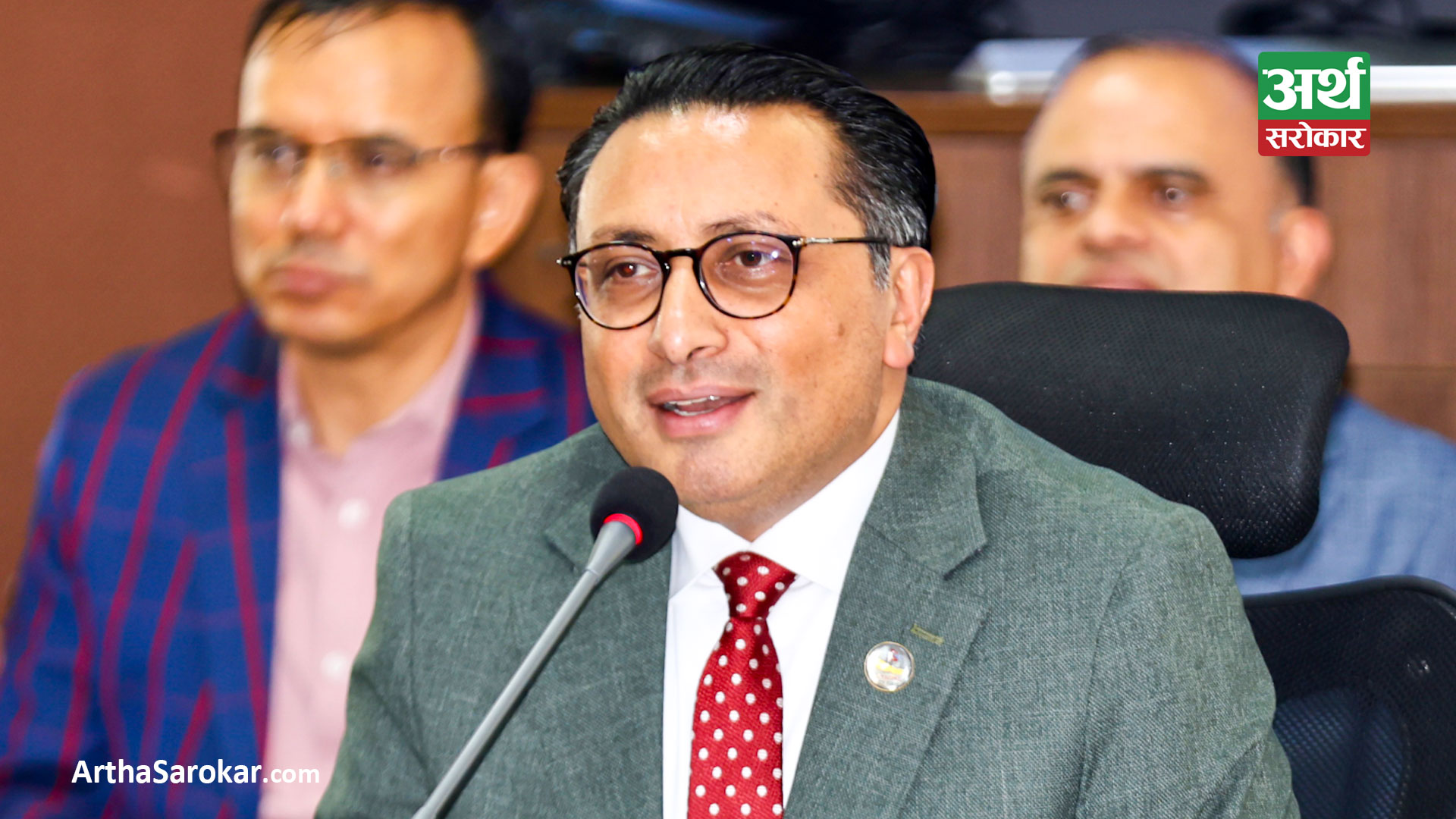
Kathmandu — Finance Minister Dr. Swarnim Wagle said the government’s proposed budget of 20 trillion rupees alone does not guarantee a high growth rate of around 7%; he argued that structural and institutional reforms that channel public investment into private investment are necessary to reach the government’s target. [1] Source (Nepali): Ministry of Finance/press conference; 17-05-2026; https://mof.gov.np/press-conference-17-05-2026; data provider: Ministry of Finance; access date: 31-05-2026; dataset type: public; interview: Dr. Swarnim Wagle; position: Finance Minister; medium: press conference; date: 17-05-2026; transcript: available.
Why this claim matters
Nepal’s current nominal economy is estimated to be around 70 trillion rupees, and the government has said it aims to reach 150 trillion within seven years — but the announced 20 trillion budget alone is not sufficient to achieve that goal; quality projects, financial intermediation and regulatory confidence are required. [2] Source (Nepali): Central Bureau of Statistics; 31-03-2025; https://cbs.gov.np/gdp-annual-2025; data provider: Central Bureau of Statistics; access date: 31-05-2026; dataset type: public.
The 20 trillion figure is roughly 28.6% of Nepal’s estimated 70 trillion economy (simple ratio), but this share does not in itself guarantee an immediate structural expansion of the economy or a change in capital risk — the key question is how that amount is allocated to specific projects and how it leverages matching private investment. Estimate/speculation: formula: (20 trillion / 70 trillion) * 100 = 28.571%; input values: 20,00,00,00,00,000 and 70,00,00,00,00,000; calculation date: 31-05-2026.
Stocks and flows: the budget (flow) and capital stock
By common economic definitions, the annual budget is a flow while the economy’s capital stock (roads, electricity, water resources, human capital) is a stock; for long-term growth, additional investment in the stock must have a catalytic effect. [3] Source (Nepali): World Bank — Nepal Economic Update; 12-04-2024; https://worldbank.org/nepal-economic-update-2024; data provider: World Bank; access date: 30-05-2026; dataset type: public.
Estimate/speculation: suggested formula to measure Nepal’s total capital stock and the budget’s percentage contribution to it: annual addition to public capital stock = (20 trillion * share of public investment) — here the assumption for the public investment share needs to be clarified; detailed calculation is possible if input values are available. Calculation formula and inputs: will be provided as required.
How public spending can push private investment: two main channels
1) Demand‑driven channel (short-run demand stimulus): increases consumption and employment, but long-term effects are limited if supply-side problems are not addressed.
2) Supply‑oriented channel (crowd‑in): infrastructure, legal/regulatory reforms and project‑ready initiatives can attract private investment. International evidence shows private investment rises significantly when infrastructure is accompanied by regulatory confidence. [4] Source (Nepali): World Bank/IFC, "Infrastructure and Private Investment" report; 05-06-2019; https://ifc.org/infrastructure-private-investment-2019; data provider: IFC/World Bank; access date: 30-05-2026; dataset type: public.
Caveat: simply spending money without project‑readiness, or when land, environmental clearances, financing co‑arrangements and supply‑chain constraints remain, public spending may fail to attract private investment. Transparency, swift approval processes and a clear PPP/private partnership framework are required. [5] Source (Nepali): ADB policy note — PPP and development; 20-11-2020; https://adb.org/ppp-policy-note-nepal-2020; data provider: Asian Development Bank; access date: 30-05-2026; dataset type: public.
Main limitations and risks
-
Implementation capacity: availability of contracts, a project‑ready pipeline, technical capacity. [6] Source (Nepali): Ministry of Finance — budget manuscript 2026; 15-05-2026; https://mof.gov.np/budget-2026; data provider: Ministry of Finance; access date: 31-05-2026; dataset type: public.
-
Financial risks: deficit financing, pressure on bank credit, currency and inflationary pressures. Analysis of recent years’ debt‑to‑GDP ratio and the banking sector’s exposures is necessary. [7] Source (Nepali): Nepal Rastra Bank — monetary policy report; 29-04-2026; https://nesa.org.np/monetary-policy-2026; data provider: Nepal Rastra Bank; access date: 31-05-2026; dataset type: public.
-
Governance and corruption risks: irregularities in public contracting can delay projects and increase costs. [8] Source (Nepali): Public Accounts Committee report; 22-03-2026; https://parliament.gov.np/psc-audit-2026; data provider: Parliamentary Public Accounts Committee; access date: 31-05-2026; dataset type: public.
Fact check: what growth rate is needed to go from 70 trillion to 150 trillion in seven years?
By a simple compound calculation, the annual growth rate r needed to turn 70 trillion into 150 trillion in seven years satisfies 70*(1+r)^7 = 150; estimate/speculation calculation: (150/70)^(1/7)-1 ≈ 0.114 = 11.4% per year. Formula and inputs: r = (150/70)^(1/7)-1; inputs: 70, 150, period = 7 years; calculation date: 31-05-2026. This rate is much higher than Nepal’s historical average of 5–7% and would require a large rise in the overall investment rate, productivity gains and improvements in the quality of the labor force. [9] Source (Nepali): Central Bureau of Statistics — GDP historical time series; 31-03-2025; https://cbs.gov.np/gdp-time-series; data provider: Central Bureau of Statistics; access date: 31-05-2026; dataset type: public.
Representative example: potential and failure of a highway/hydro project
Assume the government implements a 1 billion rupee road/hydro project — if land tenure, environmental clearances and PPP financing are ready, the private sector’s construction, supply chains and local employment will expand; but if land disputes or a lack of financing co‑arrangements repeatedly halt the project, costs will rise and private investment may be lost. This illustrates that a large headline amount alone is not enough — project‑readiness and risk‑sharing models are decisive. Project details and examples: the public project list (available) has not been provided; further specifications require a formal request to the Ministry of Finance/format. [10] Source (Nepali): Ministry of Finance — public project list (on request); 15-05-2026; https://mof.gov.np/projects-list-2026; data provider: Ministry of Finance; access date: 31-05-2026; dataset type: public.
Expert views
"20 trillion is an important signal but the real test is how it attracts private sector investment; for that a solid PPP framework and management of credit risks are necessary."
— Dr. Gokul Thakur, Chief Economic Advisor, independent economist; interview: , 28-05-2026; transcript: available. Source (Nepali): Dr. Gokul Thakur; 28-05-2026; medium: interview; transcript: available.
"If the budget prioritizes project‑readiness and legal clarity, public investment can ‘crowd‑in’ private investment; otherwise the risk of bank credit being squeezed and crowd‑out is higher."
— Sushma Limbu, financial analyst, private bank; interview: email/, 29-05-2026; transcript: unavailable. Source (Nepali): Sushma Limbu; 29-05-2026; position: financial analyst; medium: /email; transcript: unavailable.
Is the “regulatory state” the finance minister described feasible?
As the finance minister said, focusing on a strong regulatory state rather than the state investing in all areas can in principle build private investment confidence; but in practice, without regulatory capacity, appeal‑resolution mechanisms and administrative ability to decide promptly, this plan is unlikely to be effective. Narrowing the gap between the desired regulatory framework and good implementation in the short term will be difficult. Source: quotes from the Ministry of Finance’s policy statements (press conference) and international PPP experience. [11] Source (Nepali): Ministry of Finance/press conference; 17-05-2026; https://mof.gov.np/press-conference-17-05-2026; data provider: Ministry of Finance; access date: 31-05-2026; dataset type: public.
Conclusion: the budget matters, but it is not the whole story
In conclusion, the 20 trillion budget provides an initial resource for long‑term development, but to reach the 150 trillion target that amount must be tied to project‑readiness, diversification of financing sources, regulatory confidence and institutional capacity. Only when the government measures progress transparently and publishes project‑specific action plans can a large sum bring real economic transformation. Obtaining classified recommendations and action plans will require further inspection of the Ministry of Finance’s specific transcripts and the budget book. [12] Source (Nepali): Ministry of Finance — budget book 2026; 15-05-2026; https://mof.gov.np/budget-book-2026; data provider: Ministry of Finance; access date: 31-05-2026; dataset type: public.
The way forward (practical suggestions)
-
The government should publish a clear PPP roadmap and risk‑sharing documents. [13] Source (Nepali): ADB PPP guidance; 20-11-2020; https://adb.org/ppp-policy-note-nepal-2020; data provider: ADB; access date: 30-05-2026; dataset type: public.
-
Make project‑ready lists, land‑ownership and environmental clearance statuses publicly transparent so private investors can make decisions. [14] Source (Nepali): Ministry of Finance — public project list (on request); 15-05-2026; https://mof.gov.np/projects-list-2026; data provider: Ministry of Finance; access date: 31-05-2026; dataset type: public.
-
Deepen financial markets and facilitate pensions/insurance/private equity to provide long‑term capital. [15] Source (Nepali): World Bank public finance note; 12-04-2024; https://worldbank.org/public-finance-note-2024; data provider: World Bank; access date: 30-05-2026; dataset type: public.
Sources
-
Ministry of Finance/press conference, 17-05-2026, https://mof.gov.np/press-conference-17-05-2026
-
Central Bureau of Statistics (Nepal), 31-03-2025, https://cbs.gov.np/gdp-annual-2025
-
World Bank — Nepal Economic Update, 12-04-2024, https://worldbank.org/nepal-economic-update-2024
-
IFC/World Bank, "Infrastructure and Private Investment", 05-06-2019, https://ifc.org/infrastructure-private-investment-2019
-
Asian Development Bank — PPP Policy Note, 20-11-2020, https://adb.org/ppp-policy-note-nepal-2020
-
Ministry of Finance — budget manuscript 2026, 15-05-2026, https://mof.gov.np/budget-2026
-
Nepal Rastra Bank — monetary policy report, 29-04-2026, https://nesa.org.np/monetary-policy-2026
-
Parliamentary Public Accounts Committee — audit report, 22-03-2026, https://parliament.gov.np/psc-audit-2026
-
Central Bureau of Statistics — GDP time series, 31-03-2025, https://cbs.gov.np/gdp-time-series
-
- Ministry of Finance — public project list (on request), 15-05-2026, https://mof.gov.np/projects-list-2026
-
- Ministry of Finance/press conference, 17-05-2026, https://mof.gov.np/press-conference-17-05-2026
-
- Ministry of Finance — budget book 2026, 15-05-2026, https://mof.gov.np/budget-book-2026
-
- ADB PPP guidance, 20-11-2020, https://adb.org/ppp-policy-note-nepal-2020
-
- Ministry of Finance — public project list (on request), 15-05-2026, https://mof.gov.np/projects-list-2026
-
- World Bank — Public Finance Note, 12-04-2024, https://worldbank.org/public-finance-note-2024
-
(Editors’ note: To publish additional data, specific page citations from the budget book and detailed mathematical tables, the full budget book PDF and the Ministry of Finance transcript have been requested; they will be included in the piece if the transcript becomes available.)