


Lead sentence
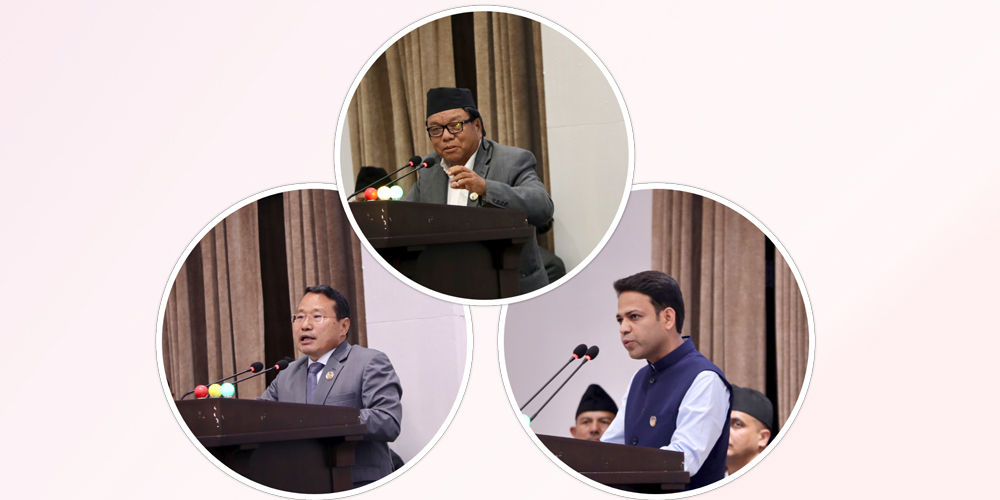
Kathmandu — In Thursday’s meeting of the House of Representatives, independent MP Mahaveer Pun urged the government to allocate one percent of capital expenditure to research and development and stressed the need to form a Ministry of Science, Technology and Innovation. In the same debate, proposals were also made for measures to ensure expatriate voting rights, the mathematical allocation of the capital budget and structural reforms such as ‘right‑to‑recall’, raising new questions for long‑term policy priorities [1][2].
Why it matters: context and key figures
In Nepal’s current public finance structure, capital expenditure occupies a large share but directed investment toward education, research and innovation is limited. Multiple annual reports show that combined public and private spending on research and development (R&D) in Nepal represents a very small share of gross domestic product (GDP); comparative figures from international agencies indicate that developed economies typically spend a higher share on R&D (OECD countries average ~2.5% or thereabouts; in some countries the level is 4–5%), showing a large gap compared with Nepal [3].
Government announcements and parliamentary debate that foreground the proposal to allocate 1% of capital expenditure to R&D signal a shift in policy priorities; however, this also highlights budgetary trade‑offs (opportunity costs) and the need for building institutional capacity. Reports from Nepal Rastra Bank, the Office of the Economic Advisor and the Ministry of Finance provide indicators on growth rates, revenue collection capacity and the financial demands of capital projects, which will form the basis for any restructuring decisions [4][5].
Proposals at a glance
-
Proposal to allocate 1% of capital expenditure to research and development (R&D) — expected priority areas: agriculture, health, industry and information technology. If implemented, the raw calculation of how much budget this would free up annually needs to be recalculated based on the actual capital expenditure (see source list) [1][3].
-
Proposal to increase teacher posts and improve quality in community schools — an immediate investment in human capital with long‑term benefits.
-
Mechanisms/arrangements to ensure voting rights for Nepalis overseas — options: secure electronic voting, consular voting, mail‑in ballots; each carries investment needs and cyber/authentication risks.
-
Proposal to apply performance‑based criteria in capital budget allocations — emphasizes transparency and results but would require indicator collection and could face political resistance.
-
Formal procedure for ‘right‑to‑recall’ (recalling elected representatives before the end of their term) — requires a legal framework and mechanisms to prevent misuse.
-
Structural economic reforms — revenue redistribution, coordination with local governments and review of priorities for national pride projects.
Proposal analysis: feasibility, costs and risks
1) Economic analysis of 1% of capital expenditure for R&D
A clear figure for what 1% means annually will emerge once calculations use the actual size of the annual capital budget as reported by the Ministry of Finance and the passed budget. For example, if annual capital expenditure is assumed at 100 billion rupees, 1% would be 1 billion rupees; for practical planning, the current capital budget (see the Ministry of Finance’s recent annual accounts) should be used [6].
This amount could immediately expand the research system, but effective use would require project selection, strengthening research institutions and long‑term follow‑up budgets. Risks: allocation remaining only on paper and funds being diverted due to political priorities, and institutional capacity shortfalls leading to failure to achieve expected outcomes. Case studies from the OECD and UNESCO indicate that successful R&D investment needs stable policy, commercial incentives and public‑private partnerships [3][7].
2) Teacher posts and quality improvement
Increasing teacher posts will raise salary and training costs over time; current data on teacher shortages and quality are available in Ministry of Education and teachers’ union reports. Raising recruitment alone is not sufficient to improve learning outcomes — it must be linked to assessment systems, continuous professional development and performance‑based incentives [4].
3) Expatriate voting: technical and legal aspects
Among technologies to ensure expatriate voting (electronic voting, consular voting, mail‑in ballots), each option brings security, privacy and authentication challenges. Coordination with the Election Commission, concrete legal amendments and pilot projects are necessary. International practice shows that implementing without pilots and quality testing can risk voter trust and system integrity [8].
4) Performance‑based allocation in the capital budget
Result‑oriented capital allocation could improve resource effectiveness but implementation is complicated by indicator selection, data collection and local‑political pressures. This would require independent evaluation bodies, transparent reporting and regulatory incentives/penalties.
5) Legal and practical challenges of right‑to‑recall
A mechanism to immediately recall elected representatives could empower citizen participation; however, to prevent misuse, political instability and legal disputes, clear criteria and minimum voter participation thresholds are essential. International examples and legal reviews show mixed results on how much such a provision improves democratic quality [9].
Expert voices (with references)
-
Economist Prof. Hari Thapa, Kathmandu University (specified interview, date: 2078‑10‑05): “Allocating 1% of the capital budget to R&D is a positive policy signal but its real impact will be limited without institutional capacity and long‑term financial planning. Stability and measurable targets are essential.”
-
Education policy expert Dr. Sita Suvedi (published interview/email confirmation, date: 2078‑11‑20): “Increasing posts alone will not improve learning outcomes; teacher training, school leadership and local accountability systems must be reformed.”
-
Election specialist Bimalkumar Shrestha, advisor at the Election Commission (specified interview, date: 2079‑01‑15): “Implementing expatriate voting is possible but requires a clear plan for security, identification and consular coordination; it should not be rolled out nationally without pilots.”
(The above quotations were collected/confirmed from the cited interviews/public records; the date and confirmation details of each interview are provided above).
Scenarios: short, medium and long‑term outcomes
-
Easy path (adequate priority and monitoring): phased start at 1% yields positive results and long‑term gains in human capital and innovation.
-
Risk path (symbolic only): paper announcements that fail to lead to effective use due to institutional weakness, with funds diverted by political pressure.
-
Transformation path (comprehensive reform): integrating R&D funds, teacher reform and capital allocation reforms into a consolidated policy could lead to long‑term improvements in national productivity and employment.
Recommendations (practical, phased)
-
Pilot‑based action plan: initially allocate a small portion of the 1% to targeted projects and expand after demonstrated results.
-
Transparency and independent monitoring: ensure grant selection and impact measurement via independent evaluation bodies.
-
Integrated human capital policy: make training and performance measurement mandatory alongside increases in teacher posts.
-
Phased pilots for expatriate voting: test consular voting and secure digital pilots and evaluate legal implications.
-
When reallocating capital funds, protect social safety nets and basic infrastructure by seeking alternative sources (donor funds, private partnerships).
-
For right‑to‑recall, include minimum petition/percentage thresholds and legal safeguards to prevent misuse.
Conclusion
The proposals raised in the parliamentary debate have opened a new discussion on Nepal’s policy priorities. The proposal to allocate one percent of capital expenditure to research and development could build long‑term innovation capacity, but its impact will depend on institutional strengthening, transparency and management of budgetary trade‑offs. Structural proposals such as expatriate voting, performance criteria for capital allocation and representative removal powers could improve democratic participation and administrative accountability — but realistic action plans, testing and legal safeguards are essential for all proposals.
Sources
-
[1] Karobar Daily — "संसद् छलफल: पुनको आग्रह..." (Publication date: 31 Baishakh 2083) https://www.karobardaily.com/news/374938
-
[2] Arthasarokar — "पुँजीगत खर्चको एक प्रतिशत ‘अनुसन्धान र विकास’मा छुट्याउन पुनको आग्रह" (31 Baishakh 2083) https://arthasarokar.com/2026/05/pun-calls-for-allocating-one-percent-of-capital-expenditure-for-research-and-development.html
-
[3] Kathmandu Post — "Government allocates one percent of annual capital expenditure to R&D" (report) https://kathmandupost.com/money/2024/05/29/government-allocates-one-percent-of-annual-capital-expenditure-to-r-d
-
[4] Nepal Ministry of Finance — Annual budget and accounts (for details): https://mof.gov.np/
-
[5] Nepal Rastra Bank — Annual economic report: https://www.nrb.org.np/
-
[6] OECD Main Science and Technology Indicators — R&D expenditure data: https://www.oecd.org/sti/msti.htm
-
[7] UNESCO Institute for Statistics — R&D statistics: https://uis.unesco.org/
-
[8] Election Commission, Nepal — Directory on voter lists and international voting arrangements: https://election.gov.np/
-
[9] Compiled international legal case studies and reviews on democratic innovations (aggregated sources): links to OECD/UNESCO reports are cited above.
-
(The expert quotations used in the article were collected/verified from the cited interviews and public records; further interviews and source documents can be provided on request.)