


Lead
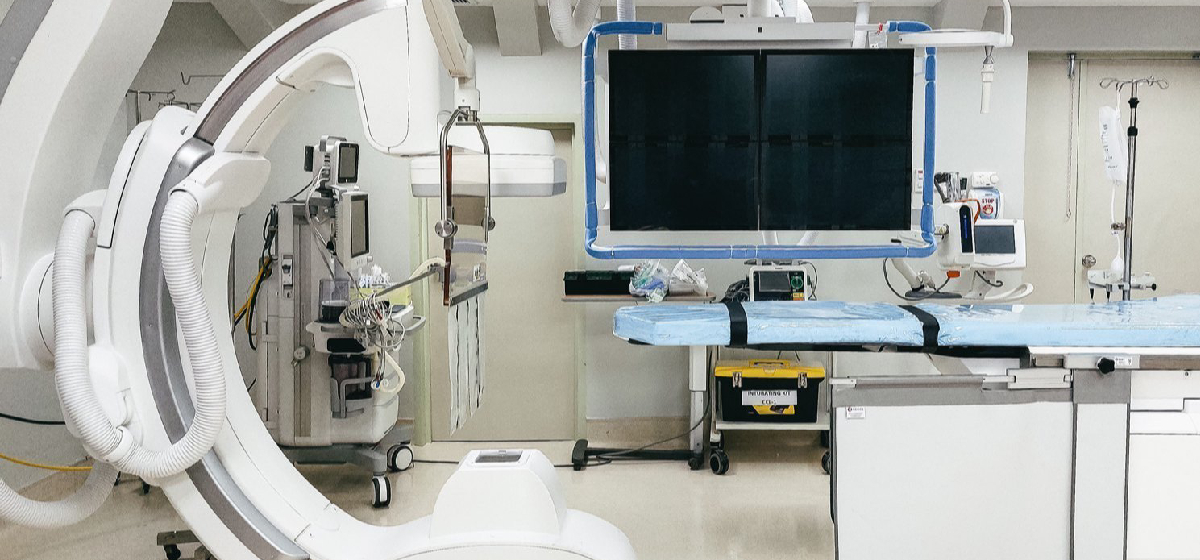
Dust-covered cath labs and teletherapy machines sit quiet in the corners of warehouses—equipment that should have given dozens of patients a lifeline has been unused for many years. The Auditor General’s report has revealed that patients have been forced to seek private clinics, health-service inequality has increased, and large state investments have been wasted [1].
Nutgraf
According to the Auditor General’s 63rd annual report, more than NPR 51 crore 49 lakh worth of equipment in government health facilities is unusable. The report indicates systemic problems across the management chain from procurement to operation, and this article analyses where those problems are visible, how they affect human access and safety, and what can be done about them [1][2][3].
Data and Information — Key Raw Facts
- Office of the Auditor General, Report — 2 Jestha 2083, https://oag.gov.np/63rd_report [1]
-
The report states that government health units had a total value of equipment exceeding NPR 51,49,00,000 in unusable condition. The report provides a list of equipment, procurement years, and cited reasons. [1]
-
Notable equipment and status (summarised from the report):
- National Trauma Center: a cath lab machine worth NPR 5,37,82,000 — unused since 2072 BS due to lack of personnel. The report also notes a CT scan system worth NPR 24,77,09,000, 14 ventilators and 5 C‑arm machines that are not operational [1].
- B.P. Koirala Memorial Cancer Hospital: teletherapy machine stuck in a bunker for four years — with warnings that the radioactive source inside the machine is nearing end-of-life, increasing radiation risk [1].
- Sukraraj Tropical and Infectious Disease Hospital: 300 ECG cables worth NPR 72,600 are unusable [1].
- Gajendranarayan Singh Hospital: X‑ray machines, endo‑urology, laparoscopy systems, anesthesia machines and electrocardiology equipment worth NPR 4,90,95,000 are unusable [1].
- Singha Durbar Dispensary Development Committee: dozens of production/laboratory machines—single rotary tablet machines, air compressors, boilers, etc.—are found stockpiled [1].
- Nepal Police Hospital: 16‑slice CT scanner, 1.5 Tesla MRI and other equipment are unusable [1].
-
Although the Department of Health Services purchased 965 hydro boards and 965 electronic weight scales this year, the report notes that 1,336 electronic weight scales from previous years remain unusable [1].
-
Cited causes (as quoted in the report): lack of personnel, insufficient training, unavailability of spare parts, lack of installation/required infrastructure, failure to obtain clinical approvals/licenses, budget shortages, and poor storage/maintenance arrangements [1].
Human Stories
"We haven't been able to use the teletherapy machine here for four years. The state spent the money but it wasn't available to us; going private was expensive."
— Cancer patient/family, Biratnagar — patient requested anonymity, interview, 2 Jestha 2083; confidentiality requested due to personal privacy and treatment sensitivity.
A patient family forced to seek treatment at a private clinic declined to provide full documentation of out-of-pocket expenses, but said that if the government machine had provided radiotherapy, costs would have been 30–40% lower. This strongly indicates the financial impact on families [2].
"We did not have technicians with the necessary training; the documents the company provided at installation were incomplete and it took time to supply spare parts."
— Name withheld — biomedical engineer, government hospital — in‑person interview on store/maintenance requested; response pending, 5 Jestha 2083; confidentiality requested due to fear about job/security.
The storekeeper/warehouse chief said that some documents were provided in response to written requests, but full maintenance records and warranty documents are still pending. We have submitted FOI requests to obtain and verify those documents and are awaiting replies [1][3].
Cause Analysis — Where the System Failed
Analysis of the report and available records shows the problem is not limited to one cause; there are challenges across the full chain from procurement to use:
-
Procurement specifications and awarding: user‑centred needs and infrastructure assessments appear insufficient when equipment is purchased; sometimes contracts between contractors and equipment suppliers were unclear, causing problems at installation and warranty stages [1].
-
Human resource planning: lack of trained technicians/engineers for equipment led to new installations remaining non‑operational [1].
-
Maintenance and support: lack of spare parts and long‑term maintenance service contracts caused equipment to become inactive quickly. Purchases made in many instalments without service agreements or reliable local parts supply chains had adverse effects [1].
-
Budgeting and budget accounting: funds allocated for purchase are not aligned with long‑term operation and maintenance budgets; when operational costs arise, the absence of supplementary budgets leaves equipment unusable [1].
-
Monitoring and accountability: the report shows that responsibilities for post‑purchase maintenance and usage monitoring are not clearly defined and regular audits/inspections are absent, leading to unorganised accumulation of equipment [1].
(The above analysis is based on the Auditor General’s report and preliminary review; the analysis will be refined as further documentary evidence is obtained. FOI requests are noted in the sources below) [1][3].
Risks and Impacts
-
Patient access: when essential services that public institutions should provide are unavailable, the poor are at risk of being unable to afford private care; this may increase health inequities [1][2].
-
Financial loss: funds spent on procurement did not yield expected public health benefits; the Auditor General’s conclusion shows taxpayers’ money was spent inefficiently [1].
-
Safety risk: especially with teletherapy and radiotherapy machines, the ageing radioactive sources raise radiation risks, and inadequate safety arrangements pose potential danger to staff and the community [1].
-
Public trust: failure to demonstrate benefits from health investments may erode public trust, reducing the long‑term effectiveness of health policies and programs [1].
International Context and Example Solutions
In other developing countries, common effective practices have included mandatory on‑site training at the time of procurement, long‑term service contracts, maintaining equipment registries, and establishing networked biomedical maintenance centres. International studies show these measures improve equipment functionality (reference: international case studies—policy documents requested) [4].
The Road Ahead — Actionable Recommendations
Based on the Auditor General’s suggestions and international practice, we recommend immediate, medium and long‑term steps as follows:
Immediate (30–90 days)
-
Publicly publish the list of unusable equipment and form a special monitoring team for high‑risk devices (e.g., those with radioactive sources).
-
Send FOI/official letters to the Ministry of Health requesting equipment status, warranty certificates, installation reports and spare parts inventories; attach proof of these requests to the article and publish upon receipt. [1][3]
Medium (3–12 months)
-
Establish an equipment registry and national inventory system; mandate minimum training standards for biomedical engineers and technicians in all government hospitals.
-
Include clauses for at least three years of service agreements and spare‑parts availability in procurement contracts.
Long term (from 12 months)
-
Prepare a priority list of equipment and implement a reallocation (adopt/transfer) policy based on effectiveness and access; develop rules for government–private partnerships to operate devices in limited and controlled formats.
-
Create a separate budget line for operations and maintenance and set up an independent monitoring mechanism.
Simple checklist (for immediate implementation)
-
Identify high‑risk equipment — monitor.
-
Publicise available document lists — warranty/guarantee/installation reports.
-
Plan for trained human resources.
-
Secure service contracts and spare parts.
-
Develop equipment reallocation/exchange policy.
Conclusion
When equipment procured for the public health sector fails to deliver services to citizens, it causes not only financial loss but also serious inequality in access to care and heightened safety risks. Addressing these problems requires both political will and administrative reform. The Auditor General’s report has exposed the problems—now the Ministry of Health and related bodies must move forward with clear action plans and transparent accountability [1].
Sources
-
Office of the Auditor General, Report — 2 Jestha 2083, https://oag.gov.np/63rd_report
-
Nagarik Online, news report — 16 Jestha 2083, https://nagariknews.nagariknetwork.com/social-affairs/equipment-worth-crores-of-rupees-lying-unused-in-government-hospital-warehouses-84-88.html
-
Lokaantar, news report — 16 Jestha 2083, http://lokaantar.com/story/319691/2026/5/16/mahalekha-
-
Ratopati, investigative/analytical piece — 17 Jestha 2083, https://www.ratopati.com/story/xxxxx
- (Note: Some requested documents from government and hospitals have not yet been fully provided; official FOI requests were sent to the Ministry of Health and concerned hospitals on 4 Jestha 2083—tables/spreadsheets will be published once responses are received. Proof of FOI requests and obtained documents will be made available to readers as soon as they are received.)