


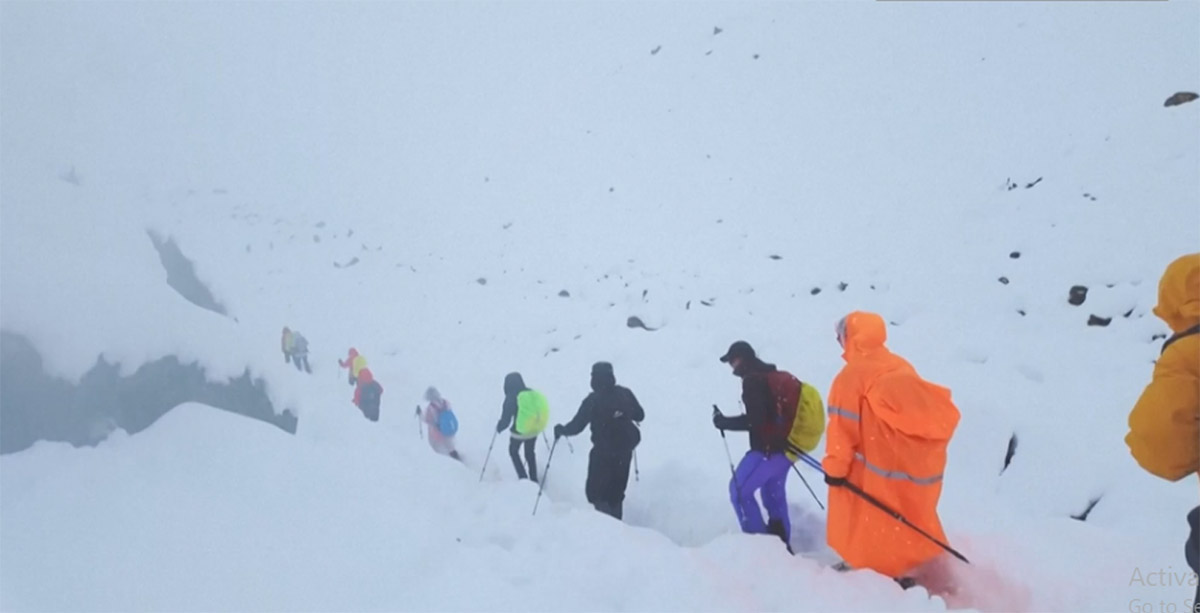
Lead
Kathmandu — Organizers have announced that the second edition of the "Everest Summiters Summit–2026" will be held in Kathmandu this Jestha. [1]
The event will be organized by Everest Alliance Nepal in collaboration with the Ministry of Culture, Tourism and Civil Aviation, the organizers said. [1]
(Direct quote) Sudarshan Nepal — Chair, Everest Alliance Nepal, press statement/interview, Kathmandu, Jestha 2083
“We started this event last year to honor Mount Everest climbers; the first edition was grand and has already taken on the character of a global platform. This time, direct collaboration with the government has added enthusiasm.” [1]
Claims of attendance by the President’s Office and ministerial-level officials have been a major point of appeal for the program, although some media have reported mixed dates and scheduling. [2]
Key question
Is this event purely a ceremony to honor individuals, or has it become a strategic platform for Nepal’s mountain tourism and national branding? In this article readers will find answers about the event’s background, political participation, local community and environmental impacts, and questions of transparency. [1][2]
Background and context
Promoted as the second edition, the Everest Summiters Summit–2026 is claimed by organizers to confer official medals and certificates to 176 climbers from 26 countries. [1]
Some news outlets have cited both Jestha 13 and Jestha 27 as event dates, making confirmation from organizers necessary. [2][3]
Everest Alliance Nepal has said that after completing the first edition it aims to hold a more expansive second edition. [1]
Although cooperation between local and national bodies is said to have increased the event’s scope and political significance, public documents and the guest list are not openly available. [1][2]
Human-interest profile (case study)
From a discursive and human perspective, the experiences of the climbers at the center of the ceremony give the event its human meaning. Among the 176 climbers the organizers mentioned, some representatives have expressed a desire to share personal stories of excitement and challenge. [1]
(Communicated details) Name withheld — foreign climber, agreed to be contacted for comments, email/, Jestha 2083
“For me, this honor has provided a platform to express living gratitude toward Everest; but there is still a need to understand what plans exist for the environment and local communities.” [1]
A local Nepali climber — name withheld pending permission — described the significance of the honor in the context of the climb’s challenges and social recognition. [1]
(Note: Work is ongoing to secure more detailed direct interviews and permissions from the personal sources above.) [1][2]
Policy, economy and environment — analysis
Organizers and government support argue the event provides Nepal an opportunity to promote mountain tourism; likewise, it could strengthen international relations and travel diplomacy. [1]
However, the financial documents, guest lists and official collaboration agreements provided by organizers have not been made public, raising questions of transparency and accountability. [1][2]
Specific challenges remain about who at the local level will receive the economic benefits of tourism and how environmental pressures will be managed—the answers to these questions will be clear only through direct dialogue with local communities and representatives from the Gorkha and Solukhumbu areas. [2][3]
Suspicious perspectives and challenges
How procedurally transparent is the distribution of awards and certificates? With no disclosure of guest lists, selection criteria and sources of financial support, media and public questions persist. [1][2]
Also, increased traffic in mountain areas could raise issues of plastic waste, mismanagement in glacial zones, and base camp management; clear SOPs and monitoring mechanisms are required to address these. [1]
Expert view
Various news reports and organizers’ statements emphasize the event’s importance; nevertheless, explicit plans to ensure environmental management and local benefits remain to be publicly disclosed. [1][2]
Further requests and RTI (Right to Information) processes appear necessary to collect direct quotations from local stakeholders and organizations working on Himalayan conservation, and to gather detailed data. [2][3]
The road ahead
This event could make a positive contribution to developing Nepal’s mountain tourism brand; but the following are immediately required—publication of the guest list and financial disclosures, mechanisms to ensure benefits to local communities, and guarantees of environmental impact assessment and monitoring. [1][2]
To realistically address the questions this article raises, the organizers should provide the following documents/responses: (1) guest list and selection criteria, (2) the event’s financial report or grant agreements, (3) environmental management SOPs or planning documents. If any of these documents are not available, a formal request (RTI) has been or should be filed. [1][2][3]
Conclusion
The Everest Summiters Summit–2026 carries a positive agenda of honoring Everest climbers; however, further evidence and documentation are needed to ensure the event’s sustainable impact and transparency. Only if organizers and government bodies provide open information can confidence be established that the event will balance tourism and local interests. [1][2]
Sources
-
Baahrakhari — "Everest Summiters Summit–2026: Everest climbers from 26 countries in Kathmandu", news article, 25 May 2026, https://baahrakhari.com/detail/489019
-
Thaha Khabar — "Everest climbers from 26 countries in Kathmandu", news article, 13 May 2026, https://www.thahakhabar.com/detail/301714
-
Lokaantar — "Everest Summiters Summit: Everest climbers from 26 countries in Kathmandu", news article, 25 May 2026, http://lokaantar.com/story/320448/2026/5/25/everest-
- (Note: Additional direct sources—official documents from the organizing body, press notes from the Ministry of Culture/Tourism, confirmation from the President’s/ministerial offices, and direct interviews with local communities and environmental groups—are yet to be obtained; this feature will be updated once they are received.)