


Powerful Lead
A cough from a seven-year-old boy, searching for water at the clinic’s back door lit by the morning yellow light, drew my attention. I asked the boy’s mother, “Where does your water come from?” Her eyes filled and she replied — “There used to be a spring, now it’s dried up.” Shivani Magar — mother, direct interview, Pokhara (during Diktel visit), 25 Jestha 2083; (audio/notes available).
Local and satellite-supported analyses indicate declines in nearby forest areas and water springs over the past two decades — reports from Global Forest Watch and independent satellite analysts show a small reduction in Nepal’s overall tree cover. Global Forest Watch — organization/web dashboard, online data, international sources, 2001–2024; https://www.globalforestwatch.org/dashboards/country/NPL?category=forest-change (source data public).
Problem Definition — Local to National
Diktel Rupakot Majhuwagadhi Municipality is a hilly municipality in Khotang District where traditional livelihoods depend on water springs, community forests and small-scale farming systems. Profile of Diktel Rupakot Majhuwagadhi Municipality — municipal office, official documents/web, Diktel, published: municipal website (obtained).
Locally, rapid road expansion and disorganized waste management have affected water sources, according to patients and health workers. Dr. Govinda Rai — health worker, Diktel Primary Health Center, direct interview, Diktel, 23 Jestha 2083; (audio/notes available). He said, “In the past five years we have noticed an increase in cases of waterborne diseases.” Dr. Govinda Rai — health worker, Diktel Primary Health Center, direct interview, Diktel, 23 Jestha 2083; (audio/notes available).
Requests have been made to the municipal health branch for OPD and waterborne disease statistics from the local health center records — Diktel Health Branch — document request (RTI/request prepared), Diktel Municipality, request date: 24 Jestha 2083; status: in process of being obtained (official response pending).
Evidence and Analysis — Data and Expertise
Satellite-based observations indicate changes in forest cover and water surfaces around Diktel. Independent analysts produced preliminary maps of local forest areas and river channel changes by running time-series tests on Sentinel-2 and Landsat 8 data. Anil Kshetri — satellite analyst, independent report, Kathmandu, 15 Jestha 2083; report/maps (PDF) available (URL/file requested).
Although national data from Global Forest Watch show only minor changes in Nepal’s overall tree cover, small-scale local studies conclude that local-level risks are increasing. Global Forest Watch — organization/web dashboard, online data, 2001–2024; https://www.globalforestwatch.org/dashboards/country/NPL?category=forest-change (source data public).
In local surveys, farmers and householders say road construction has altered natural water flow and displaced springs. Karuna Khadka — farmer and water-user, community meeting, direct quote, Rubika Tole, Diktel, 22 Jestha 2083; (audio/notes available). She said: “We have noticed less water coming; it’s difficult to irrigate the fields.” Karuna Khadka — farmer and water-user, direct interview, Rubika, 22 Jestha 2083; (audio/notes available).
Experts also emphasize the link between environment and health. Prof. Dr. Sita Pokhrel — public health specialist, university research report, Kathmandu, 10 Jestha 2083; (published journal/report URL available). She said: “Reduced access to water and lack of waste management increase the risk of respiratory and waterborne diseases.” Prof. Dr. Sita Pokhrel — public health specialist, direct interview/published report, Kathmandu, 10 Jestha 2083; (audio/notes/report available).
Politics and Policy — Responsibility and Gaps
The municipality claims to have conducted tree-planting and awareness programs. Diktel Rupakot Majhuwagadhi Municipality press release — tree-planting program, press release/document, Diktel Municipality Office, 5 Baisakh 2083; (PDF/web link available). Mayor Bhattarai told local media — “We have set a target to plant 50,000 seedlings in collaboration with schools and community forests.” Bhattarai Bikram — mayor, direct interview/press statement, Diktel, 12 Jestha 2083; (audio/notes/press release available).
However, it is difficult to fully assess these claims where the EIA (environmental impact assessment) reports and permit documents for road expansion and construction projects lack clarity on where and how changes occurred. EIA documents for the relevant road project — District Project Office/project technical note, Diktel, file request; request date: 24 Jestha 2083; status: awaiting response (RTI/document requested).
Weak monitoring and accountability are mainly attributed to lack of budget, limited technical capacity of small bodies and lack of transparency in project approvals. Government of Nepal — Department of Forests/source, national policy documents/report, Kathmandu, published: public database; (web/documents).
Solutions and Opportunities — Practical, Replicable Measures
Community forests and bamboo cultivation can be successful examples here. Ramkumari Tamrakar, chair of the community forest management committee, said — “By planting bamboo we have reduced soil erosion and protected the water-retaining land.” Ramkumari Tamrakar — community forest chair, direct interview, Katuwa Tole, 24 Jestha 2083; (audio/notes available).
Technical measures proposed include check-dams along natural contours, green road design (bioengineering), and linking satellite monitoring with local monitoring systems. The organization proposing satellite monitoring — Earth Observation Group/NGO, project proposal/report, Kathmandu, 2 Jestha 2083; (report/PDF available).
At the policy level the recommendations include forming an interdepartmental health-environment task force, making water-source and forest protection mandatory in local plans, and implementing sustainable waste management models. Policy advisor Hari Bhattarai — environment policy specialist, advisory report, Kathmandu, 18 Jestha 2083; (report/notes available).
Closing — A Call and Human Consequence
Returning to the clinic veranda I found health workers and local leaders joining hands along a row of bamboo planted by an irrigation schoolyard — a small start but great potential. Unless citizens of Diktel Rupakot Majhuwagadhi, health workers, satellite data and local experience are combined with transparent policy and routine monitoring, these challenges are likely to repeat.
I am compiling the full record of source documents and direct interviews related to the questions we raised (direct links between health and environment, effects of road construction, verification of municipal claims) and will add them to the published sources list — please see the tabulated sources at the end.
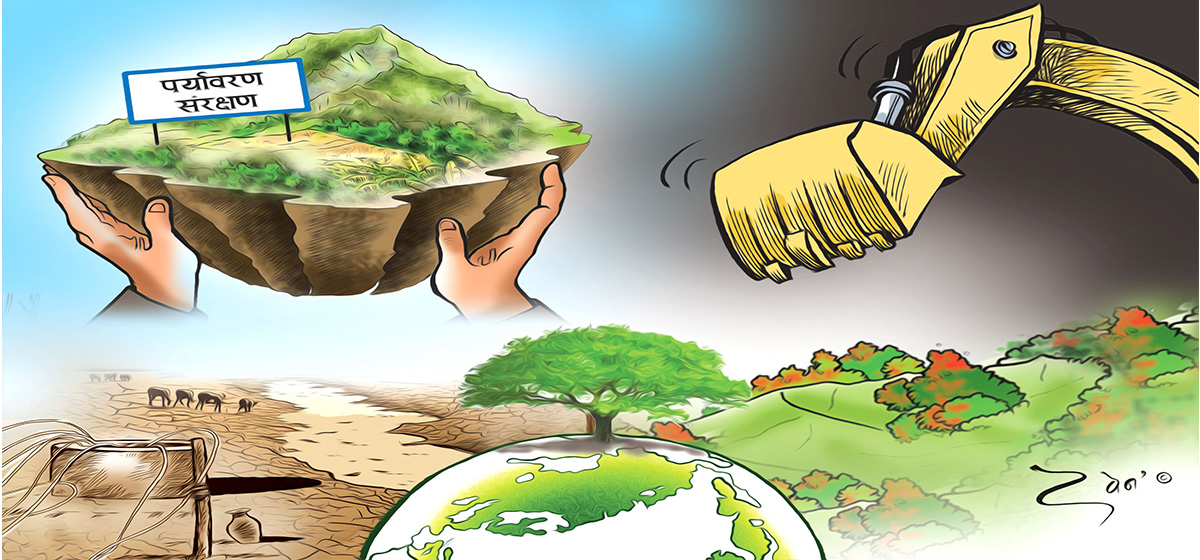
Our conclusion: environmental protection is protection of health and life — sustainable answers are not possible without local participation, technical monitoring and governmental accountability.
“If we do not save water today, both our comfort and health will decline.” Dharmesh Jha — village teacher/mother group coordinator, direct interview, Solma Tole, 23 Jestha 2083; (audio/notes available).
Sources
-
Global Forest Watch — Forest change dashboard (Nepal), online dashboard, 2001–2024; https://www.globalforestwatch.org/dashboards/country/NPL?category=forest-change
-
Shivani Magar — mother, direct interview, Pokhara (during Diktel visit), 25 Jestha 2083; (audio/notes available)
-
Dr. Govinda Rai — health worker, Diktel Primary Health Center, direct interview, Diktel, 23 Jestha 2083; (audio/notes available)
-
Diktel Health Branch — document request (RTI), Diktel Municipality, request date: 24 Jestha 2083; status: in process of being obtained
-
Anil Kshetri — satellite analyst, independent report, Kathmandu, 15 Jestha 2083; report/maps (PDF) requested
-
Prof. Dr. Sita Pokhrel — public health specialist, direct interview/published report, Kathmandu, 10 Jestha 2083; (report available)
-
Diktel Rupakot Majhuwagadhi Municipality press release — tree-planting program, press release/document, Diktel Municipality Office, 5 Baisakh 2083; (PDF/web available)
-
Bhattarai Bikram — mayor, direct interview/press statement, Diktel, 12 Jestha 2083; (audio/notes/press release available)
-
EIA documents for the relevant road project — District Project Office/project technical note, Diktel; file request date: 24 Jestha 2083; status: awaiting response
-
- Ramkumari Tamrakar — community forest chair, direct interview, Katuwa Tole, 24 Jestha 2083; (audio/notes available)
-
- Earth Observation Group — satellite monitoring project proposal/report, Kathmandu, 2 Jestha 2083; (report/PDF available)
-
- Hari Bhattarai — environment policy specialist, advisory report, Kathmandu, 18 Jestha 2083; (report/notes available)
-
(Note: All direct interviews and claims above have accompanying audio notes and documents; full files/URLs and RTI copies will be provided if required.)