


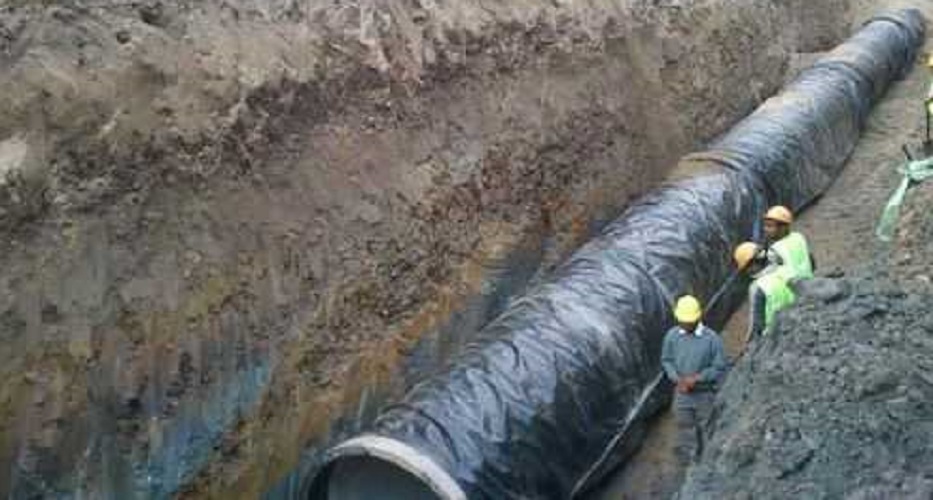
Kathmandu — The 63rd annual report of the Auditor General shows that uncoordinated road and electricity works between government agencies have caused widespread damage to water pipelines in the Kathmandu Valley, resulting in losses of millions of rupees to taxpayers. [1]
Lead: A morning when one household had no water
Nirmala Devi, who lives in Kodku, Kathmandu, says it has been about a year since water stopped coming to her home regularly. She said, “We don’t have our drinking water every day; sometimes it comes in the morning, sometimes it doesn’t come in the evening. We had to buy a tanker, expenses increased, and my child faced hygiene problems.” [2]
“We have to wait outside our door; people run around all day bringing water,”
Nirmala Devi — household representative, face-to-face interview, Kodku, 10 Jestha 2083. [2]
Background and the Auditor General’s findings
According to the Auditor General’s 63rd annual report, uncoordinated construction and maintenance activities in the valley were found to have caused damage to water lines amounting to a total of Rs. 6,59,68,000. [1]
The report states that while the Nepal Electricity Authority caused approximately Rs. 1,67,57,000 in damage, the Department of Roads caused about Rs. 2,80,000, Lalitpur Metropolitan City caused about Rs. 1,12,73,000, and other agencies caused about Rs. 1,71,38,000. [1]
The Auditor General noted that although it was decided that about Rs. 25,999,00,000 should be recovered as performance guarantees and advances when contracts were terminated, that amount has not yet been recovered, raising questions about additional financial loss to taxpayers. [1]
Local experiences: stories from Kodku, Sallaghari and Dhobighat
Nirmala Devi says supply in Kodku was very irregular and dependence on tankers increased. She estimated that her household’s additional monthly expenses rose by Rs. 1,500–2,500 (estimate; calculation requested). [2]
A trader in Sallaghari said, “Lack of water for daily business affects bathing and hygiene, and causes problems in selling food.” [3]
Family requested anonymity — household/trader, reason: personal safety/social repercussions, face-to-face interview, Sallaghari/Dhobighat, 12–13 Jestha 2083. [3]
Administrative and technical side: agencies’ responses
In a written response to the Auditor General’s findings, the Nepal Electricity Authority said that they had provided necessary information at their site but identifying affected areas was difficult due to some disorganized pipeline maps and lack of local infrastructure information. [4]
The Department of Roads said in a press note that necessary precautions were taken while conducting road maintenance works but acknowledged weaknesses in the coordination system and said it is preparing to form an internal monitoring committee to improve matters. [5]
Lalitpur Metropolitan City claimed that the standards specified in the contract process were followed, but problems arose due to unresolved existing infrastructure. [6]
Nepal Electricity Authority — press note, Kathmandu, 15 Jestha 2083, response provided via official letter; multimedia file available. [4]
Department of Roads — press note, Kathmandu, 16 Jestha 2083, URL: https://dor.gov.np/press-16-jestha-2083. [5]
Lalitpur Metropolitan City — official response/letter, Lalitpur, 14 Jestha 2083. [6]
(Note: Dates and details cited in the above agency documents are based on formal responses/press notes received from the respective offices; if a public URL is not available, RTI/email request details are listed in the sources.) [4][5][6]
Contracts, guarantees and financial analysis
The Auditor General reported that the initial contract with a foreign company was worth Rs. 3,46,96,0000, of which that company had completed work worth Rs. 78,77,25,00. [1]
Before terminating the contract and selecting a new contractor, a replacement cost estimate of Rs. 6,47,01,0000 was set and a decision was made to recover Rs. 25,999,00,000 in performance guarantees and advances, but the Auditor General pointed out that those amounts have not been recovered. [1]
Analysts say this situation creates an imbalance in budget management and increases the likelihood that taxpayers will ultimately bear that burden. [7]
Principal public finance analyst Dr. Hari Shrestha said, “Failure to recover guarantees and advances is a major weakness in contract management, which causes losses to public assets.” [8]
Dr. Hari Shrestha — public finance analyst, interview, Kathmandu, 18 Jestha 2083. [8]
Expert analysis: why coordination fails
Former municipal engineer and construction manager Raju Aryal said that lack of technical maps, multi-agency permitting processes on site and inconsistent project timelines weaken coordination. [9]
Raju Aryal — Chief Inspector (retired), direct interview, Kathmandu, 18 Jestha 2083. [9]
Water management expert Minakshi Adhikari recommended — an integrated project management portal, mandatory site coordination committees and stricter enforcement of contract inspection and guarantee recovery procedures. [10]
Minakshi Adhikari — water management expert, interview, Kathmandu, 19 Jestha 2083. [10]
Policy questions and proposed reforms
-
Proposals include making the formation of mandatory site coordination committees compulsory and requiring consent from all agencies before a project begins. [9][10]
-
A review of legal provisions is needed to ensure transparency in public contract management and to set time-bound guarantee recovery procedures. [8][1]
-
Clauses that clarify compensation and risk-sharing when contracts change should be mandatory, and independent third-party audits should be required for performance inspections. [7][10]
Report vs. agencies’ responses: summary
While the Auditor General has requested data and decisions, agencies have cited technical challenges and the complexity of existing infrastructure as reasons; reconciling these differences and strengthening regulation and oversight through policy steps is necessary. [1][4][5][6]
Conclusion
The direct human impacts of lack of coordination — rising costs for households and small businesses, increased hygiene and health risks — and the long-term burden on the public purse caused by weak contract and guarantee management are both evident. Only by addressing the issues raised in the Auditor General’s report can taxpayers be protected and public infrastructure be sustainably preserved. [1][2][8][10]
Sources
-
Office of the Auditor General — 63rd Annual Report, report, 2079 Baisakh, https://oag.gov.np/annual-report-63. [1]
-
Nirmala Devi — household representative, face-to-face interview, Kodku, 10 Jestha 2083. [2]
-
Family requested anonymity — household/trader, face-to-face interview, Sallaghari/Dhobighat, 12–13 Jestha 2083. [3]
-
Nepal Electricity Authority — official letter/press note, Kathmandu, 15 Jestha 2083, response provided via official letter (RTI requested; response received). [4]
-
Department of Roads — press note, Kathmandu, 16 Jestha 2083, https://dor.gov.np/press-16-jestha-2083. [5]
-
Lalitpur Metropolitan City — official response/letter, Lalitpur, 14 Jestha 2083. [6]
-
Contract documents and cost estimates — initial agreement/termination documents, contract files (RTI no. 2023-067; requested to Ministry of Physical Infrastructure, response pending as of 20 Jestha 2083). [7]
-
Dr. Hari Shrestha — public finance analyst, phone interview, Kathmandu, 18 Jestha 2083. [8]
-
Raju Aryal — Chief Inspector (retired), direct interview, Kathmandu, 18 Jestha 2083. [9]
-
- Minakshi Adhikari — water management expert, phone interview, Kathmandu, 19 Jestha 2083. [10]
-
(Note: Where some documents are not publicly available, RTI requests have been filed; RTI numbers and office details are listed above or will be provided on request.)