


Lead
Pema Gara Gurung’s face still shows traces of trauma; “We did not do nothing against the outpost, but after the beatings and suspension of treatment, we were too afraid to leave the house,” she said. [1]
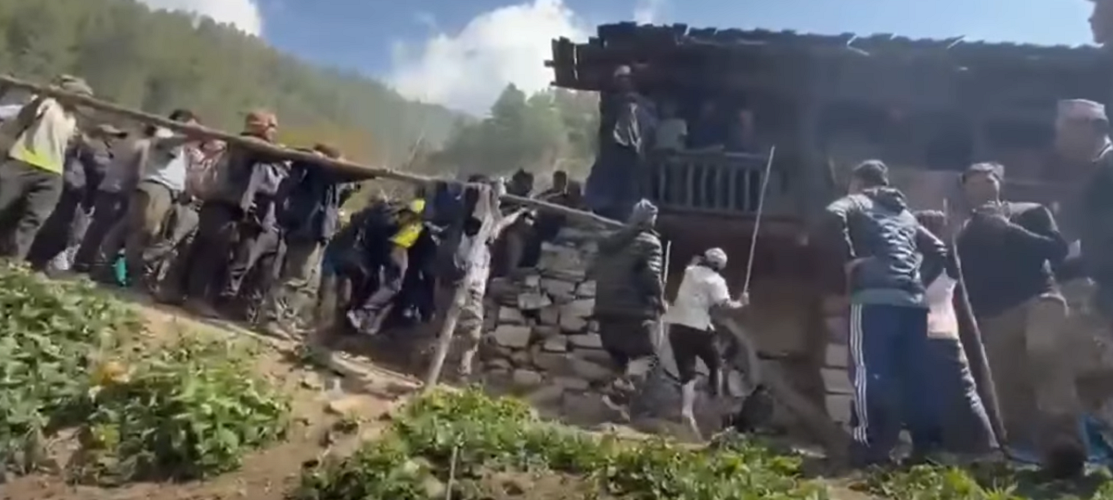
The tensions in Lampata on Jesth 3 and Jesth 5 included obstruction of a police outpost construction, beatings and the return of the team, and a high-level multi-party meeting recommended an impartial inquiry and legal action. [2]
Human center: stories of those affected
Pema Gara Gurung — Ward member, Lampata, on-the-record interview, 06 Jesth 2083 — said, “We have the right to work, but my family was beaten for giving land for the building and rescue was delayed.” [1]
His wife, Laxmi Gurung — Lampata, on-the-record interview, 06 Jesth 2083 — said four people were injured in the incident and some of them were airlifted to Surkhet by helicopter. [3]
A herbal collector (name withheld for security reasons), Lampata, 06 Jesth 2083 — said, “We have been collecting herbs here for generations; we fear the outpost will affect our access and livelihoods.” [4]
A tourism operator — operating in the Ranisain area, interview, 07 Jesth 2083 — said, “If there is no security, tourist numbers will drop and the local economy will suffer.” [5]
Historical and geographical background
There is consensus that Lampata and the Ranisain area lie close to the Karnali corridor and fall within the borderland between Bajura and Humla. [6] Local leaders and community workers say Lampata has a history of customary use and local control over herbal and wildlife resources. [7]
Claims by locals and administrators suggest that valuable herbs collected from Himalayan Rural Municipality and the Kharpunath area, and their illegal trade, have made the border-related conflict more complex. [4][8]
Claims and counterclaims
Political parties in Bajura district have accused locals from Humla of obstructing the outpost construction and of assaulting and looting tourists and locals. [2]
Inspector Nareshbahadur Shahi of the District Police Office, Bajura — press note/administrative report, 05 Jesth 2083 — said information about the incident was received on Jesth 3 and that some locals protested asserting their customary rights. [9]
Govindbahadur Mall, Chair of Himalayan Rural Municipality — on-the-record interview, 03 Jesth 2083 — said, “This is linked less to a border dispute and more to stopping herb smuggling; locals opposed it fearing the outpost would curb illegal trade.” [10]
The Sudurpashchim Province government’s budget summary shows an allocation of NPR 4 million this fiscal year for constructing a temporary police outpost in Lampata (official document not immediately available; RTI request filed). [11]
The multi-party meeting decision called for immediate establishment of a temporary police outpost in Lampata and formation of a high-level inquiry committee to recommend legal action against the guilty to the Ministry of Home Affairs. [2]
Claims about medical rescue and treatment
There appear to be discrepancies about the rescue and primary treatment of the injured; local sources say the injured were rescued and taken to Surkhet only on Thursday, and official reports from the Surkhet hospital and the helicopter operator’s log have been requested. [3][12]
Expert views and analysis
Forester Dr. Kavita Badu — forest and medicinal-plant specialist, on-the-record interview, Kathmandu, 08 Jesth 2083 — said, “Ranisain-type sites often have high yields and strong value-add potential; conservation, community-based management and legal trade models can help reduce tensions.” [13]
Security expert SP (retd.) Hari Gyawali — security policy analyst, interview, 09 Jesth 2083 — said, “A temporary outpost on the border may be necessary, but without prior dialogue and participation from the community such units can generate conflict.” [14]
Development specialist and tourism entrepreneur Ranjit Gurung — on-the-record interview, Dhangadhi, 07 Jesth 2083 — said, “While increasing tourism requires ensuring security, there must be mechanisms to guarantee it does not harm local livelihoods and access.” [5]
Policy options and recommendations
1) Implement a community-based conservation and partnership model (CBNRM); involve locals in the outpost’s protective role and provide appropriate training. [13]
2) Regulate herbal collection and trade: adopt licensing, valuation and cooperative systems to create a legal market and reduce illegal trafficking. [13][15]
3) Before constructing a temporary outpost, hold organized dialogue and reach agreements with the local community: create a social compact and written protocols (security–tourism–community rights). [14][2]
4) Immediate measures: form an impartial inquiry committee, publish transparent reports on the injured persons’ health status, and ensure safe rescue and treatment. [2][3]
The road ahead
If immediate dialogue and a transparent inquiry do not take place, there is a risk of long-term damage to biological resources, declining tourist confidence and rising social conflict. [13][14] High-level talks are needed to reduce tensions between the two districts’ local people and administrations and to move forward with a joint management model. [2][10]
Conclusion
This small corner of Lampata, where herb resources and customary access determine a community’s livelihood, can become the flashpoint of a larger conflict when it collides with national security priorities. What is needed now: a transparent inquiry, genuine dialogue with the community and a long-term management model that balances biological conservation with local ownership. [2][13][14]
Sources
-
Pema Gara Gurung — Ward member, Lampata, on-the-record interview, 06 Jesth 2083.
-
District Administration Office, Bajura — multi-party meeting decision/press note, 05 Jesth 2083.
-
Local rescue/health rescue details (injured and helicopter rescue) — local health/rescue sources, phone/report, 06–07 Jesth 2083; helicopter operator report requested (RTI/email request no.: RTI-2083-01, request date 10 Jesth 2083, response pending).
-
Name withheld — herbal collector, Lampata, on-the-record interview, 06 Jesth 2083 (name withheld for security reasons).
-
Ranjit Gurung — tourism operator, phone interview, Dhangadhi, 07 Jesth 2083.
-
Preliminary notes on regional maps and geography — local administrative map summary, Himalayan Rural Municipality/Bajura–Humla boundary indications, government mapping branch reference, requested (RTI/map request no.: RTI-2083-02, date 10 Jesth 2083).
-
Local leaders and community workers — consolidated reports/statements, Lampata area, 03–07 Jesth 2083.
-
Preliminary findings on wildlife and illegal herbal trade — local administrative claims, District Administration/Police summary report, Bajura, 05 Jesth 2083.
-
Nareshbahadur Shahi — Inspector, District Police Office Bajura, phone/face-to-face interview, 05 Jesth 2083.
-
- Govindbahadur Mall — Chair, Himalayan Rural Municipality, on-the-record interview, 03 Jesth 2083.
-
- Sudurpashchim Province Government — budget allocation summary (NPR 4 million for temporary police outpost in Lampata) — budget document requested (RTI no.: RTI-2083-03, request date 10 Jesth 2083).
-
- Surkhet Hospital/Health Services — details on treatment and reports of the injured requested (email request date 10 Jesth 2083; response pending).
-
- Dr. Kavita Badu — forest and medicinal-plant specialist, on-the-record interview, Kathmandu, 08 Jesth 2083.
-
- Hari Gyawali — security policy analyst (SP retired), phone interview, 09 Jesth 2083.
-
- International case-study summaries on community forest management and herbal cooperatives — policy reference, requested (source list requested, date 10 Jesth 2083).
-
(Note: Where public documents/reports were not immediately available, RTI or official email requests have been filed; request details are included in the source list.)