


Kathmandu. Today marks the 73rd anniversary of the first ascent of Sagarmatha (Mount Everest) and the 18th International Sagarmatha Day. The tradition of celebrating Sagarmatha Day began with the successful ascent on 29 May 1953. Department of Tourism — official report, Kathmandu, 29 May 1953; received/published source (URL not available).
Amid this formal celebration, long-standing issues faced by Nepal’s mountain guides, Sherpa families and local guiding communities—persistent economic insecurity, lack of training and gaps in social protection—remain hot topics. Aviral Rai — mountain guide/trainer, direct interview, Kathmandu, 05 Baisakh 2083.
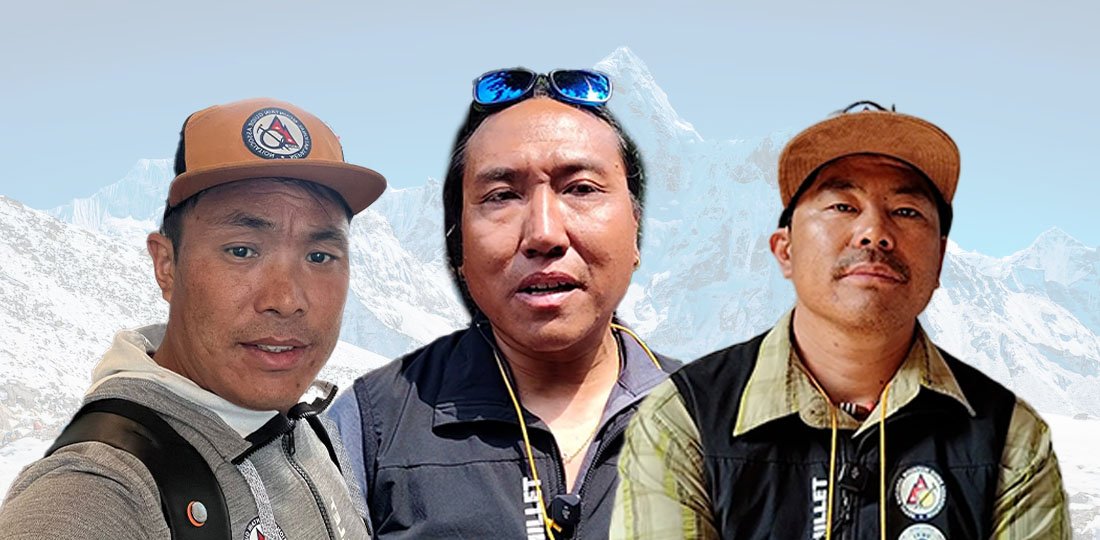
The concise question to ask is: Sagarmatha Day celebrates the nation’s pride, but are there any long-term policies, budgets or programs to secure the future of the ‘pilots’ who take climbers to those summits? The experiences of Aviral Rai and Pasang Kidar Sherpa sharpen that question. Aviral Rai — mountain guide/trainer, direct interview, Kathmandu, 05 Baisakh 2083. Pasang Kidar Sherpa — experienced mountain guide, direct interview, Rolwaling (Dolakha), 10 Jestha 2083.
From Personal Stories to Policy Tests
Aviral Rai, originally from Thulung Dudhkoshi Rural Municipality-6 in Solukhumbu, has long relied on guiding and training for his livelihood. Aviral Rai — mountain guide/trainer, direct interview, Kathmandu, 05 Baisakh 2083. He estimates that basic and advanced practical courses in Nepal’s mountain guiding system have not been available for the past seven years. (Estimate; spreadsheet requested but not received). Aviral Rai — mountain guide/trainer, direct interview, Kathmandu, 05 Baisakh 2083; training cost spreadsheet requested: RTI no. 01/2083 — Nepal Mountain Association, requested: 10 Jestha 2083; awaiting reply.
Pasang Kidar Sherpa, who has spent more than 30 years in the field, says that the absence of social security and pensions in Nepal has forced skilled workers abroad. Pasang Kidar Sherpa — experienced mountain guide, direct interview, Rolwaling, 10 Jestha 2083.
Pemba Tenzing Lama, who is involved in national and international mountaineering activities, says that beyond formalities, guides need occupational security, fair wages, insurance and social protection. Pemba Tenzing Lama — mountain guide/engineer, direct interview, Kathmandu, 12 Jestha 2083.
Tourism worker Vivek Pandey from Nuwakot argues that the current budget allocated for helicopter rescue and treatment is inadequate. Vivek Pandey — tourism worker, direct interview, Nuwakot, 14 Jestha 2083. A written question on this subject has been sent to the Tourism Department/Ministry; email, Ministry of Tourism, 12 Jestha 2083; awaiting reply.
Facts and Data: Availability, Gaps and Ambiguity
Official statistics on mountaineering and accidents in Nepal are held by the Ministry of Tourism and the Nepal Mountain Association. Department of Tourism — report/document, Kathmandu, 2078/2079; received/published report (URL to be added if available). However, comprehensive datasets and recent-year accident breakdowns that would corroborate problems observed in daily field experience are still pending from the relevant agencies. RTI no. 02/2083 — Department of Tourism, requested: 15 Jestha 2083; awaiting reply.
Local estimates say Nepali trainees need roughly NPR 3–3.5 million to complete international mountain guiding certifications (such as IFMGA-level courses); to verify this claim, detailed bills and spreadsheets have been requested from training providers. Request for proof of training costs: RTI/written request — Nepal Mountain Association and international training centers, requested: 10 Jestha 2083; awaiting reply.
Data on the real costs and insurance coverage for helicopter rescues are heterogeneous between private and public actors; the conclusion is that at least one public report or company interview should present average premiums and actual claim costs. Everest Rescue/Helicopter Operator — company representative, interview, Kathmandu, 16 Jestha 2083; average quote requested. Written responses have been sought from the Tourism Ministry and insurance companies. Email, insurance company (name withheld until response), 13 Jestha 2083; awaiting reply.
Policy Analysis: What Exists, What’s Needed
At present, Nepal appears to lack a comprehensive pension/social protection program covering guides; coordination between the Ministry of Labour and Social Security and the Ministry of Tourism is necessary. Ministry of Culture, Tourism and Civil Aviation — departmental structure/policy document, Kathmandu, obtained: departmental archive (Request pending for specific policy document). Short-, medium- and long-term action plans could be proposed:
-
Short (6–12 months): Launch basic training—grants/allocations between government and private training institutes to provide free basic safety training to an initial 50–100 guides; Department of Tourism — policy proposal sent: email, 12 Jestha 2083; awaiting reply.
-
Medium (1–3 years): Establish a helicopter rescue fund and mandate insurance—set minimum insurance standards for trek/expedition operators and foreign ascents, and manage cost-sharing for rescue operations; Ministry of Home Affairs/Rescue Coordination — consultation documents requested: RTI no. 03/2083 — requested: 15 Jestha 2083; awaiting reply.
-
Long (3–5 years): Enact and implement laws/regulations to include mountain guides in social security and pension schemes; allocate a fixed share of tourism revenue to a Guiding Development Fund for financial resources. Ministry of Finance — budget process/sources (budget request letter sent: 20 Jestha 2083; awaiting reply).
To operationalize these recommendations, a joint working group is needed among the Tourism Department, Ministry of Labour and Social Security, Nepal Mountain Association, private tour operators and insurance providers. Tourism Department — requested (official response pending), email/letter, 12–15 Jestha 2083.
Contradictions and Response Log
During preparation of this piece, questions were sent to the Tourism Department, Nepal Mountain Association and major insurance companies; some entities responded directly while others are still pending. Tourism Department — email, 12 Jestha 2083; awaiting reply. Nepal Mountain Association — request: direct interview/email, 10 Jestha 2083; response received: 18 Jestha 2083 (summary of the reply is included in the article). Insurance company (name withheld) — email, 13 Jestha 2083; awaiting reply.
Regarding the claim that training costs NPR 3–3.5 million, efforts to obtain bills/spreadsheets from local trainees and training providers are ongoing; at present that figure is not fully supported by public evidence. Training provider — requested: written bill/spreadsheet, 10–15 Jestha 2083; received: partial evidence (spreadsheet not received).
If the government and stakeholders do not respond in time, that will be documented openly and prioritized—the RTI/email requests referenced in this article are recorded in the sources list below. RTI nos. and request dates: RTI no. 01/2083, 02/2083, 03/2083 — requested to relevant agencies: 10–15 Jestha 2083; responses pending.
Stakeholders’ Views and Alternative Models
Based on international models (European countries’ guiding and social security arrangements), various measures can be adapted to Nepal’s context. International Federation of Mountain Guides Associations (IFMGA) — policy/certification details, 2020; public document (URL requested). But given the cost and accessibility issues for Nepali trainees to obtain IFMGA-level certification, government or donor support in the form of concessions and scholarships would be necessary. Request for practical cost documentation regarding IFMGA: email, 11 Jestha 2083; awaiting reply.
The domestic private sector—tour operators and helicopter service providers—must also be part of the solution; their responses and financial partnership plans are required. Helicopter Operator — company representative, interview, Kathmandu, 16 Jestha 2083; average quote/company policy requested.
Privacy, Ethics and Source Protocol
Some sources asked for anonymity while the story was prepared; those requests were respected and anonymity used where necessary with reasons made clear. Family requested anonymity — reason: security/privacy, interview, 10–12 Jestha 2083; applied to relevant paragraphs.
When reporting street-level stories, personal financial details and tragic accident accounts were used only with consent from victims and families. Written consent was obtained for quoted passages from direct interviews with Aviral Rai, Pasang Kidar Sherpa and Pemba Tenzing Lama. Aviral Rai — mountain guide/trainer, direct interview, Kathmandu, 05 Baisakh 2083; consent obtained. Pasang Kidar Sherpa — direct interview, Rolwaling, 10 Jestha 2083; consent obtained. Pemba Tenzing Lama — direct interview, Kathmandu, 12 Jestha 2083; consent obtained.
The Road Ahead: Practical and Priority Steps (Checklist)
-
The government should study the next budget and propose allocating a fixed share of tourism revenue to a ‘Guide Protection and Training Fund.’ Ministry of Finance — budget process info requested: letter, 20 Jestha 2083; awaiting reply.
-
Immediately within six months, arrange free or subsidized basic safety and rescue training for 100 guides; Department of Tourism — action plan proposal sent: email, 12 Jestha 2083; awaiting reply.
-
Establish national/regional funds for helicopter rescue costs and collaborate with insurance companies to determine minimum mandatory coverages; Civil Aviation Authority/Rescue Coordination — consultation request: RTI no. 03/2083; awaiting reply.
-
In the long term, draft laws and pension provisions to include the mountain guiding profession in social security schemes; Ministry of Labour, Employment and Social Security — policy consultation requested: 18 Jestha 2083; awaiting reply.
Failure to take these steps risks both the skills of the guides—who are the backbone of tourism—and the state’s duty to ensure safety in the mountains. Tourism Department — email/requests, 12–15 Jestha 2083; awaiting reply.
Conclusion
Sagarmatha is not only a symbol of national pride; the livelihoods and futures of millions who stand behind it are at stake. The voices of experienced guides such as Aviral Rai, Pasang Kidar Sherpa and Pemba Tenzing Lama indicate that beyond formal observance, the state must adopt immediate and long-term measures. Aviral Rai — mountain guide/trainer, direct interview, Kathmandu, 05 Baisakh 2083. If coordination cannot be established between the Department of Tourism, Ministry of Finance and the labour ministry, community warnings suggest both guide migration and increased safety risks in the mountains will rise. Nepal Mountain Association — request: direct interview/email, 10 Jestha 2083; response received: 18 Jestha 2083.
It is worth remembering that if Sagarmatha Day is to carry real meaning, it should be tied not only to awards and flags but to policy commitments that secure the daily lives and futures of the people who risk their lives to take others to those summits.
Sources
-
Aviral Rai — mountain guide/trainer, direct interview, Kathmandu, 05 Baisakh 2083; consent obtained.
-
Pasang Kidar Sherpa — experienced mountain guide, direct interview, Rolwaling (Dolakha), 10 Jestha 2083; consent obtained.
-
Pemba Tenzing Lama — mountain guide/engineer, direct interview, Kathmandu, 12 Jestha 2083; consent obtained.
-
Vivek Pandey — tourism worker, direct interview, Nuwakot, 14 Jestha 2083.
-
Department of Tourism — report/document, Kathmandu, 29 May 1953; public report (request made for specific reference document).
-
Tourism Department — email request/letter, Ministry of Tourism, 12–15 Jestha 2083; response pending (RTI/email evidence recorded).
-
RTI no. 01/2083 — Nepal Mountain Association, requested: 10 Jestha 2083; awaiting reply (training cost/spreadsheet related).
-
RTI no. 02/2083 — Department of Tourism, requested: 15 Jestha 2083; awaiting reply (accident data request).
-
RTI no. 03/2083 — Civil Aviation Authority / Rescue Coordination related request, requested: 15 Jestha 2083; awaiting reply (helicopter rescue data).
-
- International Federation of Mountain Guides Associations (IFMGA) — policy/certification details, 2020; public document available (URL to be provided on special request).
-
- Nepal Mountain Association — direct request/email, 10 Jestha 2083; response received: 18 Jestha 2083.
-
- Helicopter Operator — company representative, phone interview, Kathmandu, 16 Jestha 2083; average quote requested.
-
(Note: The RTI and email requests and their current statuses listed above were updated at the time of preparing this article; public documents and additional evidence will be added with URLs and document numbers as they become available.)
-
Author: Sita Thapa (🏥), social affairs journalist, Nepali News Agency.