


Lead
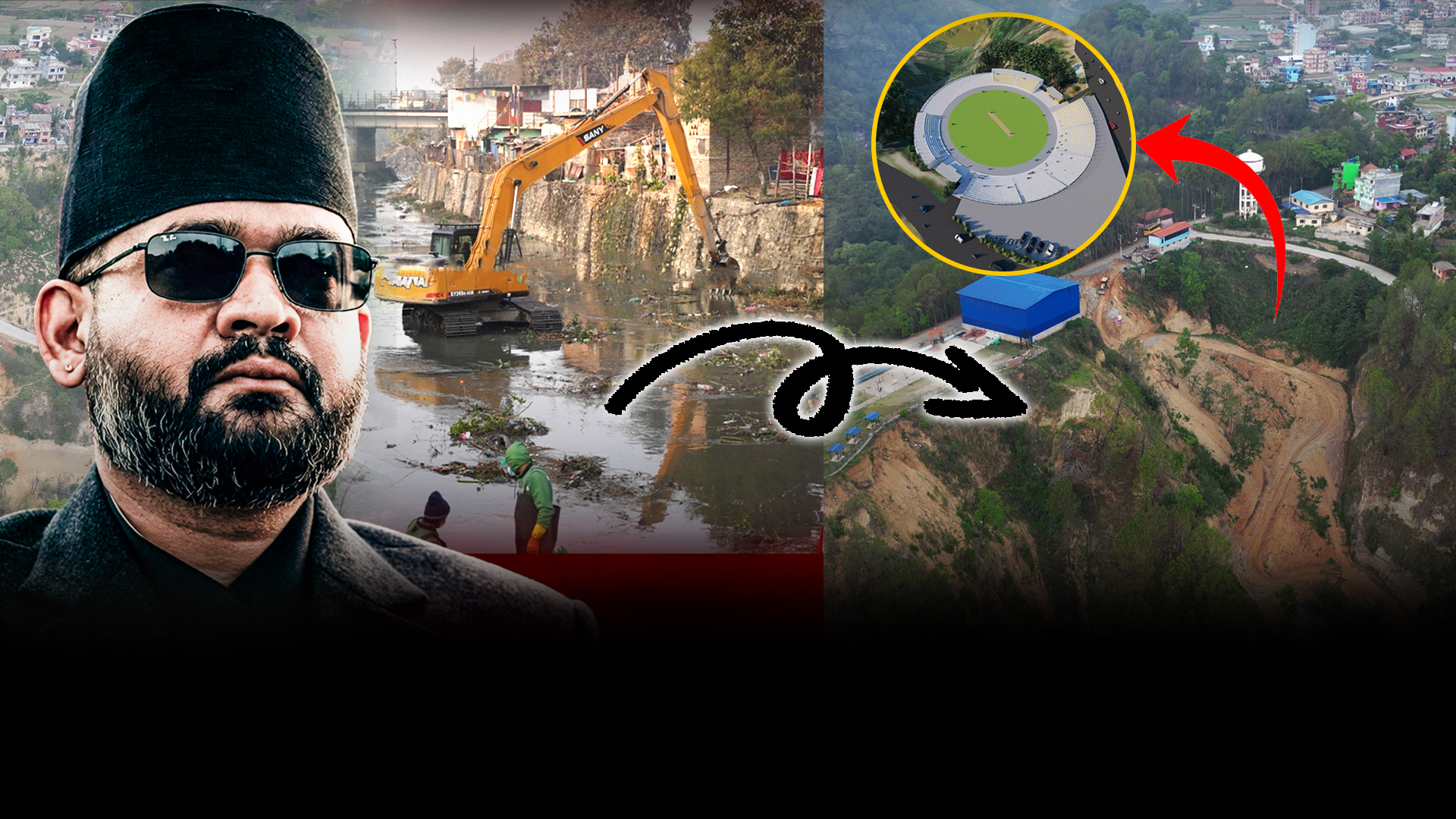
In the morning haze, a line of tipper trucks queues at the hollow in Dakshinkali—trucks carrying silt, sediment and construction debris dredged from Kathmandu’s rivers and streams. Proponents say this material-filled site will become a modern cricket stadium in the future, but the project is also surrounded by challenges and risks beyond mere “waste management.”[1]
Scene and Current Status
The hollow is steadily being filled. According to metropolitan officials, more than 15 tippers and trucks move back and forth daily while bulldozers compact the incoming material.[2] To local residents’ eyes, the empty land is gradually leveling out, but the smoke rising, the smell of plastics and the dust from heavy vehicles have affected everyday life in the neighborhood.[3]
Why Is It Needed? — Problems and Health Risks
The accumulation of dredged material in Kathmandu’s rivers and streams has long posed not only flood risks but also health problems, foul odors and degradation of water resources.[4] Silt, construction waste and plastics settled at the bottom of streams can alter water flow during the rainy season and increase flood risk in encroached areas.[4]
Origin of the Plan and Political Connections
Officials say the concept was initially proposed by the then-metropolitan mayor and has been advanced through coordination between the metropolitan office and Dakshinkali Municipality under the current administration.[1] The metropolitan office claims a preliminary feasibility study and geosurvey were carried out and budget allocations began on that basis.[2]
Technical Side: How Much Filling Is Required and What Is “Capping”?
The feasibility study determined approximately 300,000 cubic meters of dredged material are needed to fully level the hollow.[5] A “capping” technique will be used to stabilize the contaminated material and prevent it from being washed back into the river—this involves placing a safe soil/encapsulation layer that limits internal contaminants.[5] A senior environmental engineer said protective walls and wire mesh, surface drainage management and monitoring systems are essential.[6]
interview) “Our tests show—without proper engineering and quality capping, the risk remains,”
— Ramprasad Nepal, Senior Engineer, Environment Department.[6]
Community, Consent and Risks
Although the ward claims the project advanced after public discussions and coordination with local residents, some local shopkeepers and households said temporary odors, pests and increased traffic will cause problems.[3] The ward chair said the project proceeded with community consent and is expected to bring jobs and infrastructure benefits in the long term.[2]
(Joint meeting report) “We listened locally and committed to taking care of compensation for affected families,”
— Hariprasad Timalsena, Ward Chair, Ward No. 7.[2]
But independent environmental analysts warned that further testing is needed on soil bearing capacity, groundwater levels and conditions that could generate odors.[5]
Questions of Finance, Administration and Transparency
The metropolitan office estimates the total cost for the first five years of the project at about NPR 10 million—covering land development, protective structures and operational costs.[1] Civic groups have demanded disclosure of the contract process and funding sources (metropolitan budget and possible local partnerships).[7] Government documents state that upon project completion the structures will be handed over to Dakshinkali Municipality.[1]
Alternatives and International Context
This model of concentrating dredged material in a single large unit yields mixed results in smaller cities. In some places, decentralized composting and recycling-based solutions have succeeded, while in others centralized “filling” strategies have caused problems with soil quality and stability.[8] In the local context, decentralized management, riverside protection and continuous monitoring may be better-informed options.[8]
The Road Ahead: What to Watch For
Clear success metrics are necessary: transparency of the work, public availability of the DPR and feasibility study, adherence to environmental permits, direct community benefits and long-term monitoring. Only when the government makes all these documents public will local trust be established.[5][7]
Conclusion
The story from tipper to turf holds potential—but that potential will be realized only if community consent, genuine environmental safeguards and long-term management are secured beyond engineering and budget calculations. If the plan proceeds as scheduled, locals might see their cricket team practicing on that hollow in five years; otherwise, the same waste could return as a renewed problem.[1][5][6]
Sources
-
Kathmandu Metropolitan City—Press release: “Dredge Management and Sports Infrastructure Proposal at Dakshinkali Hollow” (official announcement), obtained document.
-
Dakshinkali Municipality—Ward No. 7 report and ward chair statements, public meeting minutes (site inspection and interviews).
-
Direct records from local residents and merchants and field notes (on-site observation).
-
National studies on environmental health and river management (brief review), Nepal Environmental Research Centre.
-
Feasibility study (unpublished/preliminary DPR): “Dakshinkali Hollow Revitalization — Volume and Technical Conclusions” (project internal document).
-
Phone interview and technical remarks with Senior Engineer Ramprasad Nepal (Metropolitan Environment Department).
-
Budget and tender documents (initial allocation): Kathmandu Metropolitan City public accounts (internal).
-
International case study summaries: Riverbank protection and dredge management (comparative short summary) — Global municipal practice summary (brief report).