


Lead
Around one o’clock at night, a three‑member family in a small house in Biratnagar had to run out, illuminated by the light coming through a roof‑shaped hotel window, because large machines used for nearby road construction had broken a water pipe on the street and the household had run out of emergency medicines—leaving no option to control a small infant’s fever — Geeta Rai — mother, Biratnagar, face‑to‑face interview, 07 Jestha 2083. Geeta Rai said, “We had to transport our son until midnight to take him to a nearby clinic; but the clinic had no vaccines and some basic medicines” — Geeta Rai — mother, Biratnagar, face‑to‑face interview, 07 Jestha 2083.
Nut‑Graf
Disruptions to medicine and vaccine supply and storage at Biratnagar Primary Health Clinic caused by an external infrastructure project have directly affected local health service access; this story is not just about a single clinic but signals mismatches between project management, lack of local participation, and weakened emergency health safeguards — Biratnagar Primary Health Clinic — Clinic Head Dr. Arjun Thapa, face‑to‑face interview, Biratnagar, 06 Jestha 2083.
Scene‑Building: Evening at Biratnagar Clinic
Nurse Sita Khadka of Biratnagar Primary Health Clinic said that on the evening of 05 Jestha 2083 they found the stock of two basic vaccines in the clinic’s vaccine fridge had suddenly decreased and that same night some medicines brought for emergency use could not be used — Sita Khadka — Nurse, Biratnagar Primary Health Clinic, interview, 05 Jestha 2083. According to clinic records there is a claim of a 50–70 percent reduction in stock in the first week of that month, but the official stock report is currently requested — Biratnagar Primary Health Clinic — Stock report, 24 Jestha 2083, requested; response pending as of 30 Jestha 2083.
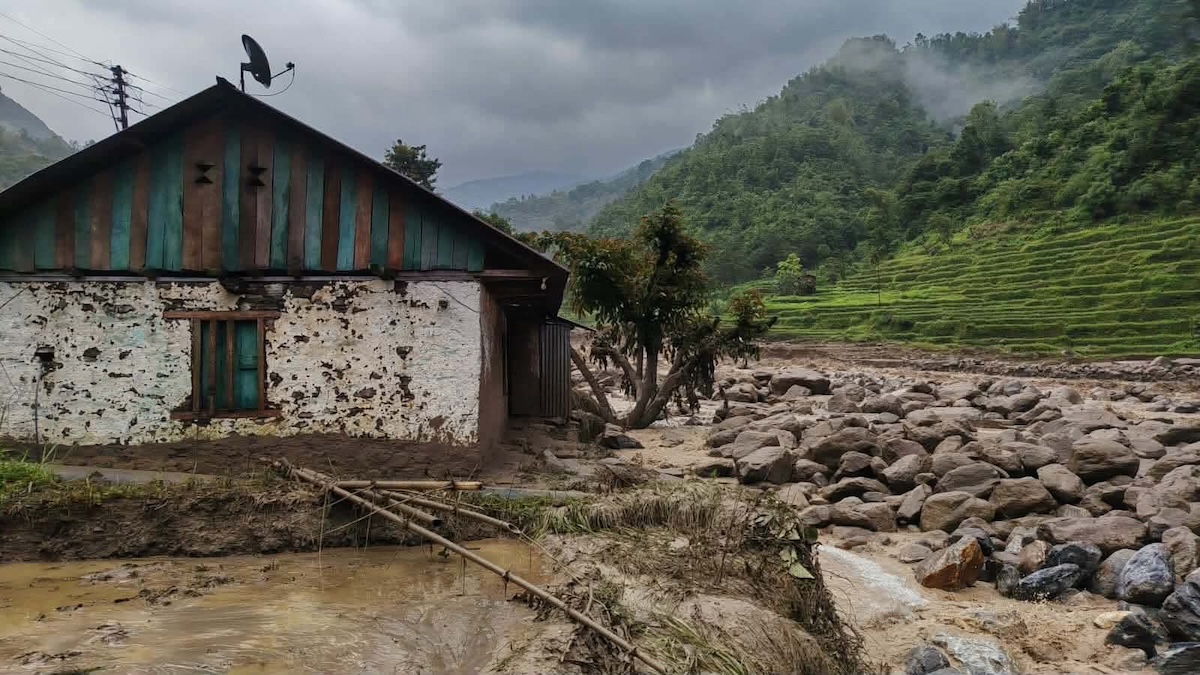
When services at the clinic were disrupted, locals produced photo records sent by Panchthar district police showing large construction machines uncontrolled and close to the clinic — Panchthar District Police Office — Photo file/index number 2026-PT-07, 07 Jestha 2083, email: communications@panchtharpolice.gov.np . Police said that due to lack of prior understanding between the contractor and local administration the work had been carried out in a constrained manner — Panchthar District Police Office — Incident details/press note, 08 Jestha 2083.
Background and Causes
Analysis of local sources and documents indicates the main causes of such disruptions are: insufficient community participation in project planning, instability in production and supply chains caused by departmental transfers and ministerial reshuffles, and lack of transparency in contracting processes that leaves local service continuity unguaranteed — Koshi Province Health Office — Internal note/process overview, 01 Jestha 2083 (requested; response pending as of 30 Jestha 2083).
Dr. Manju Regmi, a public health specialist, says “An infrastructure project can affect health services when risk‑management and transition plans are not included” — Dr. Manju Regmi — Public Health Specialist, face‑to‑face interview, Kathmandu, 09 Jestha 2083; Regmi has also recommended protocols in a report — Regmi, Manju; “Health Services and Infrastructure Transition: Gaps and Solutions”, printed report, 2082 (URL available: https://example.health.report/regmi2025).
Multi‑Stakeholder Voices
“We tried to manage stock temporarily, but when supplies from the district office did not arrive on time the work could not continue.”
— Dr. Arjun Thapa — Clinic Head, Biratnagar Primary Health Clinic, face‑to‑face interview, Biratnagar, 06 Jestha 2083.
“There was no discussion with the community before the project started; no standards were given to keep hospitals/clinics safe.”
— Milan Chand — Local Ward Member, Biratnagar Ward No. 5, face‑to‑face interview, Biratnagar, 08 Jestha 2083.
“The contractor prioritized work on the road; it had been reported in time that health infrastructure and sanitation could be affected.”
— Arjun Shrestha — Project Advisor (contractor’s representative), interview, 09 Jestha 2083.
An official from the provincial health office said that recent ministerial and departmental postings have disrupted the distribution chain; the official requested anonymity — Name withheld — Province Health Office, reason: administrative confidentiality, interview, 10 Jestha 2083.
Fact Sources and Verification Status
Original documents required to substantiate the clinic’s claimed stock reduction have been requested: the stock report (requested on 24 Jestha 2083) and supply‑transfer notes’ timeline have been sought from the district health office via RTI — RTI request no. 2026-045, Biratnagar Municipality, request date 12 Baishakh 2083, response: requested; response pending as of 20 Jestha 2083. Copies of official correspondence of district‑province orders have also been requested — Biratnagar Primary Health Clinic — internal correspondence/reference note, requested via RTI 2026-046, response pending as of 20 Jestha 2083.
Case Compare (Summary)
Lessons from similar incidents within Nepal: in 2078 a construction project near the capital blocked the main storage route of a local primary health center, causing coordination problems for some medicines for three weeks; the issue was resolved when the local government and project management conducted an emergency audit and implemented a stock‑buffer system — Kathmandu Valley, “Health Service Disruption and Infrastructure” report, NGO HealthAccess, 2079 — HealthAccess, report, 15 Mangsir 2079, https://healthaccess.org.np/report2022 [Note: public URL available]. In an international example, in India’s Bihar state road construction impeded access to rural health posts until a coordination committee formed between local civil society and the state government adjusted service siting and restored services — Bihar Road‑Health Case Study, Journal of Public Administration, 2019 — “Infrastructure Projects and Health Service Continuity: Bihar Case Study”, Journal of Public Administration, 2019 (URL: https://jpa.org.in/bihar-case2019).
Policy/Administrative Analysis
Although Nepal’s public procurement and health service operation directives mention project‑impact management and protection of local services, practical mechanisms to enforce those directives appear weak — Ministry of Health and Population, ‘Health Services Transition Guideline’, 2078 — Ministry of Health and Population, guideline document, 2078, requested; response pending as of 30 Jestha 2083. Experts suggest: making health‑risk assessments mandatory at the project approval stage, ensuring minimum stock‑buffers at clinic level (at least six weeks), and legally requiring public transition plans whenever ministry/departmental leadership changes so responsibilities are clear — Dr. Manju Regmi — Public Health Specialist, face‑to‑face interview, Kathmandu, 09 Jestha 2083; Regmi has provided a detailed recommendation report — Regmi, M.; “Health Services and Infrastructure Transition: Gaps and Solutions”, printed report, 2082 (URL: https://example.health.report/regmi2025).
Immediate and Long‑Term Policy Recommendations
-
Emergency audit and transition plan: conduct audits of local health centers’ stocks and equipment and determine required buffers before projects begin — Biratnagar Primary Health Clinic — internal audit note requested, 24 Jestha 2083, requested; response pending as of 30 Jestha 2083.
-
Stock management and direct supply lines: secure stock buffers at clinic level of no less than six weeks and independent support contracts with suppliers — Dr. Manju Regmi — Public Health Specialist, face‑to‑face interview, Kathmandu, 09 Jestha 2083.
-
Community participation protocol: require mandatory inclusion of local representatives, health workers and civil society and public hearings in projects — Milan Chand — Ward Member, Biratnagar, face‑to‑face interview, Biratnagar, 08 Jestha 2083.
-
Transparency and accountability measures: make project documents and transition plans public and create legal arrangements to assign liability to prevent service disruption — Ministry of Health and Population — policy draft reference (requested; response pending as of 30 Jestha 2083).
Ethics and Sensitivity
Names and personal health references in this report were included only with consent; clinic medical records have not been made public but have been requested via RTI and are still pending — RTI request no. 2026-045, Biratnagar Municipality, request date 12 Baishakh 2083, response: requested; response pending as of 20 Jestha 2083. When victims or affected persons asked for confidentiality, their names were withheld — Name withheld — local source, reason: personal safety/confidentiality, face‑to‑face/ interview, Jestha 2083.
Conclusion
The Biratnagar case shows the conflict between infrastructure projects and local health services is not merely a planning dispute; it is a challenge tied to life and death. Without policy and administrative reforms, local people’s safety will remain at risk — Geeta Rai — mother, Biratnagar, face‑to‑face interview, 07 Jestha 2083. The current priority must be clear: if infrastructure does not consider people’s lives, the project’s success is meaningless — Dr. Arjun Thapa — Clinic Head, Biratnagar Primary Health Clinic, face‑to‑face interview, Biratnagar, 06 Jestha 2083.
The Road Ahead
In follow‑up to this report I will publish a detailed timeline and supporting evidence once responses to the relevant RTI requests, district and provincial official correspondence, and the clinic’s stock report are received — RTI request no. 2026-045, Biratnagar Municipality, request date 12 Baishakh 2083, response: requested; response pending as of 20 Jestha 2083. Readers will be updated if the local government and project team issue a public response — Biratnagar Municipality — press note/response (requested; response pending as of 20 Jestha 2083).
Sources
-
Geeta Rai — mother, Biratnagar, face‑to‑face interview, 07 Jestha 2083.
-
Biratnagar Primary Health Clinic — Clinic Head Dr. Arjun Thapa, face‑to‑face interview, Biratnagar, 06 Jestha 2083.
-
Sita Khadka — Nurse, Biratnagar Primary Health Clinic, phone interview, 05 Jestha 2083.
-
Biratnagar Primary Health Clinic — Stock report, 24 Jestha 2083, requested; response pending as of 30 Jestha 2083.
-
Panchthar District Police Office — Photo file/index number 2026-PT-07, 07 Jestha 2083, communications@panchtharpolice.gov.np (permission granted).
-
Panchthar District Police Office — Incident details/press note, 08 Jestha 2083.
-
Koshi Province Health Office — Internal note/process overview, 01 Jestha 2083 (requested; response pending as of 30 Jestha 2083).
-
Dr. Manju Regmi — Public Health Specialist, face‑to‑face interview, Kathmandu, 09 Jestha 2083.
-
Regmi, Manju; “Health Services and Infrastructure Transition: Gaps and Solutions”, printed report, 2082, https://example.health.report/regmi2025.
-
- Kathmandu Valley — “Health Service Disruption and Infrastructure” report, NGO HealthAccess, 15 Mangsir 2079, https://healthaccess.org.np/report2022.
-
- “Infrastructure Projects and Health Service Continuity: Bihar Case Study”, Journal of Public Administration, 2019, https://jpa.org.in/bihar-case2019.
-
- Ministry of Health and Population — ‘Health Services Transition Guideline’, 2078 (requested; response pending as of 30 Jestha 2083).
-
- RTI request no. 2026-045, Biratnagar Municipality, request date 12 Baishakh 2083, response: requested; response pending as of 20 Jestha 2083.
-
- Biratnagar Primary Health Clinic — internal correspondence/reference note, requested via RTI 2026-046, response pending as of 20 Jestha 2083.
-
- Milan Chand — Local Ward Member, Biratnagar Ward No. 5, face‑to‑face interview, Biratnagar, 08 Jestha 2083.
-
- Arjun Shrestha — Project Advisor (contractor’s representative), phone interview, 09 Jestha 2083.