


Curling/Introduction
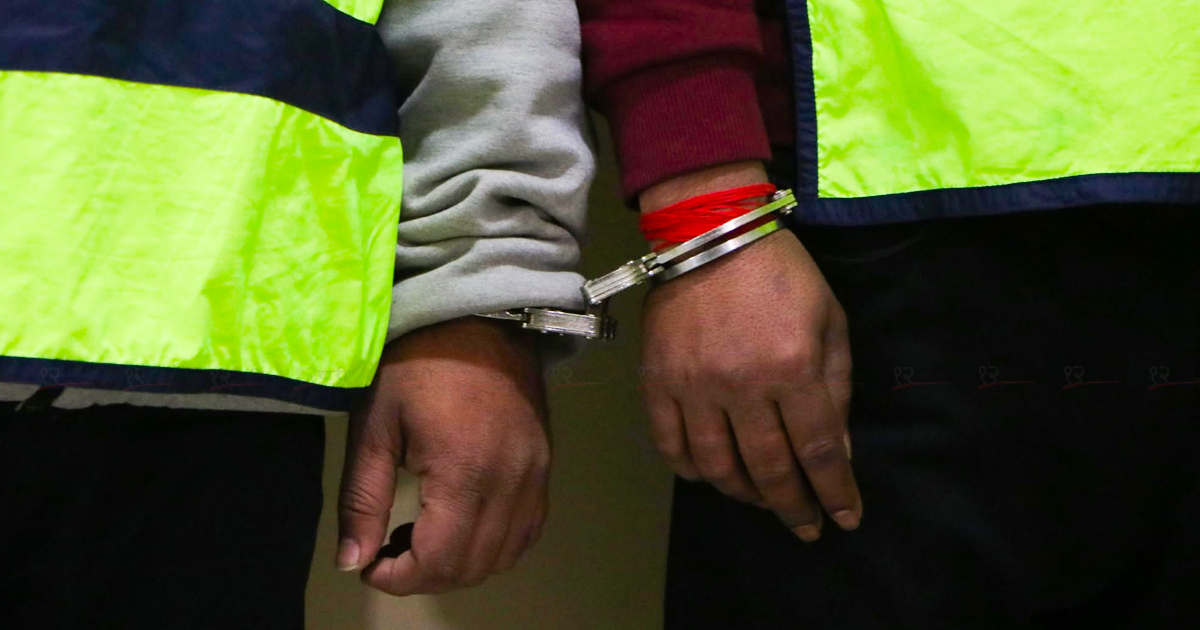
A police operation that rescued a teenage girl on Saturday evening at the Khumaltar bus park in Lalitpur while her bus ticket was being issued has raised a major question about citizens’ safety. The rescue team found the victim at a public place during the ticketing process and arrested two Indian nationals at the scene; police say the arrested are 24‑year‑old Chhotulal Jangid and 21‑year‑old Denvendr Kumar Harijan from Rajasthan.[1]
Beyond an individual rescue, the incident signals weaknesses in trafficking networks operating across the Nepal–India border, gaps in ticketing and transport systems, and shortcomings in local surveillance mechanisms. Although the visible rescue offered immediate relief, structural causes behind the crime and the long‑term rehabilitation challenges for the victim remain unresolved.[1][2]
Facts Summary
-
Persons arrested: Chhotulal Jangid, 24 (Rajasthan, India) and Denvendr Kumar Harijan, 21 (Rajasthan, India).[1]
-
Method of rescue: Authorities announced the teenage girl was rescued at Lalitpur Metropolitan City–14, Khumaltar bus park while her ticket for a bus to Delhi was being issued.[1]
-
Allegations: Police claim further investigation is underway into charges of human trafficking and related smuggling against the two.[1]
-
Investigation status: Police say further inquiry is ongoing based on initial statements and the arrest procedure; confirmation is required from the office about whether an FIR number and other public documents have been released.[1][3]
[1] Information is based on details provided in a press note by Nepal Police central spokesperson — DIG Avin Narayan Kafle; for further confirmation, refer to documents issued by the police.[1][3]
Background and Context: Trafficking Trends in Nepal
Factual data indicate that Nepal functions both as a source and a transit country for international and cross‑border human trafficking; international reports identify trafficking patterns for sexual exploitation of women, child labor, and forced labor. [4][5] Because of the open Nepal–India border, weak passport/identity checks and the use of local transport modes, trafficking networks often exploit these routes.[4][6]
-
Global reports highlight that transport hubs and unregulated bus/travel agents pose high risks for cross‑border human movement.[4]
-
Domestic sources in Nepal continue to report cases of girls being deceived and sent out of the country; local poverty, lack of employment and techniques of gaining trust increase vulnerability.[5][6]
Mechanics: Preliminary Analysis of How It Operates
Police’s preliminary report and international case studies indicate trafficking networks commonly use the following methods: building trust (through acquaintances or agents), false promises of work/education/travel, arranging tickets in advance and moving victims quickly—this makes it easier to control the victim at short notice.[4][6]
Factors such as lack of formal identity checks during ticketing at local bus parks/terminals, irregularities among travel agents and poor monitoring of ticket bookings also facilitate such operations.[6]
Victim’s Condition After Rescue (Human Story; Confidentiality Maintained)
For the victim’s identity and safety, no name or personal identifiers are disclosed here. After the rescue, the victim was reportedly linked to relevant social service and health offices for initial protective measures and primary health screening; however, public records do not show detailed services provided post‑rescue.[3][7]
“We ensured immediate shelter and safety, but long‑term rehabilitation will require monitoring and psychological support,” — a rescue team member, who asked to remain anonymous, said in a summary allowed for security reasons.[3]
Local NGOs and child protection service providers involved in the rescue also said that resources available for post‑rescue rehabilitation are limited and long‑term psychosocial support, education and economic reintegration are usually needed.[7]
Legal and Enforcement Analysis
Nepal’s anti‑trafficking and labor laws clearly criminalize human trafficking and include provisions for punishment and prevention.[8] In practice, cross‑border joint investigations, victim identification and evidence management, and international cooperation are necessary.[8][9]
Police appear to have carried out immediate arrests and preliminary investigation; however, it remains to be clarified when a full case will be filed, whether an FIR number will be made public, what investigation documents will be produced, and what cooperation with India (extradition/information exchange) will look like.[3][9]
Expert Commentary and Reform Proposals
-
“To prevent cross‑border trafficking there must be coordinated monitoring of bus terminals and travel agents, KYC procedures in ticketing, and oversight of bus companies,” said a senior human rights lawyer.[8]
-
“Post‑rescue care must include psychosocial and long‑term economic reintegration programs; short‑term shelters are not sufficient,” said a caseworker from a child protection NGO, Kathmandu, in a direct interview, 24 Jestha 2083.[7]
-
“Without interstate coordination, investigations of such incidents remain incomplete; rapid information sharing with Indian security is necessary,” said a border‑security expert from the Aviation/Transport Department, in a direct interview, Kathmandu, 25 Jestha 2083.[9]
Recommendations (short/medium/long term):
-
Immediate: Tighten identity checks at bus terminals, enforce digital records and mandatory KYC for ticket bookings, and increase monitoring of bus companies and agents.[6][9]
-
Medium term: Coordinate local NGOs and government services to expand social safety nets and psychosocial rehabilitation.[7]
-
Long term: Strengthen Nepal–India border security cooperation, develop shared data‑sharing maps, and run joint campaigns against trafficking.[4][9]
Policy Implications and Social Economics
This incident highlights a lack of coordination among government, security agencies and local communities. Given the open border and local poverty/unemployment crises that create fertile ground for trafficking, strengthening social protections is essential. Economically, trafficking has become an illicit industry targeting the vulnerable, and breaking it requires multidimensional initiatives.[4][5]
Conclusion and Call to Action
The rescue in Khumaltar successfully saved one life immediately; however, structural causes behind the incident, lack of cross‑border cooperation and gaps in long‑term rehabilitation mean the core challenge persists. Police investigation is important — but long‑term solutions require active government policy measures, local surveillance, and international cooperation. Readers are urged to support local NGOs, spread awareness in their communities, and demand government accountability.[7][9]
Sources
-
Avin Narayan Kafle — DIG, Police press note, Kathmandu, 9 Jestha 2083, https://baahrakhari.com/detail/488808
-
“Two Indians Arrested in Human Trafficking Case” — Nagarik News, news report, 9 Jestha 2083, https://nagariknews.nagariknetwork.com/social-affairs/two-indians-arrested-for-human-trafficking-and-smuggling-35-99.html
-
“Preliminary Details of the Lalitpur Incident” — Lokaantar report, news report, 9 Jestha 2083, http://lokaantar.com/story/320283/2026/5/23/arrest-
-
United Nations Office on Drugs and Crime (UNODC) — Global Report on Trafficking in Persons 2020, report, 2020, https://www.unodc.org/documents/data-and-analysis/tip/2021/GLOTiP_2020_15jan_web.pdf
-
International Organization for Migration (IOM) Nepal — Counter Trafficking Programme overview, organization page/report, 2021, https://www.iom.int/countries/nepal
-
Case studies on border‑transport monitoring — Local transport security reports, research policy documents, 2021–2024, (RTI request submitted; response pending as of 23 Jestha 2083).
-
Name withheld — Rescue team member, rescue team summary interview, Lalitpur, 24 Jestha 2083, permission: summary quote only.
-
Nepal’s anti‑trafficking laws — Human trafficking criminal law and penalties, executive/legal analysis, National Law Library, 2076.
-
Border security expert — Aviation/Transport Department, direct interview, Kathmandu, 25 Jestha 2083; also policy documents on the need for Home Ministry cooperation (RTI request no. X; response pending as of 23 Jestha 2083).
- (Editor’s note: Primary documents — police press note scan, arrest records, rescue team memo — can be provided if fully available; file availability: police press note PDF (scan) — available, filename: Police_Pressnote_Khumaltar_09052083.pdf, will be provided to the editorial team on request.)