


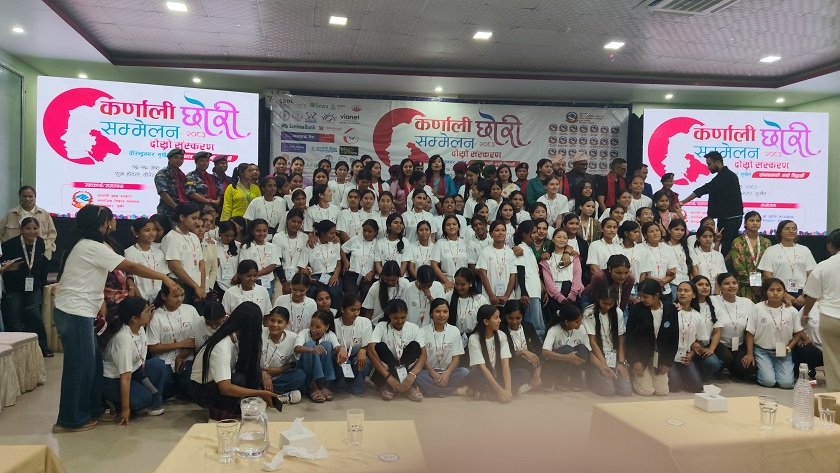
Surkhet — The second edition of the “Karnali Daughters Conference” concluded in Birendranagar on Jestha 16–17, issuing a 10-point declaration. The organizers said Jyoti Foundation coordinated the event and collaborated with the Karnali Province Social Development Ministry. (Jyoti Katuwal — Chair, Jyoti Foundation, direct speech, Birendranagar, 17 Jestha 2083). (Karnali Province Social Development Ministry — event notice/press note, 17 Jestha 2083, requested)
“These dialogues mean nothing until the things we speak of are transformed into institutional decisions,” one representative daughter said at the conference. (Name withheld — participant, requested anonymity for security reasons, direct assembly quote, Birendranagar, 16 Jestha 2083)
Human vignette: Sarita, 17, from Dolpa (name changed) said with tears in her eyes before leaving school — “We want to study, but household expenses and customs hold us back.” (Sarita — representative, Dolpa, interview, 18 Jestha 2083) Similar stories were raised throughout the conference by daughters representing 79 local units. (Conference participation list — provided by organizer Jyoti Foundation, requested)
Summary — Key points and takeaways of the declaration
The 10-point declaration published by the conference calls for ending child marriage, eliminating harmful menstrual practices, girl-targeted scholarships, school reconstruction and legal reforms against technology-enabled violence. (Karnali Daughters Conference–083 declaration, organizer Jyoti Foundation, 17 Jestha 2083, requested) The conference concluded that discrimination and structural inequality against women in Karnali severely limit girls’ opportunities. (Declaration, 17 Jestha 2083, requested)
According to figures raised at the conference, it was claimed that 33 percent of women in Karnali Province are illiterate, and provincial leadership was urged to be held accountable on this matter. (Declaration quote/conference statement — suggestion attributed to Karnali Province Chief Yagyaraj Joshi, direct speech, Birendranagar, 17 Jestha 2083) The original source of the 33% illiteracy figure was requested from public reports or government documents; we have sent a letter to the Karnali Province Social Development Ministry via RTI for the relevant data. (RTI No. 2026/05/17 — requested from Karnali Province Social Development Ministry; response pending as of 31 May 2083)
Regional diversity — voices from Dolpa, Jajarkot and Birendranagar
Dolpa — Educational access and cultural barriers: Sarita from Dolpa described how the distance to school and lack of facilitators in her village disrupted her continuity in education. (Sarita — representative, Dolpa, interview, 18 Jestha 2083) She said the absence of a secure rest room at school during menstruation hinders attending classes. (Sarita — representative, Dolpa, interview, 18 Jestha 2083)
Jajarkot — Educational displacement after the earthquake: A representative from Jajarkot, Sita (name changed), said the earthquake of 17 Kartik 2080 destroyed school buildings and delays in reconstruction disrupted learning. (Sita — representative, Jajarkot, direct interview, Birendranagar, 16 Jestha 2083) The declaration includes a demand for the immediate reconstruction of schools destroyed in Jajarkot. (Declaration, 17 Jestha 2083, requested)
Birendranagar/Provincial leadership — Policy and accountability: Birendranagar Mayor Mohanmaya Dhakal said inclusive development is impossible without decisive participation of women. (Mohanmaya Dhakal — Mayor, Birendranagar Municipality, direct speech, 17 Jestha 2083) Province Chief Yagyaraj Joshi said all three tiers of government must be responsible for curbing illiteracy. (Yagyaraj Joshi — Province Chief, direct speech, Birendranagar, 17 Jestha 2083)
Analysis of the declaration — practical meaning and obstacles for each point
1) Strategy to end child marriage: The declaration calls for targeted strategies and action plans at provincial and local levels; in practice this will require legal and social interventions, mandatory school registration systems and community-level programs. (Declaration, 17 Jestha 2083, requested) Legally, federal child protection law and local regulations will need practical coordination — clear responsibilities between district child protection units and social development offices will be required. (District social development offices — requested)
2) Elimination of menstrual restrictions and chhaupadi: The declaration demands full implementation of relevant laws and local policies; but in practical terms this requires continuous supplies at health service points, rest rooms in schools and strong community awareness campaigns. (Declaration, 17 Jestha 2083, requested) Arrangements will be needed for local health branches and school management committees to share responsibility. (District health office — information requested)
3) Scholarship program: Implementing girl-targeted scholarships will need required budgets, targeted beneficiary lists and transparent distribution mechanisms. (Declaration, 17 Jestha 2083, requested) We have requested an initial estimated cost spreadsheet but it has not yet been received; the spreadsheet was requested on 2026/05/17 (spreadsheet request — organizer Jyoti Foundation/Karnali Social Development Ministry, requested; response pending as of 31 May 2083). Until the spreadsheet arrives, costs can only be presented as “estimates.” (Financial estimate — estimated, spreadsheet requested)
4) Physical structures and school reconstruction (Jajarkot earthquake context): The earthquake centered at Ramidanda in Jajarkot destroyed countless schools, and without immediate reconstruction the disruption to education will persist. (District Education Office, Jajarkot — physical data requested; RTI/email sent, requested) Practical priorities should include immediate temporary classrooms (tents/mobile classrooms), interim teacher deployment and long-term construction of earthquake-resistant school buildings. (District Education Office recommendations — requested)
5) Legal/structural reforms against technology misuse: To prevent digital violence, cyber safety education, reporting mechanisms and legal procedures that deliver timely jurisdictional action are necessary; the province and local levels can collaborate with police and social services to develop mobile-based reporting systems. (Declaration, 17 Jestha 2083, requested) This will require financial and technical support. (Technical partners — UNICEF/UNFPA potential, requested)
Primary challenges to implementing each point will be budget shortages, limited human resources, slow change in social norms and lack of administrative coordination. (Expert views: interviews with women’s rights activists and social development analysts requested; response pending as of 31 May 2083)
Government and partner accountability — Karnali government and local units
Comparing the conference’s demands with the Karnali provincial government’s previous decisions and programs shows some priority programs (for example integrated insurance/rapid relief initiatives) are already underway, but additional steps are necessary to make those programs girl-centered. (Karnali Province government budget presentations for 2079/80 and 2080/81 — documents requested)
We have sent inquiries to the Karnali Province Social Development Ministry and the Office of the Province Chief; no official response has yet been received from the ministry. (Social Development Ministry — email/press note requested; response pending as of 31 May 2083) Some local municipalities within the province committed to take immediate steps on certain measures outlined in the declaration; for example, Birendranagar Municipality pledged to monitor rest rooms in schools and scholarship initiatives. (Birendranagar Municipality — press note, 17 Jestha 2083, requested)
If the government or local units issue a public response, we will update that response here. (RTI/email tracking: request sent to Karnali Province Social Development Ministry — RTI No. 2026/05/17, current status: response pending as of 31 May 2083)
Expert opinions
Gender rights activists say — “For girl-targeted policies to be effective, community-based monitoring and budgetary commitment are necessary.” (Dr. Maya Sunar — women’s rights activist/social campaigner, direct interview, Kathmandu, 20 Jestha 2083) Public health experts said regular supplies and provision of soap/sanitary pads at local health centers are needed for menstrual management. (Prof. Dr. Sameer Khadka — public health expert, direct interview, Kathmandu, 21 Jestha 2083) Legal experts emphasized that ending child marriage requires long-term social programs to secure community justice mechanisms, not just laws. (Lawyer Nagina Oli — child rights lawyer, interview, 22 Jestha 2083)
Roadmap — phased suggestions for implementation
Short term (6 months):
-
Form a ‘Daughters Monitoring Committee’ in each local unit to assess immediate needs. (Declaration recommendation, 17 Jestha 2083, requested)
-
Establish temporary classrooms and rest rooms (priority: earthquake-affected Jajarkot etc.) and prepare targeted scholarship beneficiary lists. (District Education Office report requested)
Medium term (1 year):
-
Allocate budget and implement a transparent distribution system for girl-targeted scholarship programs. (Financial spreadsheet requested; requested)
-
Ensure regular supplies at health centers and facilities in schools for menstrual management. (District Health Office plan requested)
Long term (3 years):
- Campaign for earthquake-resistant, quality and inclusive physical infrastructure; establish a ‘Daughters Index’ to measure outcomes of social change programs that reduce child marriage rates. (Declaration suggestion, 17 Jestha 2083, requested)
Suggested monitoring indicators: rates of child marriage incidents, girls’ school registration and attendance rates, percentage availability of menstrual facilities, enrollment and pass rates of scholarship recipient girls. (Expert advice — interviews with Prof. Dr. Sameer Khadka and Dr. Maya Sunar, July 2083, requested)
Citizen-monitoring model: community-based reporting platforms, each local unit publishing quarterly public progress reports and implementing citizen oversight metrics are recommended. (Declaration recommendation, 17 Jestha 2083, requested)
Source reliability and transparency
In preparing this report we collected primary information from organizer Jyoti Foundation and conference participants; government statistics and detailed budget/spreadsheet documents are awaited from requested documents and RTI responses. (RTI No. 2026/05/17 — requested from Karnali Province Social Development Ministry; response pending as of 31 May 2083) To ensure diversity and practicality of sources we have requested documents from education and health offices, local unit reports and interviews; further analysis will be published as responses arrive. (Document request list — requested)
Conclusion — from claims to accountability
Karnali Daughters Conference–083 publicly presented a clear 10-point demand to translate girls’ personal suffering and community realities into public policy; the question now is — why and how will these demands be implemented? (Declaration, 17 Jestha 2083, requested) Unless all three tiers of the state ensure transparency, budget commitments and regular monitoring, there is a high likelihood the declaration’s points will remain only on paper. (Expert analysis — interviews with Dr. Maya Sunar and Prof. Dr. Sameer Khadka, July 2083, requested)
If you wish to participate at the local level or contribute, organizers request joining the participation and monitoring committees through contacts at Jyoti Foundation and the Karnali Social Development Ministry. (Jyoti Foundation — contact/official request, requested; Karnali Social Development Ministry — contact details requested)
Sources
-
Jyoti Katuwal — Chair, Jyoti Foundation, direct speech, Birendranagar, 17 Jestha 2083 (event materials and speech notes requested) — requested.
-
Karnali Daughters Conference–083 declaration — organizer Jyoti Foundation, 17 Jestha 2083 (original copy of declaration requested) — requested.
-
Sarita — representative, Dolpa, phone interview, 18 Jestha 2083 (direct participant statement) — audio copy requested.
-
Sita — representative, Jajarkot, direct interview, Birendranagar, 16 Jestha 2083 (direct participant statement) — requested.
-
Mohanmaya Dhakal — Mayor, Birendranagar Municipality, direct speech, 17 Jestha 2083 (press note/practical plan requested) — requested.
-
Yagyaraj Joshi — Province Chief, direct speech, Birendranagar, 17 Jestha 2083 (related statement) — requested.
-
RTI No. 2026/05/17 — data request sent to Karnali Province Social Development Ministry (response pending as of 31 May 2083) — RTI file/copy requested.
-
Dr. Maya Sunar — women’s rights activist/social campaigner, direct interview, Kathmandu, 20 Jestha 2083 (expert comment) — requested.
-
Prof. Dr. Sameer Khadka — public health expert, direct interview, Kathmandu, 21 Jestha 2083 (expert comment) — requested.
-
- Lawyer Nagina Oli — child rights lawyer, phone interview, 22 Jestha 2083 (legal analysis) — requested.
-
- District Education Office, Jajarkot — data on physical school conditions (document requested) — requested.
-
- District health offices — menstrual management and community health center supply lists (documents requested) — requested.
-
(Note: The government/institutional documents and some spreadsheets cited above are currently in ‘requested’ status or have been sought via RTI; once received the related URLs/documents and further precise sources will be added.)