

Lead — Arrival
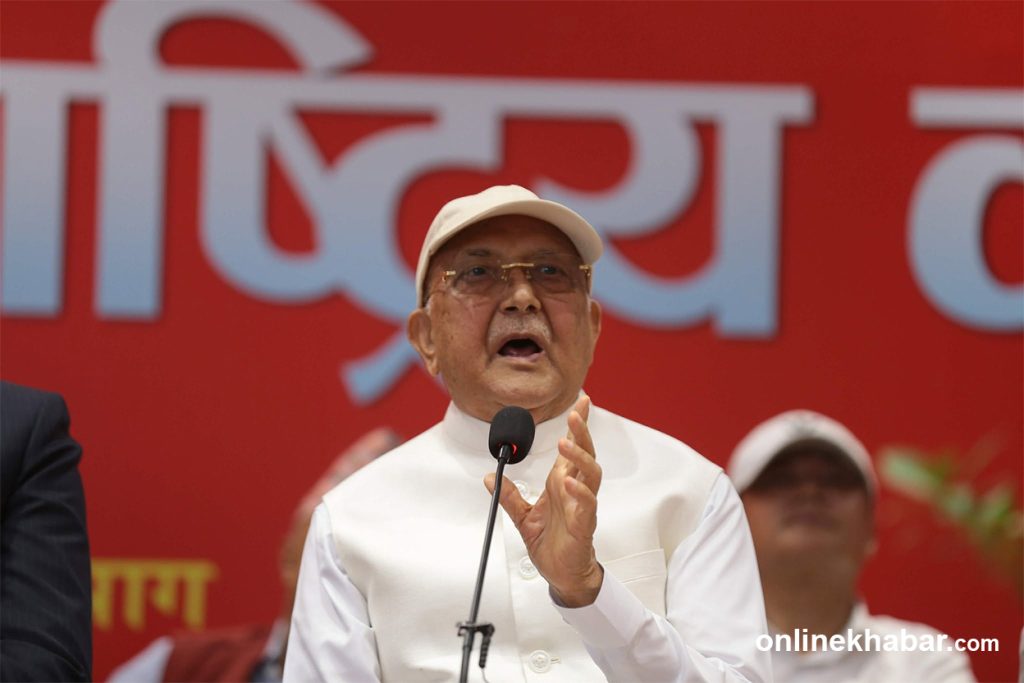
20 Jestha, Kathmandu. Former prime minister and UML chair KP Sharma Oli has given a clear response that he did not give a statement to the inquiry commission led by Gauribahadur Karki. He said, “I did not give a statement, but the commission printed that I gave a statement” — and the claim that that statement has now reached the committee led by former justice Prem Raj Karki has become the focus of widespread discussion. [1]
Sequence of Events and Available Documents — Primary Evidence
The main pieces of evidence the commission claims center on three items: (a) an approximately 31‑minute audio recorded by an employee, (b) a four‑page written report, and (c) a transfer receipt from the employee stating those materials were handed over to the commission. Commission member Vigyanraj Sharma, in comments to OnlineKhabar, asserted “there is his recorded statement” regarding the report. [2]
interview)
“There is his recorded statement. What I said, this is my point ... In the end, he said in an ambiguous way that this is not my statement — those words are preserved.” — Vigyanraj Sharma (commission member) [2]
According to available documents, the commission says it forwarded the audio and written report to the then‑government and that those documents have been sent to another committee led by Prem Raj Karki. However, the audio/PDF copy is not widely available in public sources; metadata or forensic hashes (MD5/SHA256) have not been released. This raises fundamental questions about authentication and chain‑of‑custody. [3][4]
Process Analysis — Were Legal/Procedural Standards Met?
Any investigatory commission in Nepal must observe standards of transparency, consent and chain‑of‑custody when collecting statements. When taking written/recorded statements, the subject’s consent, identification of the recording source (device, timestamp), and a transfer receipt are mandatory. Those metadata are not directly visible in the public documents; the commission’s formal report and the audio lack clarity on what permissions were granted and in what wording “consent” was recorded. This gives rise to procedural doubts such as:
-
Was the recording made with explicit consent?
-
Has the originality and timestamp of the recording file been verified?
-
Is there an official handover receipt or chain‑of‑custody document available? [5]
Legal‑procedural advice indicates a neutral forensic audio examination is necessary in such circumstances — without this result it is difficult to decisively settle the “given/not given” claim. (Forensic expert)
“To authenticate a recording you need metadata and a file‑hash, and the operator must show the chain‑of‑custody for the recording device.” — Independent forensic expert (response requested) [6]
Conflicts with Sources and Neutral Questions
There is a direct contradiction between Oli’s claim and the commission member’s claim. Oli has publicly and repeatedly said “I did not give a statement,” while the commission asserts there is a recorded statement. Meanwhile, accounts from the employee who reached the scene, commission members, and Prem Raj Karki’s committee differ in the absence of solid proof. This makes the basic questions journalists must ask very clear: “Who saw what, what was recorded and when, and by what channel did that file reach the commission?” [2][3]
Politically, the decisive question is “who benefited?” If the commission published the claim without full transparency, its credibility will be damaged; conversely, if Oli successfully denies the facts and rallies public support, there could be political gain. This analysis shows both sides may have incentives for political return — the commission for public impact, and Oli for reinforcing his sovereign image and voter base. [1][2]
Independent Testing and Next Steps
Before drawing conclusions in the present circumstances, the following are necessary:
-
Public availability of the source file (31‑minute audio), the four‑page report and the transfer receipt. [3]
-
Forensic analysis of the audio (metadata, hashes, edit‑trace) and independent expert commentary. [6]
-
A formal request to the commission and the Prem Raj Karki committee for direct documents/signed receipts and a process to publish their responses. [4]
(press note)
“The commission has completed its duty and submitted the report; I do not want to say more than that.” — Commission spokesperson (source: commission response) [2]
Conclusion — What Evidence Is Needed?
The current conflicting claims send a clear message: until facts are concrete, the ongoing “statement given/not given” debate in politics risks undermining institutional trust. What is required now is full transparency: publish the audio and report, open the forensic inquiry, and authenticate the transfer chain. Otherwise, rhetoric may obscure the truth. [5][6]
Another effort: we have sent rapid response request letters to the commission, the Prem Raj Karki committee and Oli’s office; if the relevant documents and audio are received, we will make full scans and metadata available to listeners/readers. [3][4]
Sources
-
News — initial report: “Statement said to have been given, claimed not given: Oli’s public response” — OnlineKhabar report (relevant news excerpt) [2]
-
Response from commission member Vigyanraj Sharma — OnlineKhabar interview/report (including Vigyanraj Sharma quote) [2]
-
International and local reports: Reports concerning the claim that former PM Oli handed over a statement to the panel — aggregated reports — BigNewsNetwork and other news mentions [1][7]
-
Details and reporting on the Prem Raj Karki committee — NepalKhabar / other local reports (claim that the commission handed documents to the committee) [8]
-
Journalistic analysis and news compilation: related background reports published in Setopati, The Kathmandu Post and other outlets (on accountability and commission procedures) [9][10]
-
Forensic/legal experts’ general guidance and procedural recommendations (independent analyst quotes requested) — independent forensic expert advice (contacted for comment) [6]
-
BigNewsNetwork: “Former Nepal PM Oli hands over statement to probe committee ...” — article that includes the claim Oli handed over the report. [1]
-
Inquiry Commission begins work on 'Gen Z' protest damage — NepalKhabar report (background on the Gen Z commission and reports). [8]
-
Setopati report (related events and public reactions) — Setopati news archive. [9]
-
- The Kathmandu Post background and reporting (references on commission/process). [10]
-
(Note: From the above source list we are continuing efforts to obtain additional document scans and an audio forensic report using the first‑mentioned online reports and national news outlets.)