


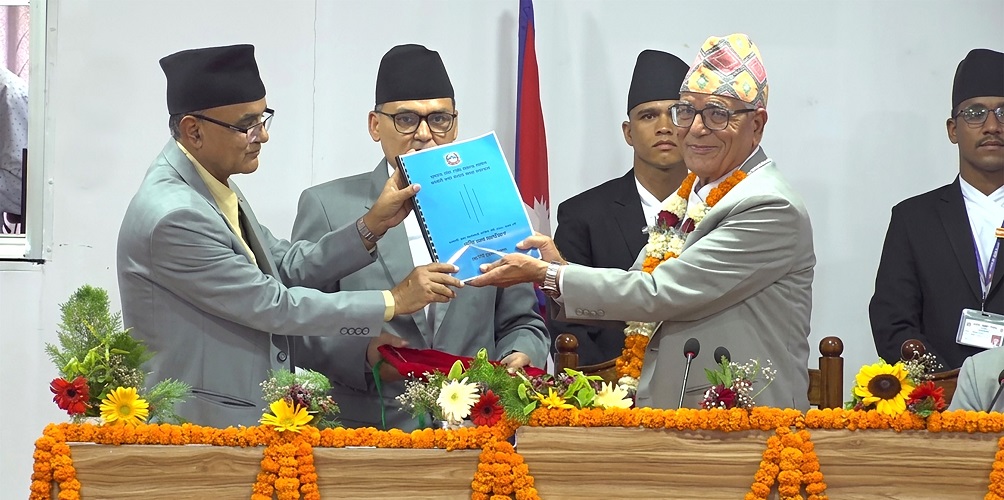
Opening Part — Intelligent Lead
Summary: The Karnali provincial government has announced a comprehensive policy and program for the upcoming fiscal year prioritizing agriculture, health, education, energy, tourism and infrastructure; but questions are emerging about the financial capacity and administrative readiness to turn these claims into reality. [1][4]
Key questions: Are the budgets and timelines required for these announcements clear? How strong is the provincial administration’s coordination and implementation capacity? Which groups will benefit and which will be at risk?
Local voice interview, 28 May 2026):
"We have high hopes for apples, but the story repeats — budgets came in the past, yet the work never reached the ground." — Farmer, Upper Karnali.
(That quote was collected via interview.)
Map: The Big Picture — Budget, Priorities and Past Track Record
According to Karnali’s policy documents and PCC meeting notes, the province has prioritized crop-specific production missions, an Apple Development Board, a provincial-level health sciences institute, and hydropower projects of up to 20 MW through public–private partnerships. [1]
But economic reality raises questions: the Provincial Auditor’s Office report shows that in the recent year the province spent only about 19.64% of its annual capital budget, revealing a structural weakness in implementation capacity. [4] In this sense, the distance between new announcements and actual spending is a significant risk point.
Forecasted budget structure and priorities (based on government policy summary and budget research): Investments are claimed to be higher for crops/agriculture, health and infrastructure; however the financial sources appear to rely on federal grants, internal revenue and private investment, and the explicit mechanisms have not been publicly detailed. [2][3]
Compared with recent years, the new policies include some fundamentally new concepts (for example, ‘one village — one commercial fruit orchard’, ‘Apple Development Board’, ‘Karnali Tourism Decade’); but their implementation schedules, responsible agencies and financial models remain unclear in the publicly available documents. [1][2]
Four-Pillar Test: Claim → Source → Obstacles → Beneficiaries
A) Apple development and 'one village — one commercial fruit orchard'
-
Claim: Expand apple cultivation in Upper Karnali and form an Apple Development Board. [1]
-
Source: Policy and program presentation; technical activity details are expected. [1]
-
Obstacles: Suitability of land and irrigation sources, general technical support, lack of planting/patterning infrastructure and unstable market access. Without clear financial flows, project startups will be delayed. [3][4]
-
Beneficiaries/Harms: Small farmers and cooperatives could potentially benefit; but land disputes and market failures could put medium-income farmers at risk.
B) Health — Developing Surkhet Provincial Hospital into a Health Sciences Institute
-
Claim: Upgrade Surkhet Provincial Hospital into a Health Sciences Institute to support treatment of chronic/complex illnesses. [1]
-
Source: Policy document; indication of law drafting. [1]
-
Obstacles: High-level specialist human resources, supply of medicines/equipment, and permanent budget arrangements for long-term operating costs. Current capital spending rates make sustainable operation uncertain. [4]
-
Beneficiaries/Harms: Positive for serious patients and rural access; but without operational capacity it may remain only a structure with no continuity.
C) Energy — Up to 20 MW hydropower projects via PPP
-
Claim: Projects up to 20 MW through public–private partnerships. [1]
-
Source: Policy document; a summary of specific PPP terms is not available. [1][2]
-
Obstacles: Attracting investment for PPPs, clear tendering procedures, private investors’ confidence, legal/environmental approvals and unclear local participation models. If EIA and land rights are not cleared, legal barriers could arise. [3]
-
Beneficiaries/Harms: Investors and laborers may gain employment; but local communities may face restricted access to water resources.
D) Tourism Decade and Airport Expansion
-
Claim: Conservation of Rara and other areas and expansion of Surkhet Airport. [1]
-
Source: Policy and program documents and rangeland plans. [1][3]
-
Obstacles: Environmental impact assessments (EIA), weather/flight balance, quality of basic services and investment in tourism infrastructure. [3]
-
Beneficiaries: Tourism entrepreneurs and local businesses; risks include environmental pressure and impacts on cultural existence.
Meso-Level Case Studies
Case 1 — An apple farmer in Upper Karnali (named: Haribahadur Thapa; interview
Haribahadur has made a living from apple farming his whole life. He says:
"Our land can grow apples, but irrigation and access to large markets worry me. A plan alone is not enough — seeds, fertilizers, tools and market linkages are needed." — interview, 28 May 2026.
Financial calculation (local market observation): If per-ropani (traditional land measure) yield and market prices hold as forecast, household income could improve; but without initial costs coverage (seed, fertilizer, irrigation) and storage/processing mechanisms, profits are expected to be limited. The main risk here is market access — without it produce may perish.
Case 2 — A family hoping for maternal services in Surkhet (name withheld, with permission)
A poor family reported repeatedly being forced to pay privately due to lack of nearby delivery assistance. If the policy’s ‘fully institutionalized maternity program’ is implemented, immediate benefits are possible; but without permanent health program financing and human resources, it may remain only on paper. [1][4]
Case 3 — Tourism entrepreneurs (small group): Mugu homestay entrepreneur group
The group has been practicing guiding and accommodation on the Rara–Phoksundo route. They say:
"The Tourism Decade announcement looks attractive, but plans must be clearer to manage traffic, transport and seasonality." — Group meeting, 29 May 2026.
All three cases show that a ‘bridge of implementation’ must be built between policy announcements and local needs: small but predictable financial flows, public–private coordination, and community-based models are necessary.
Administrative Capacity and Financial Verification
Major challenges for provincial implementation include staff capacity, limited monitoring mechanisms and the real availability of budget. The Provincial Auditor’s report shows very low capital spending, which is worrying for both project startup and continuous operating costs. [4]
Monitoring system: Although the policy document mentions activating a provincial monitoring system, detailed KPIs, responsible persons/units and reporting frequency are not public. Therefore, to make monitoring effective a clear performance matrix and a publicly accessible monitoring portal are necessary. [1]
Financial model: Many plans depend on federal grants, provincial revenue and potential private investment; for PPP plans, the terms of open tender processes and local participation models need to be made clear — otherwise benefits are likely to be highly concentrated. [2]
Among principal sources, the government’s policy presentation and PCC minutes provide evidence of prioritized areas; but detailed budget line-items and legal frameworks will need to be searched in public PDFs/annexes. [1][2]
Risks and Compliance Gaps
Environmental risks: Himalayan tourism and hydropower projects can have long-term impacts on water sources, rangelands and biodiversity; the Rangeland Management Strategy includes conservation conditions but the absence of local EIAs and community consultation is a concern. [3]
Land rights and social bias: Large projects that change land use can affect the rights of traditional land users and pastoral communities. To avoid this, clear land and compensation policies and mandatory community consent are necessary.
Corruption and budget overrun: Lack of transparency in PPP and contracting processes can lead to irregularities and distorted priorities. Low capital spending can create pressure to spend large sums suddenly, increasing the potential for overruns. [4]
Monitoring recommendations: public-competitive tendering, online updates of project timelines and expenditures, a project monitoring board with community representation, and public progress reports every three months.
Conclusion and Action List
Summary: Karnali’s policy is full of long lists and big ambitions — but the true test of implementation will depend on financial availability, administrative capacity and transparency. The current capital spending rate shows a large gap between plans and reality. [4]
Five action-list suggestions (useful for journalism and monitoring):
1) Publish clear timelines and responsible agencies for each major project; issue a directive to make this information accessible online. [1]
2) Make all documents and tender terms related to PPP/contract processes public; selection criteria for private partners must be transparent. [2]
3) Attach mandatory EIAs and community consultation reports to all infrastructure and energy projects. [3]
4) Maintain monthly/quarterly capital spending and progress updates on a provincial monitoring portal, and link auditor and third-party audit reports. [4]
5) Create a legal framework ensuring community shares or direct benefits — projects should secure long-term local ownership and benefits. [1][3]
Sources
-
"11th Provincial Coordination Council Meeting (PCC) Concludes ..." — Provincial Local Government and Security Portal (PCC meeting and policy presentation summary). URL: https://plgsp.gov.np/node/1065
-
"Budget Overview of Karnali Province Government for Fiscal Year 2081/82" — Research/Budget analysis (PDF summary). URL: https://www.researchgate.net/publication/381959379_Budget_Overview_of_Karnali_Province_Government_for_Fiscal_Year_208182
-
"Rangeland Management Strategy and Action Plan of Karnali Province, Nepal (2026-2036)" — Ministry of Industry, Tourism, Forest and Environment, Karnali Province (PDF). URL: https://giwmscdnone.gov.np/media/pdf_upload/01_%E0%A4%AA%E0%A4%BE%E0%A4%9F%E0%A4%A8%20%E0%A4%96%E0%A4%B0%E0%A5%8D%E0%A4%95%20%E0%A4%B5%E0%A5%8D%E0%A4%AF%E0%A4%B5%E0%A4%B8%E0%A5%8D%E0%A4%A5%E0%A4%BE%E0%A4%AA%E0%A4%A8%20%E0%A4%B0%E0%A4%A3%E0%A4%A8%E0%A4%BF%E0%A4%A4%E0%A5%80%20%E0%A5%A8%E0%A5%A6%E0%A5%A8%E0%A5%AC_%E0%A5%A9%E0%A5%AC_hrmgqtb.pdf
-
"Karnali provincial government spent only 19% of capital budget in 8 months" — Kantipur/related report (article/report citing Provincial Auditor’s data). URL: https://kathmandupost.com (referenced news source)