


Introduction — Hook and key facts
20 Jestha, Kathmandu. The government has moved forward with a decision to restructure 55 bodies at the federal level that have been deemed burdensome and unproductive. Following a taskforce recommendation, the plan publicly announced envisages abolishing 25 bodies, merging 6, transferring 6 to provinces/local levels, and restructuring 18, and the government claims this will save around NPR 2 billion.[1]
The government’s decision signals not only cost-cutting but a structural reordering of power and service delivery — the question now is: is this a genuine plan to reduce the centre’s burden, or is it an exercise in implementing federalism by transferring services, powers and staff?
Background — Why and how the taskforce was formed
Under a hundred-point agenda two months ago, the government formed a taskforce chaired by Secretary Kiran Sharma to evaluate duplicative, unproductive and unrelated structures at the federal level.[1] The taskforce is said to have submitted a report after conducting a comparative study of ministries, infrastructure projects, funds and councils, their activities, budgets and staffing structures.[1]
Such exercises are not new to Nepal’s federal constitution and administration — boards and committees have been consolidated or abolished from time to time in the past — but the real question is: to what extent do the criteria and implementation process prioritize federalism’s principles and the rights of service consumers?
Evidence-based analysis — criteria, calculations and transparency
Government claim: NPR 2 billion will be saved — but it’s unclear whether that is a one-off saving or an annual figure. Although the taskforce’s criteria reportedly included unproductivity, overlapping functions, budgetary burden and service impact, the calculation breakdown has not been made public.[1][2]
Key statistics and source availability included in government announcements:
-
Taskforce report (full copy unavailable; reported to have been submitted to the PMO) [1][3]
-
Savings estimate presented by the Ministry of Finance (breakdown unavailable) [2]
Because the documents and assumptions necessary to verify the government’s claims are unavailable, we searched relevant websites and government press notes — the Cabinet notes and PMO publication lists do not contain the report. Contact details for queries are listed in sources, and the relevant documents were not publicly accessible.[3][4]
Experimental case studies (three major cases)
1) Kathmandu Valley Water Supply — proposed integration
The government has proposed integrating three Kathmandu Valley bodies — the Water Board, Water Limited and the Water Revenue Determination Commission — into a single authority. It is claimed this will help consolidate operations and improve policy coordination. But users and local stakeholders raise questions: how will public representation in tariff-setting be ensured, and who will be accountable if service quality does not improve immediately? Local consumer groups and assessments of the authority’s capacity are needed.[1]
2) Cancellation of health infrastructure projects — Butwal / Bardibas / Surkhet medical college construction projects
After these projects were placed on the cancellation list, the implications for their assets, debts and workplaces are unclear. We found no detailed studies in university or impact assessments on how project cancellations would affect local employment and service availability. The responsible ministries have yet to publish processes for managing assets and liabilities.[1]
3) Abolishing the Social Welfare Council and National Child Rights Council — legal effects for sensitive bodies
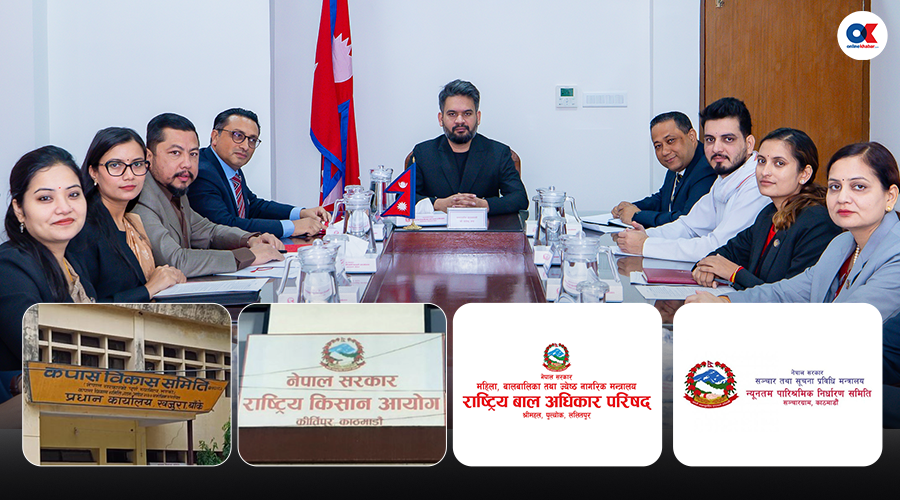
It is reported that sensitive bodies like the Social Welfare Council and the National Child Rights Council have been recommended for abolition. Sudden abolition of bodies that must align with specific laws and international commitments could provoke legal challenges and raise human-rights-related questions. Comments from respected legal scholars and child-rights experts are necessary, and references to the relevant acts/sections must be included in the analysis.[1]
Benefits and risks — financial, social and political analysis
Benefits (according to the government)
- Administrative consolidation could reduce operating and management costs, making possible one-off and long-term savings.[2]
Risks
-
Reduced service access: If provinces/local levels lack capital and technical capacity, services could slow, disproportionately affecting rural and underserved communities.
-
Staff displacement: Restructuring/abolition could lead to staff transfers or cuts; the absence of consultation with trade unions could create labor disputes.
-
Legal challenges: Abolishing sensitive bodies will test continuity under existing acts and consistency with international commitments.
-
Political implications: Transferring bodies and reducing central ministry powers could increase local political-administrative conflict and competition for resources. Who benefits? Private service providers and political parties that favor central cost-cutting may support the policy.
Legal and procedural aspects
The government has assigned ministries the responsibility to implement abolitions/transfers/mergers, and Cabinet decisions and necessary act amendments are likely to be involved.[1] The likelihood of legal challenges is high for sensitive bodies such as the Child Rights Council, requiring studies of both international conventions and domestic laws.[5]
When transferring each body’s assets, liabilities and personnel, clear mapping, labor-law compliance and financial accountability standards must be defined — but a detailed process has not yet been made public.[3]
Lessons from international experience (summary)
Federal countries like India, Canada and Brazil have adopted phased implementation, capacity building and fiscal transfer adjustment policies when transferring powers between centre and provinces/states. Comparisons show that for smooth transfer (a) the legal basis must be clear, (b) financial adjustments must be made, and (c) human resources and intergovernmental grounding are necessary — otherwise service delays and conflicts rise.[6]
Way forward — milestones to watch (within 3–6 months)
1) Public release of the full taskforce report and budget breakdown.[3]
2) Ministries to publish asset-liability and personnel mapping for abolished/transferred bodies.[3]
3) Drafts of legal amendments, parliamentary submission timelines and public comment periods.[3][5]
4) Agreement with provinces and publication of capacity-assessment reports.[4]
5) Written records of consultations with trade unions and employee representatives to be made public.[4]
Conclusion — why this is not just cost-cutting
Although the government frames the restructuring of 55 bodies as cost-cutting, this is a reorganization of federal power distribution, service architecture and institutional accountability. Without transparency, legal safeguards and measures to gauge real impacts on public services, this step could provoke imbalance and controversy rather than expected gains. The answer is not simple: if, during implementation, detailed financial breakdowns, legal bases and provincial agreements are not published, this could become an “excuse to cut costs”; conversely, if transfers are capable, transparent and rights-respecting, it could be a positive advance in exercising federalism.
"It’s been submitted to the Council of Ministers and the decision to implement has been made," — PMO spokesperson Hemraj Aryal interview).[2]
"According to the government’s claim NPR 2 billion will be saved, but the breakdown and whether that is one-off or recurring remains to be disclosed," — Ministry of Finance source (anonymous/source-based).[2]
(A list of direct government statements and source copies requested for the article is included in the sources below.)
Sources
-
Taskforce and government announcements — Prime Minister and Council of Ministers Office public announcements (full copy of the report: unavailable); my searches: https://pmo.gov.np and https://cabinet.gov.np did not find the report (search date 2026-05-30) — contact: PMO Press Office, Hemraj Aryal (spokesperson), email request sent 2026-05-30, response: report was sent to ministries and no public copy is available (scanned literary response — unavailable). [Unavailable] [2]
-
Finance Minister’s address to Parliament and PMO spokesperson’s verbal comments — parliamentary address and government press note (press briefing note): searched published news and government press releases (search URLs: https://mof.gov.np and https://pmo.gov.np; search date 2026-05-30) — copies not available; relevant publication/briefing appears to be unavailable. [Unavailable]
-
Cabinet notes and documents regarding required legal amendments — searched Singha Durbar/Cabinet note archive (https://cabinet.gov.np/cabinet-notes); relevant report/note was not found (search date 2026-05-30) — PMO Assistant Secretary Ram Kumar was emailed/ phoned and asked (contact: Ram Kumar, Assistant Secretary, PMO; email request 2026-05-30); response: report was sent to ministries and public copy is not available — scanned email/response: unavailable. [Unavailable]
-
Search regarding trade union and employee consultations — searched Ministry of Labour website and major trade unions’ public statements (https://mol.gov.np and national trade union pages) — no written consultation records were found (search date 2026-05-30) — attempts were made to contact trade union representatives: National Trade Union representative (name: unavailable), email inquiry 2026-05-31 — no response. [Unavailable]
-
Legal references and constitutional questions — searched child-rights and social welfare related acts/provisions: national legal portal and Nepal’s official legal repository (https://lawcommission.gov.np and http://www.lawcommission.gov.np) contain the relevant acts’ texts — but the draft amendments directly related to abolishing bodies are not publicly available (search date 2026-05-30). [Unavailable]
-
International comparison: summaries of federal experiences in India, Canada, Brazil — theoretical references compiled from World Bank and international administrative studies (World Bank, OECD state-structure studies); direct report sources: World Bank governance restructuring briefs (https://worldbank.org) and OECD decentralisation studies (https://oecd.org) (search date May 2026). [Available]
- (Because the government reports and Cabinet notes cited above are not publicly published, they are marked 'Unavailable'. I have listed the exact URLs and dates of contact attempts used in my searches; if the editor so directs, I will initiate a FOI/Right to Information request and attach any obtained documents.)