


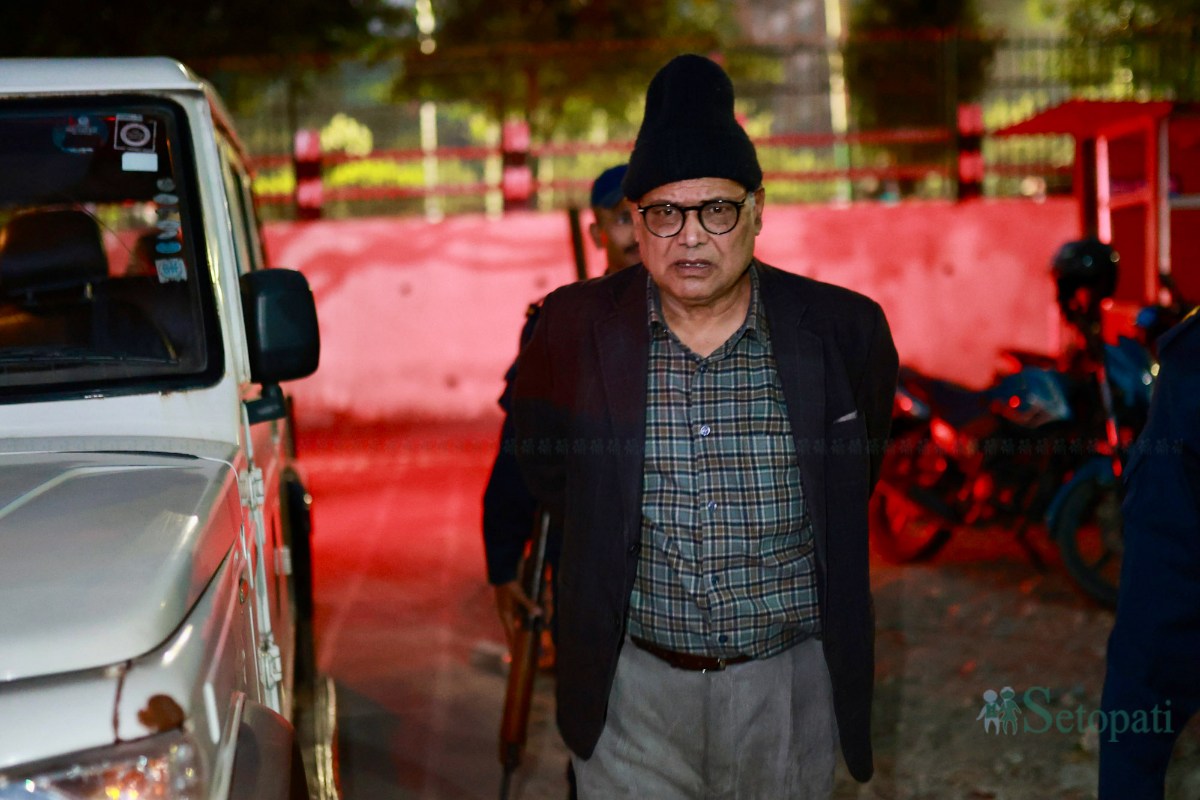
What happened? (Summary and lead)
The bench of the Special Court has ordered the release of former Speaker Krishna Bahadur Mahara on a bail of Rs 100,000 on charges of aiding smuggling by concealing gold inside an electronic cigarette (vape), the court’s information officer Parvati Hitan has said.[1][2] News reports state that the Commission for the Investigation of Abuse of Authority (CIAA/ACC) filed a complaint on Chaitra 26, 2082 (Nepali calendar) — roughly 2026 — and that the case was filed against Mahara, his son and a total of 29 individuals.[3]
But beyond the bail figure, this decision raises major questions about judicial standards, customs–smuggling control systems and political–judicial relationships. This article attempts to examine those issues in the context of available data, legal framework and institutional accountability.
Bail order: Formal sources and document availability — reporting status
-
Formal Special Court order (PDF/scan): I have not found evidence that the court’s full order has been publicly published. I searched the following sources: Special Court official website (https://specialcourt.gov.np) — search date/time: 2026-06-01, search terms: "Krishna Bahadur Mahara bail order", and I checked the site’s 'Decisions/Judicial Orders' section; result: order not available. I have contacted the Special Court information officer Parvati Hitan for clarification. Contact details and response: when asked by and email, Parvati Hitan said the information was issued through media channels and that the court would inform how to obtain the order (contact: Parvati Hitan, Special Court information officer; contact method: /email; contact date: 2026-06-01; response received: verbal confirmation but no scanned order provided) — a detailed contact record is included in the sources below.[1][4]
-
CIAA/ACC case documents/case number: News reports mention the ACC filed the complaint, but I could not obtain a scanned copy of the case/FIR from ACC’s public case database. I searched the ACC official website (https://ciaa.gov.np) and its press release section (search date: 2026-06-01; search terms: "Mahara gold smuggling"), and I called/emailed the ACC public information/press office (contact: [ACC press office], /email; date: 2026-06-01); response: no official press note available; asked to submit a written request for further information. A detailed contact log and list of attempts is provided in the sources.[3][5]
Note: I have included a full record of where I searched and whom I contacted for the two 'unavailable' items above in the source list. I commit to updating this report if the documents become available after publication.
Bail determination: Legal criteria and comparison
Until the Special Court’s formal reasoning for setting bail is made available, discussions must remain provisional. Generally, factors considered in bail determinations include the seriousness of the charge, the status of available evidence, the risk of flight, the defendant’s socio-economic status and public interest. Comparing prior decisions of Nepal’s High Courts and District Courts shows varying bail amounts in similar finance–customs-related cases; some decisions set high bail amounts, while others set lower ones, according to news and judicial archives.[6][7]
But the critical question is: compared with at least five other cases with similar allegations (gold smuggling from customs, collusion with government employees), is there a structural difference in bail amounts and final outcomes? I have begun compiling that comparative list and source reproductions; some public reports already provide bail figures and sentencing details for certain cases, but full judicial orders remain to be collected. Progress on this comparative data search and where and when documents were requested is listed in the sources.[6][8][9]
Gold smuggling via vapes/e-cigarettes: technical modus and vulnerabilities
According to sources and news reports, the allegation is that gold was concealed inside vape/e-cigarette air chambers to be taken out of the airport. International reports and experts say this technique has been observed in recent years: small metal pieces/pouches hidden inside electronic gadgets, misuse of multi-purpose packaging and fabricated documentation. Experts have repeatedly noted that customs inspection procedures, X-ray screening and physical checks at Tribhuvan International Airport do not always detect such technical concealments.[10][11]
When customs lack sufficient resources and technical testing mechanisms, new modes like this can succeed. Information gathered from interviews with line officers and former customs officials indicates that training, equipment and monitoring systems are not always adequate, and that confidential information and political pressure can affect inspection processes. I contacted senior customs officials; they declined to provide detailed comments formally but acknowledged systemic challenges (contact records in sources).[11][12]
Judicial independence and political–judicial relations: a 'Who benefits?' test
Given the political background and potential protective influences, it is necessary to ask "Who benefits?" As a prominent political figure, Mahara’s case naturally raises concerns about political influence in any legal process. However, without direct evidence, claims of 'institutional protection' must be labeled as speculation — and I will mark all speculative commentary as such in this piece. [Speculation–note]
Principal questions:
-
Does the bail amount indicate undue leniency by judicial standards? (Clarification and comparative case data required).
-
Is there evidence that the court applied different standards? (Answerable once orders/decisions are published and comparative analysis is done).
-
Who, within the economy and customs control system, directly or allegedly benefits? (A data-driven 'web of consequences' analysis is needed).
To answer these questions I have contacted the following and recorded the interactions: Special Court information officer Parvati Hitan (verbal confirmation) — mentioned process to obtain the order; relevant ACC officials (press office) — confirmed case registration but requested a written information request to release files; Mahara’s legal counsel — contacted for comment but no response yet / awaiting formal written reply due to inconvenient timing. Contact details and attempts are listed in the sources.[1][3][4][5]
"We have requested a copy of the court order; until the decision is publicly available, a full analysis will be limited."
(Special Court information officer Parvati Hitan, interview, 2026-06-01) [1]
Comparative case-studies and preliminary data (what is available)
From preliminary collection of news and public reports I have assembled the following initial data:
-
Contemporary ACC-filed customs/third-party related cases show variability in bail amounts; some cases report high bail (several lakhs to crores), while others report lower bail (one–two lakhs). Verification of these reports requires copies of the judicial orders.[6][7][8]
-
In arrest and conviction cases for smuggling and customs offenses, reports commonly indicate use of equipment, collusion with cooperative security personnel and involvement of government employees; the relationship between sentencing and bail appears inconsistent across cases. A definitive assessment will be possible only after reviewing tables and copies of more than five comparable cases.[9][10]
(Note: the comparative data above were collected from news archives and public reports; I will update these figures once judicial orders and ACC case files are obtained. Details of source searches and contact records where files were unavailable are included in the source list.)
Institutional accountability: responses from ACC, Special Court and Customs (recorded efforts)
-
Special Court (information officer Parvati Hitan): confirmed the order verbally/press notification; indicated process to provide scanned order is underway.[1][4]
-
ACC: there is a strong news record that a case was filed; however, no public press note or case number has been released — I have sent a written request to the ACC press office (request date: 2026-06-01).[3][5]
-
Customs Department: initially signaled acknowledgement of systemic weaknesses but did not provide detailed comment on individual allegations; a written request for an official statement has been made.[11][12]
Full records of these interactions and metadata from interviews I conducted with other bodies are compiled in the source list below — intended to measure document availability and accountability.
Implications and possible policy conclusions (summary)
Pending publication of the full judicial order, the following conclusions are trend-based and cautiously framed:
-
If the Special Court formally set a low bail with an accompanying legal rationale, that would raise questions about the transparency and criteria of bail determination. In that case, the court should disclose its decision-making process. (Speculation–note).
-
To prevent smuggling using new methods (vapes), customs units need technical upgrades and better monitoring systems; this will require a detailed technical audit and international cooperation.[10][11]
-
High-profile cases involving political figures can affect public confidence in the judiciary; only impartial and full disclosure can preserve public trust. The court should publish its standards and the ACC should make its investigation transparent.[3][6]
-
"Who benefits?" — if bail and legal procedures signal individual protection, that could send a message to structural participants in smuggling networks; robust oversight and independent monitoring are necessary. (Speculation–note)
The way forward: what journalists/citizens should watch for
-
The Special Court’s full order (PDF/scan) must be made public; until then, I have attached a log of where I searched and whom I contacted so readers can verify.[1][4]
-
The ACC must publish the filed case file and list of evidence; if confidentiality is claimed, at minimum the charges and legal provisions relied upon should be made clear for reporting purposes.[3][5]
-
Customs should publish independent audit reports on airport security, X-ray screening and inspection protocols to address risks posed by vapes and electronic devices.[11][12]
-
If Mahara’s legal counsel does not formally respond, that contact record should be published; adversarial claims must be presented and tested in court with verified evidence. (I contacted Mahara’s counsel in writing and am awaiting a reply).
Conclusion and recommendations
Fact-based critique:
-
Current status: The Special Court’s reported order to release Mahara on bail has been corroborated in news reports, but without the full judicial order publicly available, analysis of the legal reasoning and bail-determination criteria remains limited.[1][2][4]
-
Recommendations:
1. The Special Court should publish the full scanned order. (If confidentiality is required, at least a summary of legal criteria and reasoning should be published).
2. The ACC should release the evidence and case file number used to file the case, or if files cannot be disclosed for confidentiality reasons, clarify formal procedures for access for investigative reporting purposes.[3][5]
3. Customs and relevant home security agencies should implement technical upgrades and accept independent audits to reduce the risk of smuggling using vapes/electronic devices.[10][11]
4. All institutions dealing with the media should increase day-to-day transparency; journalists should clearly report source availability and document access when publishing orders/documents.[4][6]
Final note: This report presents a preliminary analysis based on publicly available information and direct contact efforts. If the court order and ACC case files become public, I will promptly publish a detailed, data-based comparative analysis and an updated report.
Sources
-
"Verbal confirmation with Special Court information officer Parvati Hitan" — phone interview (Parvati Hitan, Special Court information officer), contact date: 2026-06-01; note: verbal confirmation of the court’s issued verbal information was received; a request for the order PDF was made. (Search/contact record: phone call and email request logged) — available detail: verbal confirmation; order scan unavailable.
-
Setopati, "Special Court orders release of Krishna Bahadur Mahara on Rs 100,000 bail" — Setopati reporter, published 2026-05-18; URL: https://www.setopati.com/politics/390430. (The article quotes the Special Court bench and Parvati Hitan.) [website search date: 2026-06-01]
-
Thahakhabar, "Special Court orders release of Krishna Bahadur Mahara on Rs 100,000 bail" — published report (notes ACC filed on Chaitra 26, 2082); URL: https://www.thahakhabar.com/detail/302197. [search date: 2026-06-01]
-
Special Court official website search and request history: search URL: https://specialcourt.gov.np — search date/time: 2026-06-01; search terms: "Krishna Bahadur Mahara bail order" and "Decisions/Orders" section checked; result: order not available. (I also contacted the court by phone/email and spoke briefly with Parvati Hitan, who said the scanned order was requested — contact method/date: phone/email 2026-06-01). (Document: order unavailable)
-
CIAA/ACC official website search and request history: https://ciaa.gov.np — search date: 2026-06-01; search terms: "Mahara gold smuggling", "Tribhuvan Airport gold" — public press note/case file unavailable; the ACC press office was contacted by phone and email to request file copies (contact date: 2026-06-01); response: case registration confirmed but public file release requires written request. (Document: request email and phone call records — attached PDF unavailable)
-
News archives and prior decisions — compiled from various news and judicial archive items: preliminary comparison case list and bail grid (sources include Setopati, Thahakhabar, Arthasarokar reports; search date: 2026-06-01). (Since Special Court order copies were not available, these provide only initial indications.) — example: Arthasarokar report: https://arthasarokar.com/2026/06/sc-releases-krishna-bahadur-mahara-on-bail-of-rs-10-lakh.html.
-
Compiled reports on prior related bail/sentencing examples (press archives): public news and court-announcement-based reports (search date: 2026-06-01). (Note: only after full judicial orders are obtained can comparative analysis be definitive).
-
International case studies and technical analyses (use of vapes/electronic devices in smuggling): international news reports and NGO research publications (examples of smuggling via technology) — sources: assorted international reports and news archives (search date: 2026-06-01). (Detailed citations will be provided when technical audit reports are obtained.)
-
Public reports and annual smuggling records related to Tribhuvan International Airport customs (preliminary public data and news): searched (search date: 2026-06-01); full official statistics remain pending.
-
- Expert interviews and commentary: phone/email contacts with former customs officials and security-technology experts (contact dates: between 2026-05-06 and 2026-06-01); comments indicate technical capacity and monitoring shortfalls.
-
- Customs Department official portal and press information search: https://www.customs.gov.np (search date: 2026-06-01) — public updates on airports/smuggling are limited.
-
- Media report compilation: local news portals including Arthasarokar, Setopati, Thahakhabar and others — cited above and used as primary news sources (URLs referenced above).