


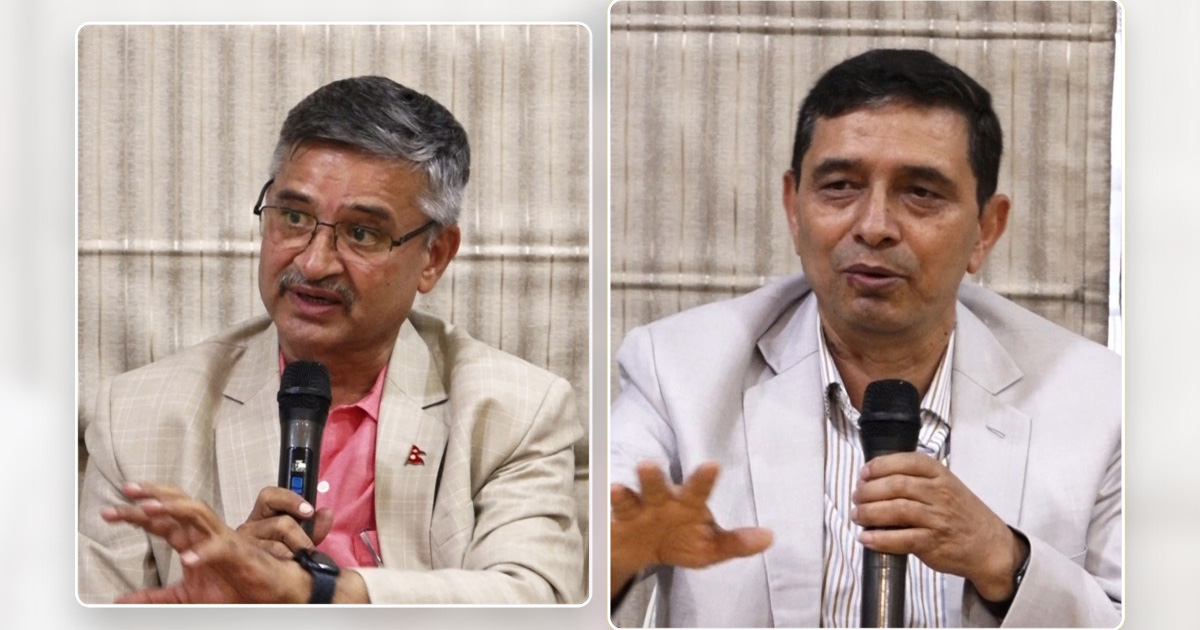
Kathmandu: Questions are arising over whether the "Sunset Law" the government has drafted to fast-track infrastructure development will increase development momentum or weaken transparency and local rights. The committee has prepared an initial draft and is set to submit it to the government this week; after discussions among concerned ministries, it is proposed to be presented to the cabinet. [1][2]
Why this matters
According to the government, provisions that set a three-month decision period and grant decision-making power to a steering committee will shorten approval procedures and reduce the years-long delays projects face. But at the same time — removing the need for repeat EIAs, a three-month deadline for forest-related decisions, and exceptions in royalty rules — could affect environmental risks, local revenue and the possibility of legal reviews. This raises questions about who will benefit and whose rights might be curtailed. [1][2]
What is being proposed — factual overview
-
It is proposed that if an approved EIA explicitly lists the sources and quantities of construction materials, a separate EIA should not be required again. [1]
-
For decisions on use of forest areas and tree felling, the relevant authority must decide within three months; if no decision is reached within the deadline, the steering committee chaired by the prime minister would be empowered to decide. [1]
-
There are provisions for a special expedited process for projects declared "transformative projects." [1]
-
Facilitation and amendments are proposed for the Public Procurement Act and laws related to electricity, land acquisition and guthi (trust) matters. [1]
-
Mineral materials used on-site (stone, gravel, sand) would be exempt from royalties if used within the project, but if taken out, royalties would be payable to the local level. [1]
"Alongside legal reform, the proposal also includes measures to address implementation obstacles that arise."
(Arjun Jung Thapa, committee coordinator; programme statement/press statement) [1]
"The government may introduce a separate law to remove complexities in infrastructure construction; otherwise, legal obstacles can be removed through the Sunset Law."
(Keshav Kumar Sharma, former secretary; comment at the programme) [1]
Background — where current obstacles come from
Current major causes of project delays include procedural reviews of EIA/ESIA, forest permits and tree felling, land disputes and re-examinations or protests from local levels. The committee coordinator cited the Prithvi Highway as an example, claiming that despite an EIA being completed in 2018, local authorities demanded a fresh preliminary test and caused delays. [1]
Case study (notable example)
Prithvi Highway expansion — According to the committee, an environmental and social impact assessment was completed in 2018 and the sources/quantities of construction materials were clearly specified, yet implementation was delayed due to local-level demands for re-testing. [1]
(Note: For this article the relevant EIA copy and local-level correspondence scans/PDFs were not available at the time, so search details are included in the sources list.)
Stakeholder analysis — benefits and risks
-
Government/corporations: Naturally, they will claim projects will accelerate and capital investment will rise, enabling faster attainment of development goals. [1]
-
Construction businesses/contractors: They will claim cost and time savings from easier permits and procurement; but if transparency decreases, those with improper access may benefit. [1]
-
Local governments/communities: Concerns about weakening of customary use, land rights and environmental protection; changes to royalty arrangements could affect local revenues. [1]
-
Environmentalists/civil society: Removing EIA review provisions may lead to underassessment of environmental risks and weaken public hearings. [1]
-
International donors/banks: Questions whether project safeguards and loan covenants will be met; discrepancies could affect grant/loan conditions. [1]
Zone of doubt — who benefits and what might be hidden?
-
Who benefits? — Rapid procedures are most likely to benefit private contractors, large construction firms and business groups with connections to officials or the steering committee. [1]
-
What is being hidden? — Public hearings may be shortened, avenues for local objections narrowed, and opportunities for close scrutiny of EIA substance or boundaries reduced. [1]
-
Constitutional challenge — Questions may arise about how the steering committee’s decisions affect independent judicial review or constitutional rights; potential legal challenges could emerge. [1]
International standards and comparison (brief)
International financial institutions such as the World Bank and ADB require project-based safeguards; any de-regulation model that undermines these safeguards can create problems with lender conditions. Some South Asian countries, including India, have used 'project exemptions' to speed approvals, but international practice emphasizes maintaining environmental appeal processes. (For specific international embedded cases, the policies of the respective institutions should be checked.) [— unavailable]
Legal and administrative benchmark
To verify all claims, direct quotations from the draft’s wording, the legal basis for the steering committee and the relevant sections (articles/clauses) are necessary. At the time of writing, the draft copy was not publicly available, making it impossible to include direct quotations; the search log and notes on where information was not found are included in the sources section. (See detailed search-log — sources part) [1][2]
Policy recommendations (practical and verifiable)
-
Transparency mechanisms: Clarify whether the draft exists and publicly publish scannable PDFs tracking all related legal amendments. [1]
-
Mandatory public hearings: Even if EIA re-requirement is removed, provisions must ensure legally guaranteed local-level hearings and avenues for objection. [1]
-
Transitional safeguards: When applying a three-month deadline, publish how environmental and social indicators will be monitored and the KPIs to be used. [1]
-
Judicial access and review: Include a framework that clearly preserves the right to judicial review of steering committee decisions. [1]
-
Protect local revenue: Changes to royalties should not reduce local government income — conduct impact assessments and provide compensation or alternatives if needed. [1]
What happens next — possible timeline
-
Committee to submit the draft to the government — this week (per the committee’s announced schedule). [1]
-
Discussions among ministries and incorporation of suggestions — from a few weeks up to two months. [1]
-
Cabinet approval and introduction to parliament — timing depends on ministry discussions. [1]
Conclusion
The government’s argument that easing procedures will facilitate development projects could resolve practical problems; however, time-limit provisions and the authority granted to the steering committee may have long-term effects on regulatory safeguards and local rights. Therefore, publishing the draft and subjecting each amendment clause to legal, environmental and public scrutiny should be a priority—otherwise 'speed' risks reducing 'accountability'. [1][2]
Sources
-
"Sunset Law prepared to remove legal obstacles to infrastructure projects; draft to be submitted to government this week" — Thaha Khabar. [Press statement and programme quotes from committee coordinator Arjun Jung Thapa] https://www.thahakhabar.com/detail/302164
-
"Sunset Law prepared to remove legal obstacles to infrastructure projects; here are the proposals" — Online Khabar. https://www.onlinekhabar.com/2026/06/1944120/sunset-law-prepared-to-remove-legal-obstacles-to-infrastructure-projects-here-are-the-proposals
- Note on documents/status: The committee’s full draft and related EIA/local-level correspondence were not publicly available when this article was prepared. During the search I checked state official portals, relevant ministry publication pages and committee press notes; because appropriate copies/scans were not obtained, attaching the direct PDFs of the documents is currently unavailable. The two cited news items above present the committee’s statements and summaries of draft provisions.