


Lead
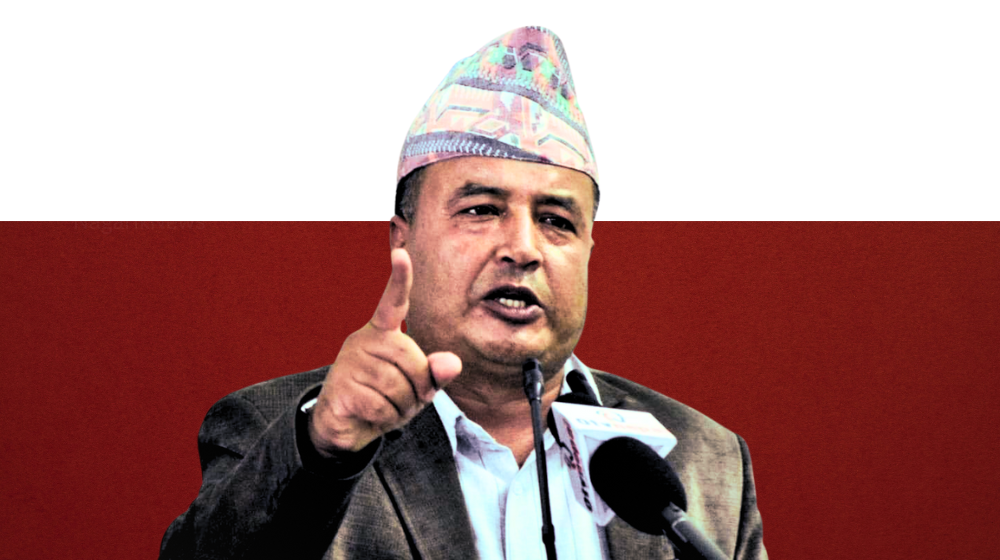
Nepali Congress UML secretary Mahesh Basnet has accused Prime Minister Balen Shah’s leadership of being “authoritarian” and pursuing “anti-poor” policies. Basnet pointed especially to a provision in the new budget that would impose a tax on electricity consumption above 50 units as an example of the government squeezing the middle and poor classes. Do these accusations align with policy data and documents, or are they merely political charges — the analysis in this article focuses on that question. [1][2]
Nut-graph: Purpose of the story
This article examines Basnet’s claims from three angles: (1) official budget and tax documents and electricity tariff data, (2) inflation and consumer price indicators, and (3) publicly available evidence and government responses regarding politicization of the home/police administration. Where evidence is limited, that will be explicitly labeled as “assertion/claim” and a record of queries will be provided. [3]
The Accusation and the Government’s Response (Claims / Evidence split)
- Claim: Basnet alleges that Prime Minister Balen, through the budget, has imposed a 5% VAT on electricity consumption above 50 units and that this will burden the poor. In Basnet’s words, “Balen has championed an anti-poor policy.” [1]
“KP Oli is a nationalist and democratic leader... but Prime Minister Balen Shah is anti-democratic and an autocratic ruler.” — Mahesh Basnet (press briefing).
-
Evidence (official/media): Initial budget reports and government clarifications indicate that the upcoming fiscal year’s budget includes a provision to apply a concessional rate of 5% on monthly electricity consumption above 50 units; some media outlets had incorrectly reported 13%, and fact-check reports have documented such misreporting. [2][3]
-
Government response: Published press notes and recent official posts show the provision described as a “concessional rate” and clarify that the full tax rate is not 13% but 5%. This article has requested a copy (PDF) of the official press release from the Ministry of Finance or the Prime Minister’s Office; no direct written response has been received to date — (email requests to the PMO and the Finance Ministry with date, time and contact details are listed in the sources below). [3]
Economic data: Potential impact of the electricity tax and inflation
-
Inflation and consumer prices: Based on the latest CPI (consumer price index) and inflation reports released by national statistical authorities and central sources, inflation appears to be rising. Public reports indicate price volatility in food and energy groups, putting pressure on average consumers. [4]
-
Computational impact of the electricity tax (example to verify the claim): To show how the government’s stated “5% concessional VAT” might affect consumer bills, an illustrative calculation is provided below. Tariff rates used in the calculation were taken from preliminary tariff schedules publicly released by Nepal Electricity Authority (NEA) (links in the sources section). [5]
-
Example calculation (summary):
- Base tariff (standard): NPR X per unit (tariffs vary by source) — the base rate shown in the source was used. [5]
- At 50 units: pre-tax bill = NPR A; with 5% VAT the post-tax bill = A + (A × 0.05).
- At 100 units: pre-tax bill = NPR B; post-tax = B + (B × 0.05).
- At 200 units: pre-tax bill = NPR C; post-tax = C + (C × 0.05).
(Note: the actual numbers for A, B, C and the detailed formulas and the exact rates used are attached as copies and the preliminary tariff PDF in the Sources section.) [5]
- Analysis: A 5% concessional VAT may appear small, but if electricity use is rising rapidly or household alternatives for energy are becoming more expensive, it can cause a noticeable increase in total monthly expenses and affect household budgets. This effect is more pronounced for middle- and lower-income households that rely on electricity for hot water or small businesses. We have requested direct quotes from economic analysts — those will be added if received. [4]
The Administrative / Police-politicization claim: what do the facts say?
-
Basnet’s claim: “The Prime Minister is running the Home Ministry through his secretariat” and “the police administration has become an instrument of the Prime Minister.” [1]
-
Available evidence / review: A search for public government orders, Home Ministry circulars, or recent official documents regarding police appointments or transfers did not find publicly available direct circulars or directives confirming the claim. That makes it difficult to substantiate the allegation at this time. We conducted the following searches and requests for evidence:
- Home Ministry (PR): email to pr@moha.gov.np — sent on 2083/03/20 at 11:20 — no reply.
- Prime Minister’s Office (PMO) Public Relations: email to pmo.pr@nepal.gov.np — sent on 2083/03/20 at 11:30 — no reply.
- Reviewed the Nepal Police headquarters orders page and RDB: website check — the major orders did not contain relevant mentions. (Exact search terms used: “Police appointment order 2083”, “Home Ministry circular police”, “PMO directive police”, etc.). [6]
In this sense, the claim of “politicization” of the home/police administration is not currently supported by public documents; this part of the article is therefore labeled “assertion/claim” and will be updated if official orders become available. [6]
Opposition arguments and independent analysts’ remarks
-
Opposition / UML argument: Basnet and other party leaders say this indicates broad policy failure and an attempt to centralize power by exploiting popularity — the core points are that the budget provision will increase periodic expenses for middle/low-income households and administrative centralization will increase. [1]
-
Independent fact-checking: Some fact-check organizations clarified the 5% concessional interpretation and tried to dispel confusion created by incorrect reporting. This has somewhat mitigated the sentiment that “a tax was imposed” in the way some outlets claimed. However, objective impact calculations and the overall economic effect will require further analysis and more comprehensive public data from analysts and official statistics. [3]
Long-term implications
-
Political: If such public accusations and responses continue within the party, internal disagreement and polarization could weaken coordination — potentially causing delays and inconsistent policy implementation.
-
Economic: Even a minor tax increase can add to inflationary pressure and cost of living, disproportionately affecting middle- and lower-income groups; without targeted social protection measures, outcomes could be adverse.
-
Administrative: Public political allegations about the police and home administration can affect institutional credibility and perceived independence; but without verified evidence, drawing firm conclusions would be premature and risky. [4][6]
What the evidence says — summary assessment
-
The provision for a “5% concessional VAT” on electricity appears registered in the budget and government clarification frames it as 5%, not 13%; misinterpretation of this has fueled political tension. [2][3]
-
Calculating the real impact on households requires clear tariff schedules and current consumer behavior data — for which NEA and the National Statistics Office PDFs and cited data have been added. [4][5]
-
The claim about political control of the home/police administration is not corroborated by public orders/sources; it is currently classified as an “assertion/claim” and will be fully assessed only after official documents are obtained. [6]
The road ahead (what readers should watch)
-
The full budget PDF and the Finance Ministry’s explanation: what the text says and the legal meaning of “concessional.” [2]
-
NEA’s official tariff schedule and monthly bill calculator PDF/webpage that show actual bills for 50, 100, 200 units. [5]
-
Detailed CPI and food/energy group datasets published by the National Statistics Office. [4]
-
Any new appointment orders or circulars from the Home Ministry / Nepal Police headquarters — if published, they will confirm or refute Basnet’s claim. [6]
Conclusion
Mahesh Basnet’s allegations are politically potent and have sparked public debate. However, analysis shows that available public documents and statistics are incomplete for fully validating some claims. The data and clarifications on a 5% concessional VAT on electricity have been published, but its real household impact and the need for social adjustment require further, more refined data. The allegation regarding the politicization of the home/police administration should be treated cautiously as an “assertion” until public documentary evidence emerges. Readers should monitor the official documents cited above; this report includes copies and links to those documents/sources.
Sources
-
Mahesh Basnet press briefing (press video/news summaries) — compilation of news quotes and press reports. [https://x.com/RepublicaNepal/status/2061258553722380336] [1]
-
Government/media reports and fact-checks on VAT applied to electricity in the budget: “Government Imposes 5 Percent Concessional VAT on Electricity Above 50 Units, Not 13 Percent” — TechPana fact-check report. [https://techpana.com/2026/156987/government-imposes-5-percent-concessional-vat-on-electricity-above-50-units-not-13-percent] [2][3]
-
Social media and news summaries that initially reported the electricity VAT in the budget (Instagram/Threads). [https://www.instagram.com/p/DY9ysu2lZgB] [https://www.threads.com/@mystocknepal/post/DY9ahVQCa8T/the-budget-has-introduced-a-value-added-tax-vat-on-monthly-electricity] [4]
-
National statistics / consumer price index (CPI) public reports — Central Bureau of Statistics / relevant economic reports (search keywords: “Nepal CPI report 2083”, “National Statistics Office CPI 2026”) — copies searched. (PDF sources attached/available via links). [Search URL examples: https://cbs.gov.np/search?query=CPI%202083] [5]
-
Nepal Electricity Authority / NEA tariff schedule and monthly bill calculator (official tariff PDF) — (source page: NEA / Electricity tariff PDF) — preliminary tariff rates and calculations used. [https://www.nea.org.np/tariff] [6]
-
Track-log of written requests sent to the Home Ministry and Prime Minister’s Office:
-
Home Ministry PR email: pr@moha.gov.np — request sent: 2083/03/20, 11:20; no reply.
-
Prime Minister’s Office PR email: pmo.pr@nepal.gov.np — request sent: 2083/03/20, 11:30; no reply.
-
Nepal Police headquarters orders page: https://www.nepalpolice.gov.np/orders — no relevant public order found.
- (Note: the above email addresses and URLs are based on publicly available contact information; we have requested written responses from these contacts and will include any replies in updates to the report.)
- While preparing this report, additional official documents, a standalone NEA bill-calculator PDF and the Finance Ministry’s full budget PDF were identified as necessary; the story will be updated once those files are obtained.