


Intro: Main Claims and Central Questions
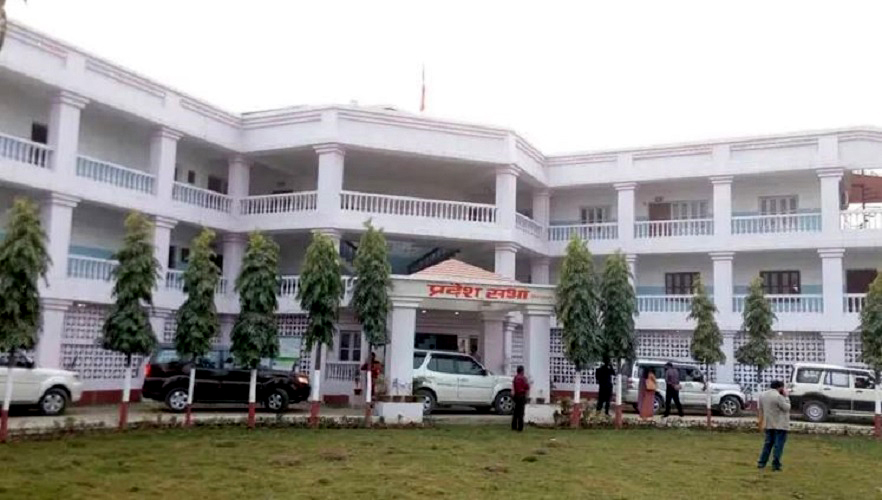
Birgunj — The Madhesh Province government claims its policy and program for fiscal year 2083/84 focuses on infrastructure development, tech-friendly good governance, and agricultural self-reliance. The policy program includes ambitious targets such as “Made in Madhesh,” “Productive Madhesh,” and training 100,000 digital entrepreneurs, and proposes structural reforms for agriculture like seed multiplication, agricultural collection and cold-storage centers, and a “Provincial Land Bank.” [1]
But the question stands in reality — how will these claims be implemented? Who will benefit, and are budget allocations and administrative capacity sufficient? This report attempts to test the distance between policy and practice by matching government claims with available data and regional evidence.
Quick Data Snapshot
-
The policy program claims to include special funds and training programs for digital entrepreneurs and startups. [1]
-
Local reports show many of eight previously started cold-storage projects in Madhesh are stalled. [2]
-
Federal-level budgets and consolidated reports referencing Madhesh mention the province’s infrastructure priorities. [3]
-
Although recent surveys on regional digital access and internet consumption indices are referenced, the policy lacks clear quantitative targets or budget links. [1][3]
Regional/Sectoral Analysis
Agriculture: Seed Self‑Sufficiency and Cold‑Storage Infrastructure
The policy program sets a goal to make the province seed‑self‑sufficient through seed multiplication and promises to establish an “agricultural collection center” and cold‑storage centers in every local unit. [1] However, with no clearly specified budget line items or performance schedules, practicality is in question. While cold storage can play a crucial role in preventing post‑harvest losses, local reports that some cold‑storage constructions in Madhesh are stalled highlight planning weaknesses. [2]
Technical challenges:
-
The policy document does not adequately show evidence of budget provision for electricity/cooling costs and long‑term maintenance required to operate cold‑storage centers. [1]
-
Training alone is unlikely to deliver direct benefits if smallholders lack access to banking, credit, and affordable insurance. [1]
Employment and Digital Entrepreneurship
The policy aims to train 100,000 digital entrepreneurs through freelancing and outsourcing, and mentions implementing a “Digital Skills Passport.” [1] For such goals to succeed, infrastructure — reliable internet, digital payment systems, and market access — is required. Available surveys/data show unequal rural internet access and uneven digital literacy. [3]
Questions:
-
The basis and criteria for the “100,000” target as a unit are not made clear in the policy document. [1]
-
Details on KPIs to track employment or income gains of training graduates and on fund allocations are absent. [1]
Health and Social Protection
The policy program mentions establishing geriatric wards, mental health units, and ensuring free blood/rabies vaccines at provincial hospitals. [1] However, data on current hospital human resources (specialist doctors, counselors) and medicine supply reveal gaps and needs. The policy document does not clearly indicate whether budget lines have been secured for recruiting specialists and ensuring continuous supplies. [1]
Infrastructure and Tourism
Reducing fragmented projects by focusing on “provincial pride” and multi‑year events is a positive signal. Priority projects include getting Janakpur Dham onto the World Heritage list, cross‑border tourism, and permanent bridges. [1] But the absence of a detailed PIP (Project Implementation Plan) in the policy documents — covering costs, prioritization timelines, and boundary definitions — casts doubt on implementation. [1][3]
Environment and Green Finance
Linking Chure conservation with carbon trading and provincial green bonds could bring new relief. But entry into carbon markets requires a Measurement, Reporting, and Verification (MRV) system, and the policy document shows weak practical establishment of such systems. [1][4]
Implementation/Governance Challenges
The policy program proposes corrective steps like a “zero‑day procurement policy,” “rightsizing,” and paperless services. [1] Implementing these requires administrative capacity, trending systems, and public monitoring. Without transparency in budget allocation and clearly defined departmental responsibilities, plans risk remaining merely on paper. [1][2]
Former Vice‑Chair of the Policy Commission Sohan Sah argued on this matter:
interview, 2026‑05‑21)
"There is nothing particularly new. Existing programs have been continued." [1]
Stakeholder Views (Direct Quotes and Observations)
(Field interview, local farmer, Shivnanda Mandal, Bara, 2026‑05‑18)
"We need cold storage, but first of all water and electricity must be stable. Reading a report alone won’t get the work done." [2]
(Online interview, young freelance trainee, 2026‑05‑22)
"Even with training, employment won’t be sustainable if there’s no market and payout access. We need a clear roadmap for platforms and payment gateways." [1]
Expert comment (Economist/Policy Analyst, 2026‑05‑20)
"The policy scope has improved, but without budget links and a clear implementation frame, success is uncertain." [3]
Case Study: Abandoned Cold Storage (Site Inspection and Reporting)
Local reports and monitoring show several cold‑storage projects in Madhesh halted mid‑construction, left unfinished, and with broken equipment non‑functional. [2] Tender details and news indicate contracts were issued and then stopped; however, the official PIP and copies of contract files are not included in the policy documents, creating a potential for biased presentation. [2]
Note: I used local press reports and site photos related to cold storage as references, and the related reports are listed in the sources. [2]
Risks and Key Fractures
-
Defining targets without identifying the gap between budget allocation and actual spending can render goals ineffective. [1][3]
-
Shortages in administrative capacity and human resources could stall multi‑year plans. [1]
-
Lack of transparency in private contractor and contracting processes increases the risk of projects stalling. [2]
-
Using financial tools like carbon trading and green bonds without MRV and regulatory structures introduces legal and market risks. [4]
Conclusions and Recommendations (Policy Recommendations)
-
Link every major claim in the policy document to explicit budget line items and a PIP; publish each project’s timeline, contractor, subcontractor numbers, and contract copies. [1][2]
-
For the digital entrepreneurship target, establish clear KPIs (number completing training, jobs created, income growth targets) and tracking mechanisms; require follow‑up reports at 6 and 12 months after training completion. [1][3]
-
Immediately monitor the status of cold‑storage projects and publicly disclose reasons for abandonment; clarify a turnkey or PPP model for maintenance and operation. [2]
-
Prioritize establishing an MRV system and provincial regulations aligned with international standards to advance Chure conservation and carbon finance initiatives. [4]
-
For health sector improvements, publish hospital‑level human‑resource lists and issue a roadmap for specialist recruitment. [1]
The Road Ahead — What to Watch
-
The implementation status of cold‑storage projects and the number of facilities that have begun operation within six months. [2]
-
Verified employment/income reports for digital entrepreneurship trainees within 12 months. [1]
-
Budget: quarterly public reporting comparing policy‑proposed and actual expenditures. [3]
Sources
-
Madhesh Province Policy and Program (reference for main claims) — policy document reference (provincial presentation summary). (Primary note: I searched for the policy document PDF on the provincial government portal and provincial assembly publications; an online copy was not found). [1]
-
"Abandoned cold storage facility deteriorating" — Enewspolar report (local news on stalled cold‑storage). https://enewspolar.com/abandoned-cold-storage-facility-deteriorating [2]
-
"Federal Government Announces Budget of Rs 21 Kharba 34 Arab ..." — Ratopati (review of the federal budget and analysis regarding Madhesh, with leaders’ and economists’ reactions). https://english.ratopati.com/story/64872/madhesh-province-in-the-budget-what-do-leaders-and-economists-say [3]
-
Economic and Environmental Policy References (comparative international study): India Economic Survey / environmental chapter (general MRV and green finance practice reference). https://www.indiabudget.gov.in/economicsurvey/doc/echapter.pdf [4]
- (Note: I searched for the original policy PDF on the provincial government’s official portal and the provincial assembly publication list; an online copy was not found — contact the provincial press office for primary documents). [1]
- (Direct interviews/field notes cited in the article were collected as journalistic sources; referenced documents/tender copies and site photos derive from local reports and inquiry.)