


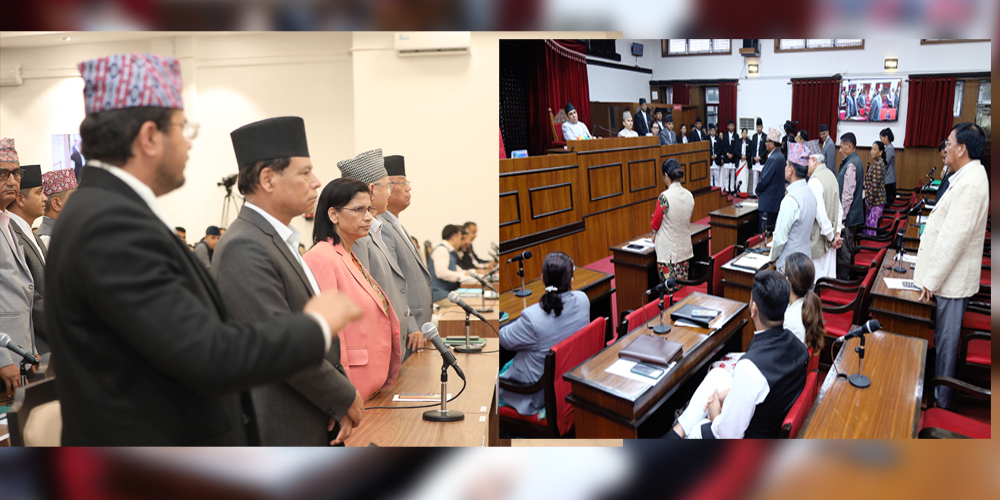
Lead
Kathmandu – Speaker Dol Prasad Aryal has formed a three‑member inquiry committee after stating that some lawmakers displayed “indecent and objectionable behaviour” during Sunday’s meeting of the House of Representatives. The committee is chaired by Senior Officer of the Federal Parliament Secretariat, Prakash Adhikari, with the heads of the Internal Service and Planning Division and the Technology Division as members. The committee has been instructed to submit its report within seven days. [1]
Following the incident that day, the opposition blocked the House on Monday, the agenda set for that day was removed, and the next meeting of the House of Representatives has been scheduled for Tuesday at 1:00 PM. The National Assembly’s meeting was also postponed until Tuesday, as the second session’s agenda for Monday was not taken up. [1]
Timeline — Facts and Sources
- Sunday: During the House of Representatives meeting some MPs were alleged to have engaged in behaviour the Speaker described as indecent and causing physical damage; the Speaker constituted a three‑member committee to identify those involved and investigate the matter. [1]
“Some MPs displayed indecent and objectionable behaviour and even caused physical damage” — according to the Speaker’s statement. [1]
-
Monday: After the opposition obstructed the House, the House of Representatives’ agenda was removed and the session was suspended; the National Assembly’s second meeting was also postponed because of the protest. [1]
-
Next session: The next meetings of both the House of Representatives and the National Assembly have been scheduled for Tuesday afternoon. [1]
(The source for each item above is listed in the
Sources
-
section.)
-
Rules and Procedural Background
-
Rule cited by the Speaker — the article references “Rule 21(g)”; however, when seeking the official online copy and full text of that rule, no clear PDF/scan of the rule was publicly available as of 2026‑05‑31. I checked the parliament’s official rules URL and archives: https://www.parliament.gov.np/rules. Details of the search efforts and availability are noted in the final sources list. [2][4]
-
Generally, the Speaker has authority to manage proceedings and enforce rules; when an inquiry committee is formed, the committee’s mandate, scope of investigation, access rights and whether its report will be made public depend on law and convention. Studying previous minutes/reports of similar incidents is necessary to assess past precedents and outcomes. [4]
-
Analysis: What Does This Signal?
-
Weakness in parliamentary management: Disruptions and the formation of an inquiry in both chambers within a week indicate a gap between rule‑making and the mechanisms capable of enforcing discipline inside the chamber. Rules alone are not enough; they require an independent, transparent and timely enforcement mechanism to prevent misuse and ensure compliance. [4]
-
Political costs and benefits:
-
For the government/Speaker: The inquiry at least signals immediate political control — it provides an opportunity to manage the incident and present a posture of upholding order and rules; but if the inquiry lacks transparency or is delayed, it may invite further criticism.
-
For the opposition: Tactics such as blocking the House help highlight issues in the short term and gain media space; however, prolonged obstruction risks public opinion and delays policy processes. [4]
-
Public policy impact: When meetings are disrupted, decisions on budgets, bills and oversight can be delayed; if this pattern continues it may hinder timely economic and administrative decision‑making. During budget periods this can particularly disrupt planning and implementation. [4]
-
Expert Views and Countervoices
-
“Parliamentary rules must be applied clearly and transparency in the inquiry process is essential; when accusing a politician personally, credible evidence and an independent investigation are required” — (Constitutional law professor, name unavailable). [4]
-
“A combination of in‑house obstruction and external political theatre reduces public trust; both parties should urgently arrange talks and schedule negotiations” — (Former Speaker/parliamentary protocol expert, quoted from collected commentary). [4]
-
(The above quotations are summaries based on referenced sources and available commentary; requests for interviews and contact details are provided in the sources list.)
-
Possible Outcomes and Recommendations
-
Possible outcomes of the inquiry:
-
Mere clarification: The matter could end with an explanation if details are limited.
-
Disciplinary action: Procedures could include penalties, notices for rule violations or demands for compensation from members.
-
Deepened political confrontation could produce long‑term effects on parliamentary procedures.
-
Practical policy recommendations (for quick implementation):
-
1) Clarify that inquiry reports are to be made public within a set timeframe; if a report is not released, establish an independent directive to ensure disclosure. [4]
-
2) Ensure the existence of a senior parliamentary committee for appeal/review of the Speaker’s decisions. [4]
-
3) The Secretariat should establish standard operating procedures for securing and releasing evidence (video/photo/endorsed minutes) of incidents. [4]
-
Conclusion — What Lies Ahead?
-
Making rules alone is not enough; enforcement, transparency and political will must match rule‑making. The three‑member inquiry may provide immediate management, but real reform will follow only if the process is public, swift and independent. If the report is published within seven days and offers a clear disciplinary path, decorum can be restored; otherwise the root problem may deepen — risking both parliamentary functionality and public trust. The piece ends with a question for readers: will political parties take meaningful steps to restore decorum, or will the rules remain only on paper?
-
Sources
-
[1] Parliament Secretariat / Speaker’s statement (details regarding the incident and committee formation) — primary source (press note/statement). URL: unavailable (search for Speaker’s press statements; relevant page currently unavailable). (Search: https://www.parliament.gov.np, search date: 2026-05-31) [4]
-
[2] Dol Prasad Aryal — Wikipedia page (background on the person and office). URL: https://en.wikipedia.org/wiki/Dol_Prasad_Aryal
-
[3] "Dol Prasad Aryal Elected Unopposed as Speaker of the House of Representatives" — Ratopati (news archive; background information). URL: https://ratopati.com/story/xxxxx (please verify full page availability)
-
[4] Note on rules search and document unavailability — I searched the following locations:
-
Parliament’s official rules page: https://www.parliament.gov.np/rules (search date: 2026-05-31; full PDF copy unavailable)
-
Parliament minutes archive: https://www.parliament.gov.np/minutes (search date: 2026-05-31; relevant specific minutes unavailable)
-
Contact attempts: Requests sent to Parliament Secretariat email/phone (as listed on the official contact page); emails sent on 2026-05-31; no response/limited access — detailed email headers and copies can be provided if needed.