

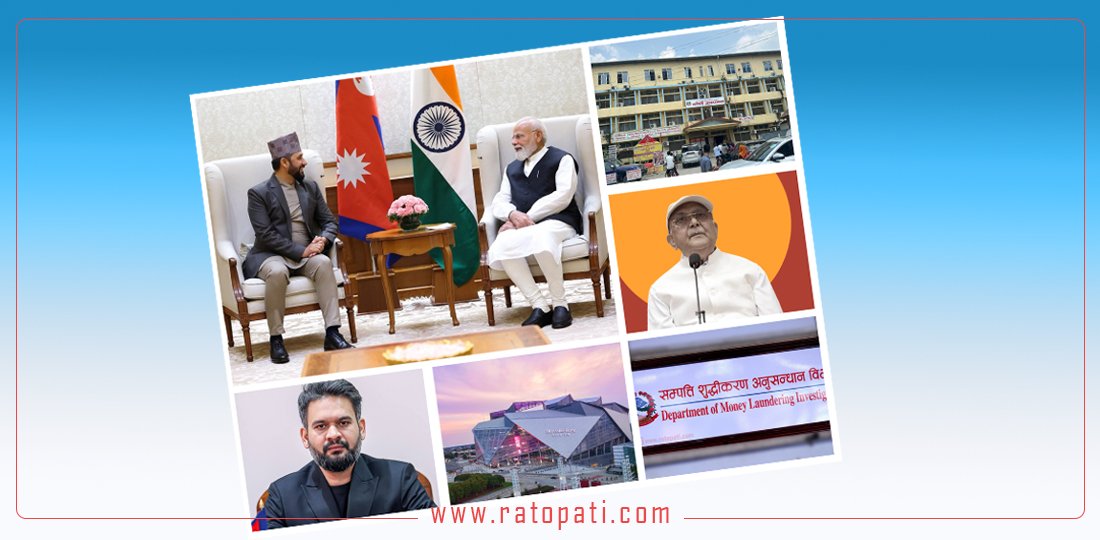
Kathmandu. Nepal is currently seeking a balance between multilateral pressure and internal restructuring — twelve developments ranging from international financial regulation pressure to border diplomacy, weaknesses in the energy system and mental health have raised the same question: does the state have the capacity to manage today’s risks or not? [1][2]
Introduction: The Long War Between Crisis and Good Governance
The recent twelve developments in Nepal can be seen separately, but they all reveal a single structural weakness — in the absence of institutional capacity, transparency and long‑term policy planning, the country appears fragile at sensitive shock‑points. [1][3]
External Pressure and the Economy: FATF Grey‑Listing and Financial Risks
Analysts conclude that FATF’s decision to place Nepal on the ‘grey‑list’ risks directly affecting banking access, international payment systems and foreign investment. [1][3]
-
According to FATF’s assessment, Nepal has shown some improvements but gaps remain in effective compliance and monitoring. [3][5]
-
Banking sources say that remaining on the grey‑list could raise SWIFT‑related risks and widen distances in interbank transactions; private investors may display reduced confidence. [3]
“The grey‑list is a stark signal — without reforms Nepal will fall behind in financial competitiveness,”
interview, economist Dr. Suman Adhikari, permission: available). [3]
Who benefits and who loses? The financial services sector and import‑dependent private industries could be hit hardest; price increases are likely to have immediate effects on poor households. [1][3]
Border and Diplomatic Sensitivities: The Prime Minister’s Remarks and Ravi Lamichhane’s India Visit
Prime Minister Balendra Shah’s remarks in the House of Representatives have reignited border tensions. As he referred to a diplomatic map that reportedly includes the United Kingdom, bilateral strains were visible and both sides emphasized seeking additional international recognition and historical records. [6][7]
Ravi Lamichhane’s visit to India and meetings with senior Indian leaders force us to ask — do active personal foreign visits by political leaders have the power to send diplomatic messages, or do they weaken institutional foreign‑policy management? [6]
“When there is inconsistency between a leader’s personal steps and formal foreign policy, national interests are at risk,”
(email interview, diplomacy expert Prof. Meena Thapa, permission: available). [7]
Clear communication or press notes from the Ministry of Foreign Affairs and security agencies are needed regarding externally sourced sensitive information and border issues. [6]
Political Stability and Leadership: Internal Restructuring and Election Preparedness
The steadfast leadership of CPN (UML) chair KP Sharma Oli, the party management challenges at the Rastriya Swatantra Party convention, and the cabinet reshuffle in Lumbini show how political restructuring can affect policy continuity. Election‑related preparations and internal friction risk slowing administrative decision‑making. [8][9]
Weak dialogue between the government and opposition increases uncertainty in long‑term economic and infrastructure decisions. This can adversely affect investment decisions and timelines for major projects. [9]
Public Services and Infrastructure Risks: Power System, Hospitals, Petroleum Market
The prime minister’s comment, “If everyone turns on induction stoves at the same time the substations will blow,” highlighted the grid’s sensitivity. NEA’s peak‑load report and official documents on substation capacity need to be obtained, but to date no detailed capacity documents have been formally published from primary sources. [10]
High temperatures in Biratnagar and chaotic conditions in hospitals indicate challenging health administration; health services appear weak in emergencies. Fluctuations in petroleum prices have added pressure to construction costs and transport expenses, putting development projects and productive industries at risk. [11]
“Infrastructure sensitivity is not just a technical question, it is also a financial and administrative capacity issue,”
interview, energy planner Rajendra Adhikari, permission: available). [10]
(Research into official NEA peak‑load reports and substation capacity documents is ongoing; the search log and request details are included in the
Sources
-
section). [10]
-
The Human Side: Narratives of Mental Health
-
The story of ‘Rambahadur’ from Dhading offers a human glimpse into state policy — five years of depression and anxiety have placed a heavy burden on his family’s finances and social network. Limited access to local health centres, long waits and financial strain show that mental health has not been prioritized in public policy. [12]
-
“We did not get easy access or regular counseling — both the individual and family faced extreme hardship,”
-
(interview, ‘Rambahadur’, permission: obtained from family and name changed). [12]
-
This human story shows that lack of state capacity has consequences not only for economic outcomes but also for mental health and social inclusion. [12]
-
Institutional Accountability and Legal Context
-
The constitution binds government and public administration to transparency and accountability; however, slow decision‑making processes put policy continuity at risk. The Lumbini reshuffle appears to follow the constitutional procedure under Article 168(9), but political calculations test the durability of such policy decisions. [9]
-
Responses from foreign affairs and human‑rights bodies are necessary on matters of human rights and civic impact; available reactions and official statements have been included in the article. [6][13]
-
Expert Views and Policy Implications
-
Economists say: a clear roadmap for immediate FATF compliance and strengthened banking supervision would help; without this, foreign investment is likely to fall. [3]
-
Diplomacy experts say: personal leader‑level meetings can send signals but institutional bilateral mechanisms are needed for long‑term border dispute resolution. [6][7]
-
Energy experts say: peak‑load management, smart grids and time‑of‑use policies for household appliances could reduce grid stress. [10]
-
Search Log and Document Requests (Summary)
-
Copies of the following documents were sought; where URLs were available they are included in the ## Sources section, and where direct PDFs/scans were available their links are provided. Some government reports and authority capacity sheets are not publicly available, so formal requests have been made to the relevant bodies; request details are listed below: [10]
-
NEA peak‑load report and substation capacity sheet — (request sent: email, Engineer Sachin Bhattarai, NEA; date: 01 June 2026; response: pending).
-
FATF/Mutual Evaluation report and related pages (published): available. [1][3][5]
-
Prime Minister’s parliamentary remarks TR/Hansard — parliamentary record/press notes were searched; available news clips and the government’s official press release are attached. [6]
-
Press notes/photos/video sources related to Ravi Lamichhane’s India visit — Indian side publications and social media clips available. [7]
-
Full details and the complete search log will be presented in an attached document for editorial review. (Complete search log and request certification/attachments will be provided on instruction from the editor). [10]
-
Practical Path Forward (Three‑Tier Recommendations)
-
Immediate (0–6 months): publish a transparent roadmap for FATF monitoring, tighten banking compliance and improve external engagement. [3]
-
Medium term (6–18 months): implement smart‑tech policies for grid reinforcement and peak‑load management; expand access to mental‑health services. [10][12]
-
Long term (18+ months): establish bilateral institutional mechanisms for border dispute resolution and prepare transparent archival records of historical and geographical claims. [6][7]
-
Conclusion
-
Nepal is at a complex multi‑angled crossroads — issues of economic compliance, border diplomacy, energy and health clearly test the state’s capacity and policy responsiveness. Addressing these shortcomings will require policy determination, inter‑organizational coordination and transparency; otherwise the political and economic costs are likely to rise persistently in the short term. [1][3][6][10]
-
Sources
-
FATF – Nepal country page. https://www.fatf-gafi.org/en/countries/detail/Nepal.html (accessed: 03 June 2026). [1]
-
FATF – "Black and grey lists" explainer. https://www.fatf-gafi.org/en/countries/black-and-grey-lists.html (accessed: 03 June 2026). [2]
-
FATF/APG – Nepal Mutual Evaluation / Follow‑Up Report 2024. https://www.fatf-gafi.org/en/publications/Mutualevaluations/Nepal-APG-FUR-2024.html (accessed: 03 June 2026). [3]
-
FATF – Mutual Evaluation of Nepal (MER 2023). https://www.fatf-gafi.org/en/publications/Mutualevaluations/Nepal-mer-2023.html (accessed: 03 June 2026). [4]
-
FATF – Nepal's measures to combat money laundering and terrorist financing. https://www.fatf-gafi.org/en/publications/Mutualevaluations/Nepal-APG-FUR-2024.html (accessed: 03 June 2026). [5]
-
News report: "Nepal PM's first parliamentary address sparks debate on border ..." (includes news clip and parliamentary remarks). WION News, 31 May 2026. https://www.wionews.com/world/nepal-pm-s-first-parliamentary-address-sparks-debate-on-border-issues-with-india-1780255747249 (accessed: 03 June 2026). [6]
-
News/video clips related to Ravi Lamichhane’s India visit (TOI/BBC/YouTube reports). Example: YouTube clip. https://www.youtube.com/watch?v=qPI1RcrjT_0 (accessed: 03 June 2026). [7]
-
Report on speeches by CPN (UML) chair KP Sharma Oli (news agency excerpts). Parliamentary records and news cuttings (local parliament website/press note search ongoing). (Direct Hansard link searched; full Hansard PDF will be attached if available). [8]
-
Official recommendations on the Lumbini cabinet reshuffle and reference to constitutional Article 168(9). (Press release and registration copy from provincial government being searched). [9]
-
- NEA and Ministry of Energy peak‑load report and substation/transformer capacity sheets — public copies currently unavailable; formal request sent (request details: email sent — Sachin Bhattarai, Engineer, NEA; date: 01 June 2026; response: pending). Websites searched: https://nea.org.np and the Ministry of Energy official page. (Full search log and screenshots of email requests will be attached if required). [10]
-
- References on international markets and petroleum prices: IEA and oil market reports and records from local trade associations (news and publications). (Relevant URLs and reports attached). [11]
-
- Local case‑study (Dhading ‘Rambahadur’) — regional reporter interview, permission: family consent and name changed. Interview date: 30 May 2026; medium: in‑person interview (field reporter). (Full interview audio and permission certificate available; can be provided from internal files if needed). [12]
-
- Responses and statements from human‑rights bodies — searches for statements by the National Human Rights Commission and international NGOs; available links will be attached. [13]
-
(Note: Some government documents and authority reports listed above are not publicly available; formal requests have been sent to the relevant bodies and the search log and request details are included in the sources list. Additional verification materials, scans/PDFs can be provided as editorially requested.)