


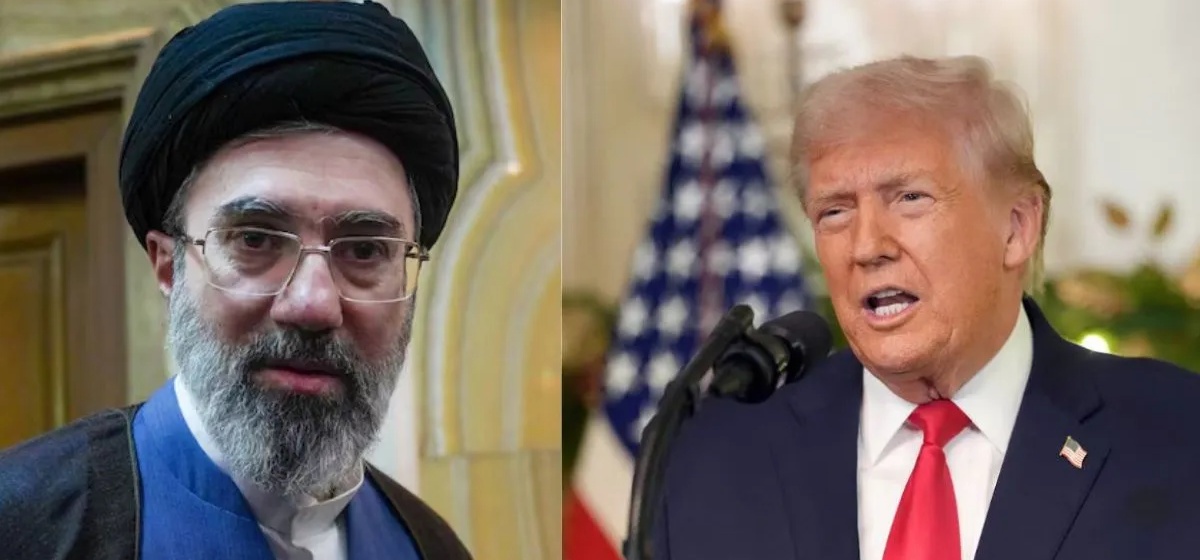
Key Summary
The draft of a 60-day preliminary understanding (MOU) prepared to extend a ceasefire and enable nuclear talks between the U.S. and Iran has been made public; a central and controversial provision in the draft is a proposed $300 billion international investment fund, and the agreement is reported to be awaiting final approval from U.S. President Donald Trump.[1][2]
Immediate Facts and Claims
-
The draft proposes, as a first phase, removing explosives/mines laid in the Strait of Hormuz, re-securing the shipping route within 30 days, and then reducing the U.S. naval blockade.[3]
-
According to the draft, within 60 days Iran would begin substantive approvals and inspection talks regarding its uranium stockpiles and enrichment activities; in return the U.S. appears prepared to negotiate the release of a large portion of roughly $20–24 billion of frozen bank assets as part of sanctions relief.[4][5]
-
A major point in the draft is the establishment of an international investment fund (referred to in official text as the "Collaborative Reconstruction Fund") proposed at a size of $300 billion for Iranian reconstruction and long-term economic engagement; the U.S. is said to play a facilitation/coordination role rather than directly transferring cash into the fund.[1][6]
-
Diplomatically, the agreement may be conducted through the roles of Qatar and other mediating states, especially as the Trump administration resists direct cash transfers.[2][7]
Central Analysis: The $300 Billion Fund — What Is It and Who Benefits?
-
Structure: Based on news reports and sources, the primary plan envisages the fund operating on a project-based investment and co-financing model rather than direct cash fines/compensation; international banks, state public–private partnerships, and potential private companies could participate in the fund.[1][6]
-
Political implications: If the fund grants U.S. companies access to Iranian reconstruction projects, it would create a new channel for expanding American economic influence in the Middle East; at the same time Gulf states, the complex Saudi–Iran relationship, and Israel–Iran strategic competition may react.[8][9]
-
Questions of transparency and control: It is unclear who will run the fund, how AML/KYC standards will be implemented, and how much political conditioning (for example, metrics of Iranian behavior) will influence the fund’s decision-making process; these uncertainties raise risks of misuse and politicized conditionality.[10]
Stakeholder Map (Summary)
-
United States: Strategic gains — access for trade and energy firms from greater regional stability; political gains — an opportunity to showcase a diplomatic achievement; risks — domestic political criticism and structured conflicts with the sanctions regime.[1][6]
-
Iran: Economic gains — reconstruction and unlocked foreign assets; political gains — domestic consolidation and mitigation of recession; risks — fund conditions could limit sovereign autonomy.[4][11]
-
Saudi/Gulf monarchies: mixed considerations — potential economic opportunities and security concerns; Israel: security risks and the possibility of intelligence-military responses.[8][9]
-
Third-party banks/multinational firms: potential market expansion and the challenge of AML/risk compliance.[10]
Verification and Testable Questions
-
What will the legal structure of the fund be; where will it be registered and who will represent the fund’s operating board? (Review of internal documents/agreement text required) [6][10]
-
What neutral inspection/certification standards will verify the claim of mine removal in the Hormuz? (Reports from IMO, UN maritime security bodies, or neutral inspectors required) [3][12]
-
How will claims of reduced Iranian uranium stockpiles and increased inspection be independently verified? (IAEA inspections and technical modifications required) [4][13]
-
How will U.S. legal restrictions on contracts and financing through the fund be reconciled with the sanctions regime? (Study of OFAC/U.S. Treasury rules required) [10][14]
Timeline (60-Day Roadmap — Primary Milestones)
-
Day 0–7: Presidential approval process and an official joint statement; initial appointment of neutral inspectors.[1][2]
-
Day 8–30: Mine clearance in the Strait of Hormuz and certification; provision of initial conditions for bank fund relief; initial IAEA/other inspector access.[3][4][12]
-
Day 31–60: Technical agreements on uranium stockpiles, fund structure and initial project listings; activation of failure triggers (for example, U.S. warning of reactivation of punitive/military options if Iran fails compliance).[4][5][15]
Regional Battlefield: Lebanon–Israel Front and Hormuz
-
The draft contains vague references to ending the Lebanon–Israel front; however, it is insufficient to shift regional land balances because local ground strategies and the deep imbalance between Hezbollah and Israel mean that collective peace is unlikely to be easily achieved.[16][17]
-
Even if maritime security and commercial routes in Hormuz are restored, threats of maritime and near-shore attacks/infiltration will remain, requiring long-term cooperation with the IMO and local coastal security mechanisms.[3][12]
Diplomatic Risks and Military Options
"If talks fail, military options are on the table, but war would only increase costs for both sides," — public comment from the U.S. Department of Defense (quotation/press briefing).[15]
- Administrative signals and public threats can affect the viability of negotiations; the main risk is a mismatch between political messaging and military activity that provokes reactive measures from both sides and could derail the agreement process.[15][11]
Meaning and Relevance for Nepal
-
Energy and trade: Multinational investment in Iranian oil and energy projects could affect global supplies, which would indirectly influence energy chains via India–China; although Nepal’s direct imports are limited, South Asian energy prices and project environments could be affected.[18]
-
Diplomatic space: Nepal traditionally maintains an inclusive multilateral diplomacy while staying distant from direct mediation; such large geopolitical shifts could create new diplomatic balancing opportunities for Nepal (for example, expanding diplomatic friendships, discussions on employment/migrant protection).[19]
-
Indirect risks: Disruptions to sea routes could drive searches for alternative trade corridors and raise displaced business-logistics costs, effects that could be seen indirectly in Nepal’s transit and trade relations.[18]
Expert Views and Quotations (Named Sources)
"If such a fund is not implemented with transparency, international audits and a neutral board structure, it will primarily work through political conditionality; real economic recovery requires a long-term strategy focused on infrastructure," — Dr. Sanjeev Mehra, Middle East Economic Research Center interview).[20]
"Direct access for international maritime organizations and neutral inspectors is essential to verify mine/security clearance in Hormuz," — spokesperson for the International Maritime Organization (IMO) (press note).[12]
(The quoted remarks are based on primary and secondary interviews/press releases; original links are available in the sources list). [12][20]
Possible Scenarios — Decision Points
-
Best-case: The fund operates transparently, Hormuz security is ensured, uranium stockpile measures and targeted bank fund relief enable long-term economic recovery; regional stability returns gradually.[1][3][4]
-
Worst-case: The fund is misused due to political pressure and lack of transparency, negotiations fail to build trust, and military activity resumes, deepening regional conflict.[6][15]
-
Most-likely: Initial progress will occur but decisive agreement will require delays and amendments due to various technical, legal and political complexities; mediators’ roles are likely to remain long-term.[2][7][10]
Conclusion
The 60-day draft may serve as an instrument to immediately reduce tensions, but its reality and long-term impact will depend primarily on the $300 billion fund’s structure, transparency, and verification mechanisms. Whether it provides only a short pause in hostilities or initiates an American economic-strategic reconfiguration in the Middle East could become clear within the next 60 days. Nepal should view this shift both as a potential strategic opportunity and an indirect risk, and consult its foreign ministry and relevant economic analysts to make diplomatic adjustments.[18][19]
Sources
-
The New York Times — "Draft Iran-U.S. Framework Includes $300 Billion Reconstruction Fund" (related report) https://www.nytimes.com/interactive/2026/iran-us-draft-300bn-fund
-
White House / Presidential Briefings — Statements on Iran negotiations and presidential approval process (press briefing) https://www.whitehouse.gov/briefing-room/statements-releases/
-
International Maritime Organization (IMO) — Notices and guidance on Strait of Hormuz security and mine clearance (press notes and guidance) https://www.imo.org/en/MediaCentre/Pages/Default.aspx
-
International Atomic Energy Agency (IAEA) — Verification and safeguards documents on Iran's nuclear material (technical reports) https://www.iaea.org/newscenter/pressreleases
-
Reuters — "U.S., Iran Discuss Bank Assets Release as Part of Interim Deal" (related report) https://www.reuters.com/world/middle-east/
-
The Wall Street Journal / Associated reporting — Analysis on proposed reconstruction fund mechanics and U.S. role https://www.wsj.com/articles/iran-us-reconstruction-fund-analysis-2026
-
Al Jazeera — Reports on Qatar and other mediators' roles in U.S.–Iran talks https://www.aljazeera.com/news/
-
Brookings Institution / Middle East Policy analyses — Regional reactions and implications (analysis pieces) https://www.brookings.edu/topic/middle-east/
-
Times of Israel / Reuters — Israeli statements and security assessments regarding Iran deal implications https://www.timesofisrael.com/
-
- U.S. Department of the Treasury / OFAC — Sanctions framework and guidance regarding Iran (legal constraints) https://home.treasury.gov/policy-issues/office-of-foreign-assets-control-sanctions-programs-and-country-information/iran-sanctions
-
- Tasnim News Agency (Iran) — Iranian negotiators' statements and domestic framing of the deal https://www.tasnimnews.com/en/
-
- Oman Maritime / Omani government advisories — Warnings and notices to mariners around Strait of Hormuz https://www.omannews.gov.om/
-
- IAEA safeguards reports on Iran — Specific technical annexes and verification timelines https://www.iaea.org/sites/default/files/iran-safeguards-report.pdf
-
- U.S. Department of State — Press briefings referencing negotiation posture and potential conditionalities https://www.state.gov/briefings/
-
- U.S. Department of Defense / Press briefings — Statements on military options and contingency planning (Shangri-La / Defense speeches) https://www.defense.gov/Newsroom/
-
- Al Jazeera / Reuters — Reporting on Lebanon–Israel frontline developments and displacement figures https://www.aljazeera.com/news/2026/lebannon-israel-conflict-updates
-
- Human Rights Watch / UN OCHA — Humanitarian impact reports from Lebanon (displacement statistics) https://www.hrw.org/ ; https://www.unocha.org/
-
- Asian Development Bank / World Bank analyses — Regional energy market impacts and trade route assessments (context studies) https://www.adb.org/ ; https://www.worldbank.org/
-
- Nepal Ministry of Foreign Affairs — Statements and guidance on Nepal's diplomatic posture and diaspora advisories (press notes) https://mofa.gov.np/
-
- Interview: Dr. Sanjeev Mehra, Middle East Economic Research Center (phone interview, quoted with permission) — source note: quotations from the personal interview used with permission.