


Top Story
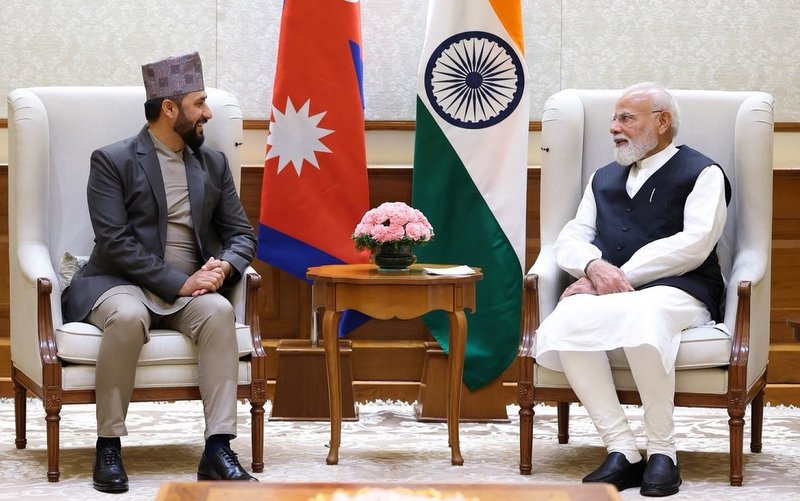
Kathmandu — Ravi Lamichhane, chairman of the Rastriya Swatantra Party (RSP), met with Indian Prime Minister Narendra Modi on Wednesday at Hyderabad House in New Delhi. Following the meeting, a publicly released photograph and Modi’s statements reiterated a commitment to increase cooperation under the shared prosperity agenda and a “neighbourhood first” policy.[1][2][3]
Why This Meeting Matters (Nut-Graph)
A photo-op between a prime minister and a senior foreign leader may not be confined to political courtesy but could signal a practical policy roadmap. The questions arise: does this meeting presage any formal projects, agreements, or investments? Or is it simply a public gesture that introduces Nepal’s new political figure into Indian politics? The answers could affect policy priorities, economic access, and long-term political balance inside Nepal.
Context and Background
India has long placed the “Neighbourhood First” policy at the centre of its foreign policy. In recent years India has been active in trade, energy supply, connectivity, and infrastructure cooperation, but Nepal–India relations have experienced ups and downs over border disputes, water resource management, and terms of investment.[4]
Against this backdrop, high-level meetings with new or emerging political leaders can potentially redefine those relations. Who benefits from such meetings — access to public services, contracts and projects, or political backing — will depend on public transparency.
Claims About the Meeting and Available Evidence
Prime Minister Modi publicly posted the meeting photograph, welcomed Lamichhane, and described Nepal as a priority partner.[1][2] The RSP’s reception at the BJP office was also publicized, and news reports said Lamichhane met Foreign Minister S. Jaishankar and Home Minister Amit Shah before the Modi meeting, suggesting the meeting’s breadth and coordination with central Indian leadership.[2][3]
“I warmly welcome and fully support his desire to work closely for shared prosperity and a brighter future,” Prime Minister Narendra Modi said in a public statement after meeting Lamichhane.[1]
However, documents or formal understandings (MoUs), project lists, financial proposals, or travel schedules beyond the public photo and general statements are what would confirm the meeting’s substantive reality. So far, no official documents or detailed project information have been publicly released; news reports list other senior officials present and the reception arrangements, but evidence of project/financial terms is not yet available.[2][3]
Beneficiaries and Risks: Stakeholder Analysis
-
India’s strategy: It appears to be a long-term approach to build influence by cultivating ties with new political leadership, which could strengthen economic access (investment, contracts, energy supply) and geopolitical trust. But how India will provide assistance — as grants, loans, or public–private partnerships — needs clarification.[1][2]
-
Nepali leaders and the government: Lamichhane could accumulate domestic political capital from international recognition; foreign validation can increase internal influence. But without transparency around any projects or agreements, there is risk of long-term debt burdens or increased dependency on projects.
-
Private companies/contractors: Relations with the BJP and the Indian private sector could open up opportunities in contracts and construction projects. This could also raise the risk of unequal competition and procurement irregularities.
-
General public and local communities: If projects are transparent and beneficiary-focused, employment and services could improve; but conditional loans or environmental and social risks could cause harm.
Expert Views and Questions About Lack of Sources
Based on available public information, some analysts view the meeting as a political promotional activity because no concrete agreements or project evidence are visible. Other security and foreign policy analysts say such “political recognition” can lay the groundwork for long-term policy access. Both perspectives, however, underscore the need for documentary evidence — accounts, timelines of proposed projects, and financial terms — to verify claims.[2][3]
From a journalistic perspective, the following questions are essential to pursue further disclosure related to the Modi–Lamichhane meeting:
-
Has any formal MoU or project list been finalized? If so, what are the terms and financial sources?[2]
-
How will the presence of other senior officials in the meeting influence decision-making processes?[2][3]
-
How will proposed projects comply with Nepal’s legal, environmental, and economic standards?[4]
What to Expect Next (Timeline)
-
It is necessary to press for detailed press notes, draft agreements, or project lists from the PMO/MEA or the RSP in the near term.[1][2]
-
Transparency would increase if members of parliament, relevant ministries, and public representatives release any available evidence.
-
Independent analysts and economists should present assessments of financial impact and cost–benefit calculations so public debate can be balanced and evidence-based.
Conclusion
The Modi–Lamichhane meeting opens doors of possibility for both countries. However, public evidence so far is limited and key questions remain unanswered. The photograph and reception convey a political message, but proof of practical, long-term partnership must go beyond the picture-op. Both journalism and public watchdogs should now demand documents, project details, and financial terms and press for verification; until then, the meeting can be interpreted as either a “successful publicity” effort or a “strategic entry” — which interpretation is correct will depend on the evidence.
Sources
-
"Lamichhane–Modi Meeting" — Thaha Khabar, includes meeting details and Modi’s public statement. https://www.thahakhabar.com/detail/302311
-
"Meeting between Indian Prime Minister Modi and RSP Chairman Ravi Lamichhane" — OnlineKhabar, report on the visit schedule, BJP reception, and meetings with other ministers. https://www.onlinekhabar.com/2026/06/1945654/meeting-between-indian-prime-minister-modi-and-rashtriya-swayamsevak-sangh-rss-president-ravi-lamichhane
-
"Meeting between RSP Chairman Lamichhane and Indian Prime Minister Modi" — Lokaantar, summary of the meeting and public statement. http://lokaantar.com/story/321174/2026/6/3/modi-and-rabi-
-
Recent contextual sources on Nepal–India relations and the “Neighbourhood First” policy and trends in trade/investment (Nepal Rastra Bank, World Bank) — suggested for data/details.