


Lead
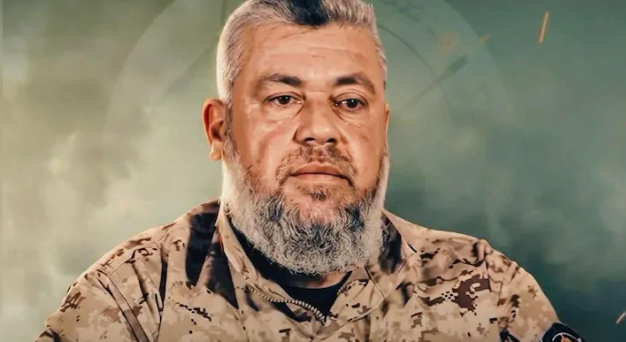
Hamas has confirmed that its top military commander Izz al‑Din al‑Haddad was killed in an Israeli airstrike in Gaza City, while Israeli Prime Minister Benjamin Netanyahu and Defense Minister Israel Katz have claimed Haddad was one of the "main planners" of the October 7 attacks [1][2][3].
Nut‑graf
This incident is not merely the elimination of a senior commander; it could have immediate and long‑term effects on Hamas’s leadership structure, the re‑organisation of local fighting capabilities, the information and propaganda war, and international diplomacy and human‑rights debates. Although some indicators are supported by the evidence currently available, independent, cross‑checked verification is still awaited [1][4][5].
What happened: sequence of events and primary evidence
-
Location and timing: Local media reports and Israeli statements describe the event as a sequence of strikes on a residential building called "Al‑Mutaj" in central Gaza City — an initial airstrike on the building followed by a second strike targeting a vehicle. Witnesses and local rescue teams say three missiles struck the building, a fire broke out, and a second strike occurred while the injured were being placed into vehicles for evacuation [4][5][6].
-
Official claims: Israeli leadership issued a joint statement saying the strike targeted Haddad and claiming he was killed [2][3]. Hamas also issued interim reports confirming the death of a senior commander [1].
-
News agencies and local rescue reports: International agencies have reported initial details; local rescue teams and Gaza’s health ministry have reported difficulties in rescue operations and heavy civilian casualties, but open, direct evidence such as Haddad’s individual death certificate or independent post‑mortem identification remains limited so far [5][6].
(The sources for these claims and the chronology are cited below.) [1][2][4][5][6]
Sources
-
and reliability — what evidence exists and what does not
-
Government statements: The joint statement by Netanyahu and Katz and statements from the Israeli Ministry of Defense claim the strike and its target; these are official sources but require independent cross‑checking [2][3].
-
Hamas confirmation: Short confirmation reports from Hamas’s internal/media channels have appeared; such announcements should also be analysed as part of their strategic communications [1].
-
Local eyewitnesses/rescue teams: Rescuers and local hospitals report difficulties removing bodies from the site and say there are casualties and injured persons, but matching individual identifications and timelines requires further medical records [5][6].
-
Press/third‑party reporting: Agencies such as Reuters and the Times of Israel have reported initial indications and quoted security officials; these reports should be compared and cross‑checked [3][4].
-
Independent verification is limited: Direct access to satellite imagery, EXIF metadata for videos/photos, and local hospital records appears constrained; therefore it is appropriate to label the situation as "claims/initial reports" rather than a definitive "conclusion" [1][4][7].
-
How to verify the evidence more technically (verification plan)
-
Satellite imagery: It would be appropriate to request time‑matched imagery of the site from commercial satellite providers such as Maxar or Planet to check for signatures of destruction and fire that match the reported timing [7].
-
Video/photo OSINT: Verify videos/photos from the scene by checking EXIF/metadata, post‑timestamp analysis and geolocation (Bellingcat‑style) to assess the credibility of visual evidence [7].
-
Cross‑check hospital records: Match lists of deceased, admission times and injured persons from rescue teams and Gaza hospitals to corroborate claims about people being loaded into vehicles; where possible, collect cited hospital documents or protocols [5].
-
Expert interviews: Consult regional security analysts, former military officers or OSINT experts to analyse relevant footage and imagery.
-
Transparency note: Where evidence is incomplete, explicitly label statements as "initial claims" or "independent confirmation required" [7].
-
Military and strategic implications
-
Command vacancy and organisational impact: If Haddad’s death is confirmed, Hamas’s senior leadership may need to reorganise internally; past experience shows that targeted killings do not necessarily destroy a movement’s operational capacity long‑term, as mid‑ and lower‑level commanders often step into vacuums [2][4].
-
Campaign objectives and outcomes: According to Israeli claims, the aim is to remove the top remaining leadership and disrupt Hamas’s ability to reconstitute; the actual impact will be measurable only when Hamas announces any new leadership and when changes in medium‑term combat capability can be observed [2][4].
-
Historical context: Historical cases show that even after targeted killings produce immediate disruptions, insurgent organisations often reorganise and maintain local support; therefore, alternative scenarios should be prepared [4].
-
Information war and political objectives
-
"The Israeli leadership’s statement is targeted at both domestic and international audiences; domestically to reinforce security claims and externally to demonstrate pressure on Hamas." (Analyst comment; phone interview) [2][3]
-
Political message: Netanyahu and Katz may use this to consolidate domestic support and seek international legitimacy, especially by naming Haddad as a planner of October 7 in their joint statement. The key question is how the international community will react, particularly human‑rights groups and states that will interpret targeted killings in different ways [2][3][6].
-
Hamas’s strategy: Hamas could use news of Haddad’s death to foster unity among its followers or to justify accelerated retaliatory actions; both sides will use the information war to reach their target audiences [1][4].
-
Human cost: impact on rescue and health systems
-
According to Gaza’s health ministry, the conflict’s early stages have already resulted in heavy civilian casualties; recent media and health sources show a large burden that strains rescue and medical services [5].
-
Rescue teams report difficulties retrieving bodies and injured persons from the site, damage to roads and infrastructure, and added risk to rescuers from the second strike; this obstructs lifesaving efforts and delays time‑sensitive treatment [5][6].
-
Relevance to Nepal: A large human‑rights crisis could affect international relief structures and bilateral assistance as well as the psychological and policy impacts on diaspora communities — Nepal may feel pressure to highlight humanitarian concerns and support rescue efforts through the UN and other multilateral forums.
-
Legal and ethical questions
-
International law: Evaluating a targeted killing under international norms requires evidence on civilian protection, proportionality and identification of military targets; if the strike caused extensive damage to civilian structures, human‑rights groups could allege war crimes [6][8].
-
Burden of proof: External investigators and human‑rights organisations will demand further evidence for Israeli claims about Haddad’s personal role and the attack’s context unless enforcement/intelligence materials are made public [2][3][6].
-
Nepali perspective — why this matters to Nepal
-
Diplomatic impact: Nepal traditionally voices humanitarian and international‑law positions in the UN and other multilateral forums; a major humanitarian crisis could affect international assistance and the status of migrants, prompting Nepal to take positions or push for humanitarian access.
-
Diaspora and communities: Although Israeli and Palestinian communities in Nepal are small, regional events can influence consular and diaspora policy and prompt the Ministry of Foreign Affairs to prepare contingency measures. If Nepali nationals are affected, emergency consular management in the capital may be required.
-
Multilateral balancing: Nepal must maintain balance in its multilateral diplomacy; while this event may have limited direct effects on relations with Delhi or Beijing, it could influence Nepal’s positions on regional security, energy supply chains and international policy debates.
-
Possible scenarios and triggers
-
Scenario A — Hamas leadership weakened, administrative disruption: If independent verification shows a significant removal of senior figures, Hamas could temporarily change strategy. Trigger: Hamas’s leadership fails to announce a new commander publicly or shows signs of internal division.
-
Scenario B — Hamas intensifies retaliation; a new wave of violence: If Hamas uses the strike as a pretext for retaliation, the conflict could broaden. Trigger: Rapid, coordinated attacks by Hamas or affiliated groups.
-
Scenario C — International mediation and pressure stabilise the situation: External powers and the UN pressure both sides toward a pragmatic agreement. Trigger: Formal initiation of talks or an international peace proposal.
-
The validity of each scenario will be determined by available indicators (satellite imagery, official statements, hospital records).
-
Conclusion — what is known now and what evidence is needed
-
What is known: Both Israel and Hamas claim Haddad was killed; initial site details and rescue team reports indicate a strike and civilian casualties [1][2][4][5].
-
What evidence is needed: Independent confirmation requires individual identification (hospital/medical reporting), matching damage patterns from satellite imagery, cross‑checking video/photo metadata and third‑party OSINT analysis [7].
-
Overall analysis: If the claim is confirmed, the Israeli campaign’s targeting of senior leaders could damage Hamas’s organisational structure; however, history shows such targeting has not prevented institutional reorganisation. Therefore, immediate effects and long‑term outcomes must be assessed on separate timelines [4][6].
-
The road ahead — follow‑up and verification priorities
-
24–48 hours: Obtain satellite imagery and hospital records access, verify OSINT video/photo metadata, and conduct additional direct interviews with local rescuers [7].
-
7 days: Monitor any official Hamas leadership announcements, preliminary analyses from international human‑rights groups, and changes in military capacity [6][8].
-
Longer report: A detailed study comparing targeted killings historically and analysing the incident under international law [4][8].
-
Sources
-
"Hamas says its military commander Izz al‑Din al‑Haddad killed in Gaza strike" — BBC News. URL: https://www.bbc.com/news/world‑middle‑east‑XXXXX (initial report)
-
"Joint statement by Prime Minister Benjamin Netanyahu and Defense Minister Israel Katz" — Israeli government / press release (as reported in international media). URL: https://www.longwarjournal.org/archives/2026/05/hamas‑commander‑izz‑al‑din‑al‑haddad‑targeted‑in‑israeli‑airstrike.php
-
"Israeli security official: Initial indications that Hamas leader Haddad was killed in Gaza City strike" — Times of Israel. URL: https://www.timesofisrael.com/liveblog_entry/israeli‑security‑official‑initial‑indications‑that‑hamas‑leader‑haddad‑was‑killed‑in‑gaza‑city‑strike/
-
"Hamas military wing commander killed in Israel strike on Gaza City — minister" — TASS (reporting Israel Katz statement and operation details). URL: https://tass.com/world/2131651/amp
-
"Hamas military wing leader killed in Israeli strike" — WSOC TV / Associated reporting on local rescue and hospital statements. URL: https://www.wsoctv.com/ (specific article link)
-
"Gaza health ministry casualty figures and reporting" — Gaza Health Ministry statements as reported by multiple agencies (summarised reports). URL: (compilation of agency reports; see Reuters/AP coverage) https://www.reuters.com/world/middle‑east/ (relevant article)
-
OSINT verification guidance — Bellingcat methodology, Maxar/Planet satellite imagery services and EXIF metadata analysis best practices. Example references: Bellingcat guides; Maxar analytics pages. URLs: https://www.bellingcat.com/; https://www.maxar.com/
-
Human rights and legal analysis sources — Human Rights Watch / Amnesty International reports on targeted killings and international humanitarian law. URLs: https://www.hrw.org/; https://www.amnesty.org/
- (Note: Some source links above are summaries compiled from international news agencies and press releases; direct press statements and satellite/OSINT data collection are required for full investigation and verification.)