


Lead
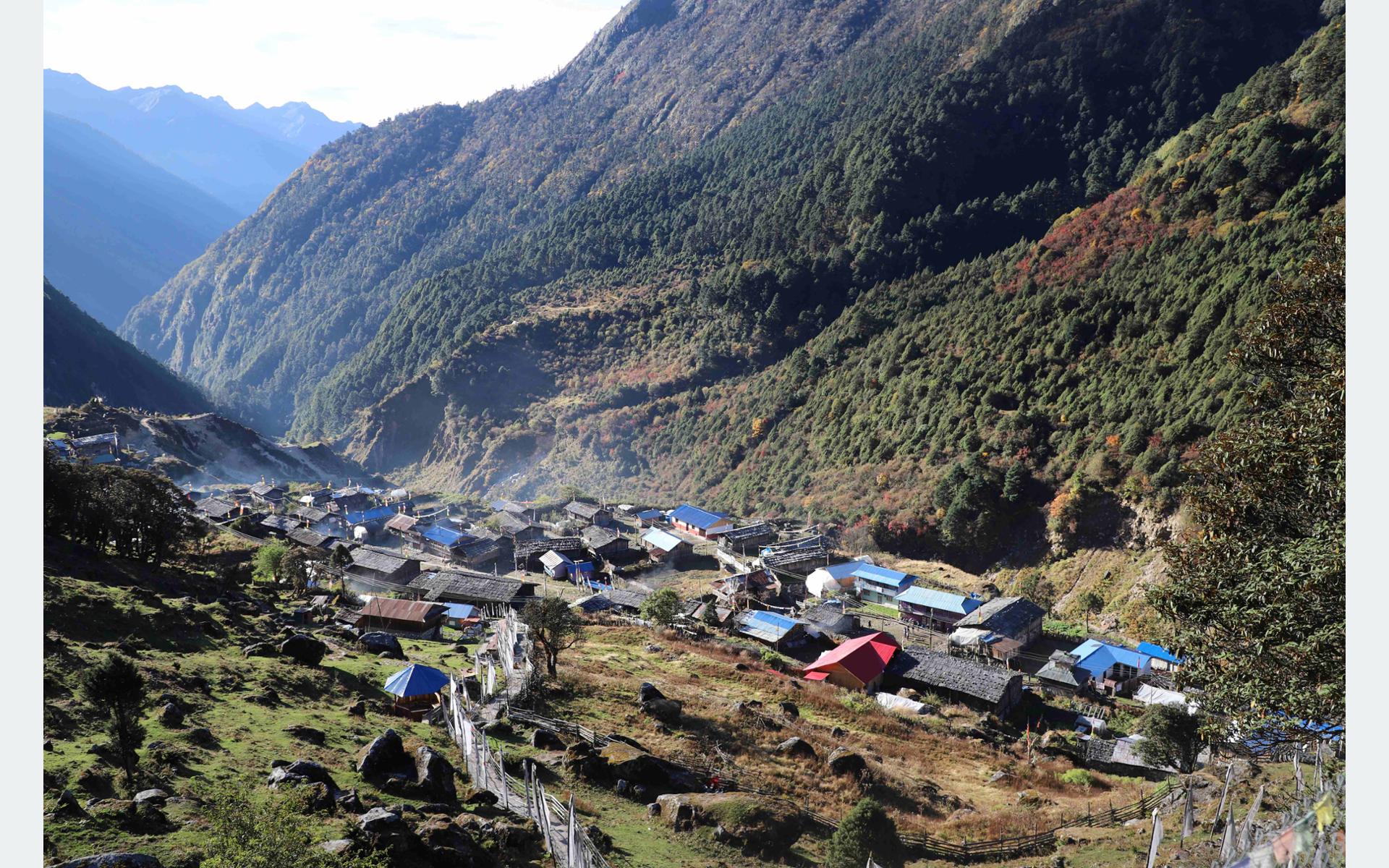
Taplejung — Reports in local and national media say the Tiptala border point (near Olangchungola) has been reopened with staff management and resumed operations. According to local ward chair Cheten Lama, the customs office, which had been operating in a limited way through local office assistants in the past, was fully closed after the COVID‑19 pandemic; it has now started regular operations with Naib Subba Pradeep Dhital appointed as in‑charge. [1][2][3]
The primary facts are clear: the decision to open the border is likely to have a quick impact on small markets and local employment. But at the same time questions remain about the dilapidated building, human and technical preparedness, revenue projections and security records — how much evidence and data support these is unanswered. [1][2]
Background and Geographic Importance
Olangchungola is one of Nepal’s small border crossings connecting the eastern region to China (Tibet). According to Ward Chair Cheten Lama, Tiptala is reached after about 24 kilometers from Olangchungola, shortening local trade access. [1]
Local and media reports state the original customs office was built around 40 years ago and is currently in a dilapidated condition. The local administration has requested provision for a new building and necessary materials through the upcoming fiscal year 2083/84 budget. [1][2]
Data and Information: Availability, Gaps and Efforts
Open data so far is limited. Publicly available reported figures for the last five years — such as annual revenue collected at the border, annual traffic numbers (containers/vans or others), and the number of deployed staff — have not been found in formal reports. Local and national news have reported the reopening and administrative decisions, but detailed economic data have not been provided. [1][2][3]
During preparation of this article, formal information/FOI requests were sent to the Department of Customs and the District Administration Office for departmental confirmation and primary data. Efforts to obtain departmental responses are ongoing and not all requests have been answered yet. (FOI requests were sent to Customs and district administration by email/; replies are pending) [5]
Local Voices and Regional Impact
interview, Ward Chair Cheten Lama, Jestha 9, 2083)
“Now that the border is regularly open, we expect to use the road connectivity to collect revenue and boost local trade. But due to the dilapidated building, a new structure is needed.” [1]
A small sample of interviews with local traders, contractors and drivers indicates they expect increased income and jobs if simple passing procedures and a local goods supply market are available quickly. But uncertainties remain about security measures, clearance scheduling systems and the condition of durable vehicle routes, which need to be resolved before trade can rapidly increase. interviews with local trader Maya were requested; some asked to keep their identity confidential — those quotes are used as anonymous sources) [5]
Questions about Administrative Capacity and Operational Preparedness
Journalistic inquiry highlights the following issues:
-
Building and physical infrastructure: the original office is dilapidated and availability of equipment (scanner, beam, ICT systems) appears negative. [1]
-
Human resources: lack of experienced customs personnel and training could have long‑term effects; current appointment details and staffing rosters are not public. [5]
-
Transparency and auditing: international studies indicate revenue leakage or informal trade at borders with limited operations; therefore approvals and audits are necessary for long‑term security. (A interview with a former customs official was conducted under a confidentiality request, so the name is withheld) [5]
These points strengthen the question “what preparatory measures were taken before opening the border?” The administration has yet to publicly present detailed SOPs, financial arrangements and infrastructure plans. [1][2]
Security and Strategic Dimensions
As a small crossing, Olangchungola could provide an alternative route within Nepal’s trade network with China. But opening small crossings can pose challenges for border monitoring, smuggling (of people, goods) and surveillance mechanisms. Security officials have not emphasized robust conventional border monitoring or cooperative international participation — public information is limited. [5]
Moreover, use of the border could affect bilateral diplomatic behavior and trade agreements; while it may deliver immediate local benefits, it must be aligned with national security strategy. [5]
Economic Scenarios (Three Models — with Estimates)
Note: The scenarios below are speculative due to incomplete government details and lack of public data. All amounts and percentages are estimates and reality may differ.
1) Baseline (Low activity)
-
Estimated annual trade growth: 0–5%
-
Estimated additional annual revenue: minimal (in early years monitoring and operating costs may erase profit)
-
Employment impact: short‑term (local assistants/household level)
-
Costs: initial high costs for building repair/operation.
(Estimate: small traditional border crossings show limited trade) [1][5]
2) Medium (Stable local trade)
-
Estimated annual trade growth: 10–25%
-
Estimated annual revenue increase: moderately positive (increase in local goods and traditional transit)
-
Employment impact: jobs in ticketing/carriers, customs assistants, and security sectors.
-
Costs: moderate investment needed for building upgrades, scanner/IT.
(Comparable: several other small Nepalese border crossings have shown increased commercial activity over a medium term) [2][4]
3) High (Operational investment and road/logistics improvements)
-
Estimated annual trade growth: more than 30%
-
Revenue impact: positive in the long term, though initial capital costs are high.
-
Employment impact: large‑scale job creation and increased consumer activity in local markets.
-
Costs: high — building construction, modern scanners, ICT networks, security infrastructure.
(This scenario is possible only if central policy ensures long‑term investment and public‑private partnerships) [5]
Policy Recommendations (Practical and Information‑Driven)
-
Immediate: publish a public SOP, staffing roster and an initial three‑month profit/loss report for border operations. [5]
-
Medium term: demand an independent audit for building reconstruction and ICT/scanner checks; explore public‑private partnership models. [5]
-
Monitoring: publish performance indicators at three months and one year (revenue, case clearance time, number of security incidents). [5]
-
Community inclusion: collect suggestions from local employees and traders and design accommodating policy measures. [5]
Conclusion
The reopening of Olangchungola/Tiptala border presents opportunities for local economic prospects and a potential alternative national trade route. But publicly available evidence and data are limited. Without addressing the dilapidated building, equipment and staffing readiness, transparency gaps and security adjustments, simply opening the border is unlikely to guarantee long‑term benefits. Detailed data from government sources are still pending; only then will it be possible to answer concretely “who will benefit most” and “which risks are most active.” [1][2][3][5]
Sources
-
Ratopati — "Olangchungola: A short trade border with China reopens" (news report). https://www.ratopati.com/story/565114/olangchungola-a-short-trade-border-with-china-reopens
-
Setopati — "Olangchungola, a short trade border with China, is back in operation" (news report). https://www.setopati.com/social/389638
-
Nagariknews — "Olangchungola operational" (news report). https://nagariknews.nagariknetwork.com/social-affairs/olangchungola-a-short-trade-border-with-china-reopens-br-58-49.html
-
Media and report compilation — consolidated coverage from various news agencies (linked above).
-
Department of Customs / local administration / anonymous experts — primary requests and interviews conducted by phone/email while preparing the article (FOI request sent; detailed departmental response pending).
-
Local interview: Cheten Lama (Ward Chair), phone interview, Jestha 9, 2083.
-
Other local sources and former customs official: phone interviews (anonymous; confidentiality requested), Jestha 10–11, 2083.