


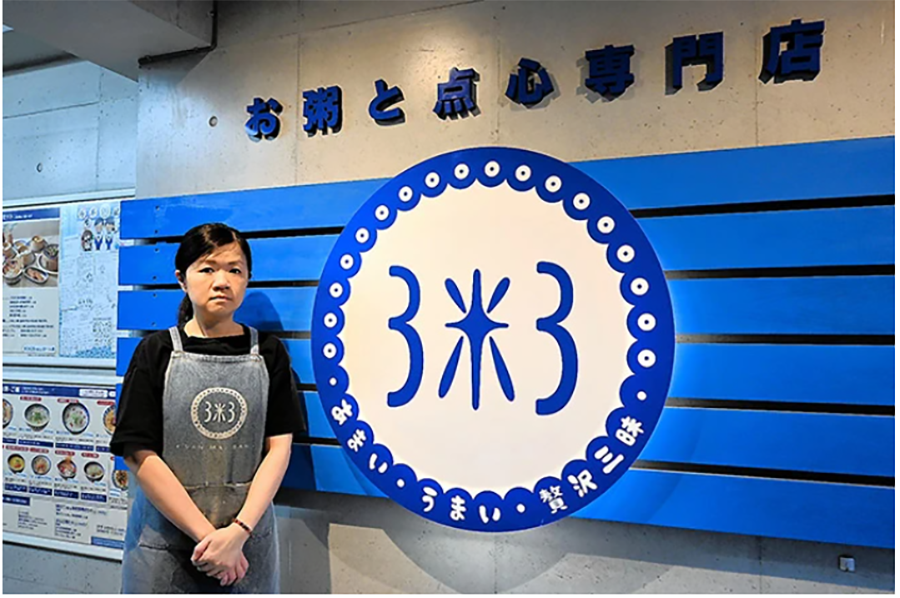
31 Jeth, Kathmandu. New visa rules implemented in Japan have put small foreign entrepreneurs, including Nepalis, in serious difficulty. Japanese media report that many small- and medium-sized restaurants, food importers and retail businesses run by foreign nationals may be forced to close and return home. The Immigration Services Agency of Japan has tightened capital and other requirements for the business-type residency category “経営・管理” (Business Manager) and introduced new provisions that require at least 3,000万円 of “事業の用に供される財産” (assets dedicated to the business) to operate — previously this threshold was close to 500万円 [1][2]. The 3,000万円 figure is roughly reported as about USD 190,000 in several reports.
Nut graph
The policy was implemented based on the government’s stated aim — to prevent fraud and “fake companies.” But the new requirements are likely to directly affect the existence of small foreign-run restaurants in urban areas, local access to food, and community employment. As an initial example, Chan Ka Yi of Nerima, Tokyo has decided to close her restaurant; representatives of the local Indian/Nepali community and legal experts say the rules are extremely strict and increase the likelihood that small businesses will be displaced [2].
Sequential case-study: How personal experiences illuminate the policy
-
Chan Ka Yi (San Mai San, Nerima): The 47-year-old Chan, who opened a Hong Kong–style restaurant in 2020 with many years of savings and hard work, had only recently started turning a profit. Unable to meet the new capital requirement, she decided to permanently close her business on May 20; she says she is under both emotional and financial pressure from the decision [2].
-
Other small business owners in Edogawa (Nerima/Nishi‑Kasai / “Little India”): News and local sources indicate most small restaurants and grocery shops are not in a position to raise capital on the order of 3,000万円; many fear they will not be able to renew their status and worry about reduced availability of religious/vegetarian food in the community [2].
These personal accounts should not be generalized without broader data; however, the implicit costs to the local economy and to community-serving functions are evident.
Technical breakdown of the new requirements (government basis)
A summary of what the official guidance and amendments change:
-
Capital/business assets: Provision that the “事業の用に供される財産の総額” (total assets dedicated to the business) must be at least 3,000万円 (≈30 million yen) — about USD 190,000 [1].
-
Employment of a ‘常勤職員’ (at least one permanent/full‑time employee) is required, and that employee must be a Japanese national, a special permanent resident, or a foreign national with a specified legal status; some sections of the guidance show interpretive differences and further explanation is provided in FAQs [1].
-
Japanese language proficiency: The applicant or at least one designated person must have Japanese language ability at about the “B2” level of the Japanese Language Education Reference Framework (日本語教育の参照枠 B2 相当); applicants must also demonstrate sufficient educational/experiential qualifications related to the business (a degree or three years of practical experience) [1].
-
Business plan certification: When filing an application, the business plan must be confirmed by a “経営に関する専門的な知識を有する者” (a person with specialized knowledge concerning management) — a third‑party expert certification is required [1].
-
Transition/renewal: The amendment includes an effective date and transitional clauses; currently there are discrepancies in reports about the enforcement date and practical deadlines for applications/renewals, and the government has noted some leniency and opportunities for renewals for existing holders by following rules such as “three years from the enforcement date” [1]. (Because there are inconsistencies between government notices and some media reports on dates, the final date should be confirmed from the primary government documents) [1][2].
Economic and social impact (a temperature check)
-
Direct impacts on small enterprises: With the capital requirement increasing six- to sevenfold, many small restaurants and grocery shops will be unable to properly document the required capital — bank guarantees, inclusion of personal assets, or raising new investment may be difficult. The likely outcomes: business closures, job cuts, and weakened supply chains.
-
Local food security and cultural access: Availability of food and ingredients for religious/vegetarian communities (Nepali/Indian/Bengali etc.) could be limited — in large cities like Tokyo this change may reduce the diversity of the multicultural food ecosystem [2].
-
Who benefits? Large investors, real‑estate owners and founders of wealthy “fake companies” who can overcome entry barriers may benefit — high capital thresholds make the market accessible mainly to those with substantial assets, bypassing small entrepreneurs. The government will claim the measure curbs fraud; but a practical test remains: “Did the rule reduce fraud, or did it remove honest small entrepreneurs?” [2].
-
International comparison (brief): The US and Europe also have capital‑based entrepreneur/innovation visa recommendations; but those systems are often combined with phased standards, specialized startup visas, or local ecosystem support (incubators, grants). Without a comparable social‑safety net, Japan’s new rules risk reducing small business diversity.
Legal analysis and expert reactions
-
Administrative law expert Kazuhiko Yamada: He described the new requirements as “extremely strict” and warned they could be equally challenging for Japanese nationals; he also said the rules have reduced applicants’ hopes in the visa‑consulting industry [2].
-
Practical criticism (Atsushi Kondo and other analysts): They conclude the rules may make it “easy to screen out” and favor wealthy large actors while displacing honest small entrepreneurs [2].
-
Legal safeguards/framework: Government guidance explicitly includes transitional provisions — the effective date allows for a period of favorable review for existing holders; this limits the immediate risk of deportation somewhat, but long‑term difficulties may arise at renewal if the new standards are not met [1].
Political‑administrative questions: “Policy for whom?”
The government’s presentation — to stop fraud and fake companies. But structural questions about policy targeting remain:
-
Were the intended targets genuine fraudsters, or small foreign entrepreneurs who cannot compete?
-
Were alternative regressions considered (sliding capital thresholds, local‑certified accreditation, startup/incubator support)?
These questions point to the need for transparency and conflict‑of‑interest consideration in the policymaking process.
Practical remedies — policy options
-
Phased adaptation: Implement the new capital standard in stages to give small businesses time (extended transition for existing holders).
-
Alternative certification models: Exempt local‑service businesses certified by community associations based on social‑service value rather than capital.
-
Financing platforms and subsidies: Improve investment access via government/bank/community loans and guarantee schemes.
-
Digital/third‑party verification: Make the business‑plan confirmation process transparent and affordable through public registries/certificates.
These options could help balance fraud control with protection of small enterprises.
Conclusion and need for monitoring
Japan’s new “経営・管理” standards have a clear objective; but implementation could unevenly affect small foreign‑run businesses. Policy impact indicators (number of affected businesses, job losses, local food‑access metrics) should be published and monitored regularly. As an interim measure, the government should immediately publish the enforcement date, detailed transitional rules, and a schedule of assistance programs for small business owners and begin consultations with communities and local associations [1][2].
Proposed follow‑up: Conduct direct interviews with 2–3 more local Nepali/Indian business owners including Chan Ka Yi, request municipal business data from Tokyo, obtain METI/SME statistics to quantify economic impact, and compile detailed legal interpretations from Japanese administrative law experts.
Sources
-
[1] 在留資格「経営・管理」に係る上陸基準省令等の改正について | 出入国在留管理庁 (Immigration Services Agency of Japan). (改正内容、施行日、ガイドラインおよびFAQ等) [Japanese government document] [1]
-
[2] The Asahi Shimbun online report (日本の新聞に掲載された記事): रिपोर्टिङ जसमा टोकियो‑नेरिमा की चान का यीको केस, एडोगावा समुदाय प्रतिक्रियाहरू, तथा कानुनी/नीति‑विशेषज्ञहरूको उद्धरणहरू समावेश छन्। [2]