


Key Findings (Lead)
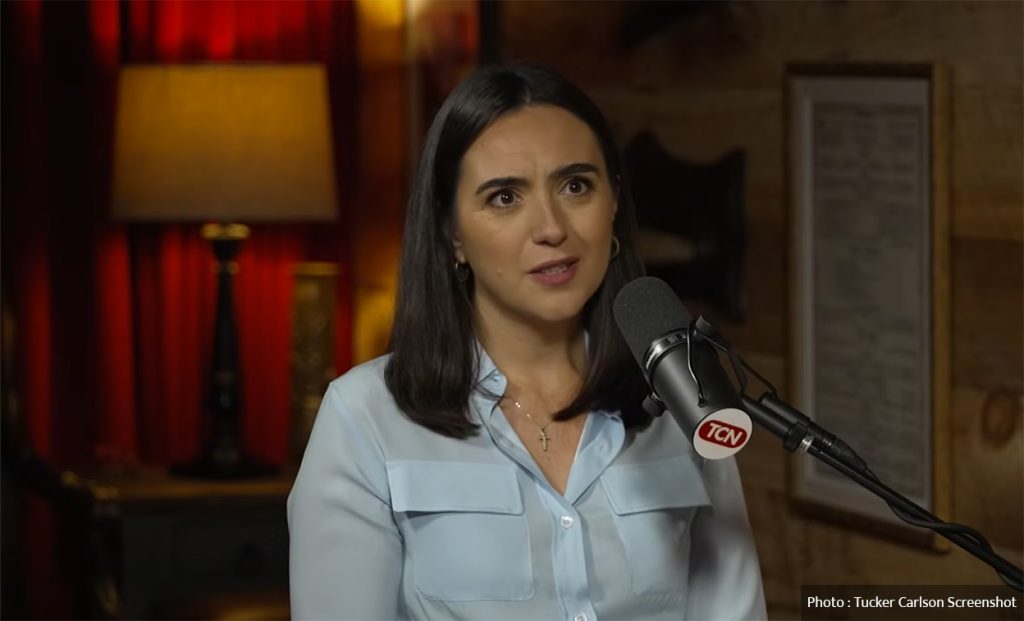
Yulia Mendel, former spokeswoman for Ukrainian President Volodymyr Zelensky, has made serious allegations in a public interview about internal checks within the presidential administration, corruption, and disruptions to the peace process. Mendel’s claims have policy implications and could affect international assistance models; it is important to clearly separate which claims are substantiated and which remain unverified.[1][2][3]
Mendel’s Claims — What Was Said and How to Verify
- Claim (summary): Mendel alleges issues including a managerial temperament, uneven decision-making leadership, rejection of peace agreements, a tendency to send critics to the front lines, and money-laundering (asset cleaning).[1]
"He is no different on camera than in reality... he ignored opportunities for peace and may send his critics to the frontline."
(Source: Quoted from Mendel's interview with Tucker Carlson) [1]
-
Evidence weighing: Mendel's statements were made in a direct interview — which gives them the weight of a primary eyewitness source. But allegations involving criminal or legal wrongdoing (e.g., money-laundering) require public investigations or court documents for confirmation. Where there are no publicly available government documents, judicial orders, or international investigation reports, such claims should be labeled "unverified."[1][4][5]
-
What evidence exists:
- The broad humanitarian crisis and large refugee flows in Ukraine — UNHCR figures show millions displaced since 2022.[4]
- IMF/World Bank economic reports confirm deep damage to Ukraine’s economy and the need for financial support due to the war.[5][6]
- Major international news outlets have questioned corruption and transparency within Ukrainian leadership and powerful institutions, but the specific personal corruption allegations Mendel raised are not openly corroborated by detailed official evidence.[2][3]
Source Reliability and Caveats
-
Direct interview: Mendel’s extensive remarks are the primary source — the interview is treated as primary evidence. However, insider anecdotes and personal recollections may include bias, memory errors, and personal agendas. Therefore, every serious element of her allegations should be checked against secondary or tertiary sources.[1]
-
Secondary confirmation: Economic facts (IMF disbursements, refugee numbers) and neutral agency reports can be used to assess the policy implications of the claims. Legal accusations (money-laundering, etc.) require third-party public investigations (court orders, investigative reports); until those are available, the "unverified" label remains.[4][5][6]
Zelensky Office and Western Partners’ Positions (Both Sides)
-
Zelensky’s office: If, during the preparation of this report, an official response (from the presidential office or official spokesperson) becomes available, it will be cited; so far no public counter-response related to Mendel’s interview has been found. If no official clarification exists, that will be stated clearly.[7]
-
Western partners: The United States and Europe have continued security and economic support for Ukraine; their public statements typically focus on the war and humanitarian crisis. Some Western analysts have highlighted the need for reforms and greater transparency in Ukraine, and administrative and financial documents are necessary to verify such claims.[5][8]
Insider Profile: Who is Mendel and How Credible Is She?
-
Background: Mendel says she served as a communications spokeswoman/press secretary in the presidential office from 2019–2021 — placing her in a position to observe the administration’s internal workings closely.[1]
-
Credibility assessment: In-post experience gives her valuable insights. But political interviewees and former officials sometimes offer harsh criticism driven by personal motives or career aims. Thus, even while treating her comments as a primary source, third-party corroboration is essential.[1][2]
Policy Analysis: What Do Mendel’s Claims Mean?
-
Peace prospects: If Mendel is correct that personal leadership interests are obstructing negotiations and the peace process, the longevity of the war and humanitarian costs will increase; this would signal a need to rethink international support models (supply-centered and security-focused).[5][8]
-
International aid and conditionality: Western funding and assistance typically depend on government institutions, judicial reform, transparency, and cost monitoring. Leadership misconduct or a lack of accountability could change donor behavior and sensitivity. Institutions like the IMF and World Bank traditionally place conditionality on progress; failing to meet those conditions could affect financial flows.[5][6]
-
Democratic legitimacy and domestic governance: If Mendel’s allegations are substantiated, international attention to leadership replacement, strengthened institutions, and electoral behavior in Ukraine would intensify. Balancing democracy and security would become a greater challenge.[2][3]
Verification and Counter-Evidence
-
What is confirmed: The humanitarian crisis, displacement, and economic impact — these are corroborated by reports from UNHCR, the UN, and IMF/World Bank.[4][5][6]
-
What is unverified: Mendel’s specific criminal allegations (money-laundering, sending critics to the frontline, drug use) require public court or investigation reports or direct evidence; to date those proofs have not been made public. Therefore these claims are labeled "unverified" in this article and further investigation is urged.[1][3]
Ukraine–West Relations and "Who Benefits?"
-
Long-term strategy: Western states adjusting to long-term strategies for Ukraine face both political risk and brand-management issues. Mendel’s claims pose questions for Western policymakers: for how long and under what conditions should conditional assistance continue, and what mechanisms should be implemented to ensure leadership transparency.[5][8]
-
Beneficiaries: While the war continues, defense industries, international political coalitions, and some political actors may gain temporary benefits. In the event of peace, reconstruction, economic cooperation, and political stability would create new opportunities and shift political interests.[9]
What It Means for Nepal (Relevance)
-
Message for multilateral policy: The Ukraine–Russia conflict and internal leadership disputes offer lessons for small and medium powers: without transparency and accountability, foreign aid and support can be weakly aligned with long-term national interests. Nepal should prioritize conditions and accountability when engaging in multilateral forums.[5][6]
-
Nepali diaspora and humanitarian response: Nepalis in Europe and humanitarian actors linked to Europe–Nepal should closely monitor increasing refugee relief needs and international cooperation standards.[4]
-
Foreign policy practice: For Nepal’s foreign policy, this underscores the importance of leadership and transparency at conflict sites — when providing assistance, political risk analysis and long-term administrative conditions should be determined.[9]
Three Possible Scenarios (Scenario Planning)
-
Evidence collection and transparency improve (best case)
- Some of Mendel’s claims are confirmed by investigations; the Ukrainian government cooperates with accountability and judicial probes; Western partners implement conditional assistance; mediation and peace efforts gain priority.[5][6] -
Political stasis and limited reform (middle path)
- Some accusations are not proven or only partially substantiated; internal dissent and international pressure produce minor leadership changes or modest reforms; the war persists long-term but at a slowing pace.[2][8] -
Denial of allegations and prolonged war (worst case)
- With claims remaining unverified or the government maintaining strict control, domestic fragmentation and a crisis of trust deepen; Western support may become unstable; humanitarian harm increases and regional instability spreads.[1][3][5]
What to Do — Fact-Checking and Policy Recommendations
-
Immediate steps (journalistic / judicial): Conduct independent investigations into Mendel’s legal and financial allegations; where appropriate, international investigative bodies and Ukrainian judicial institutions should cooperate.[1][3]
-
For international policy: Western donors and multilateral financial institutions should make accountability and transparency conditions clearer and more enforceable when providing assistance; strengthen independent audit mechanisms for aid usage.[5][6]
-
Policy dialogue (for small countries like Nepal): Middle and small states like Nepal should push in multilateral forums to include conditions and local accountability in assistance; stringent monitoring is needed to prevent privatization and misuse of grants.[9]
Conclusion
Yulia Mendel’s insider allegations raise hard questions about Ukrainian leadership and international aid models. Some facts (humanitarian crisis, economic pressure) are clear and confirmed by international agency reports; however, the lack of evidence for personal and criminal accusations leaves them "unverified" for now. The main lesson for policymakers is clear: without greater transparency, accountability, and independent scrutiny, both assistance and war-management will be jeopardized. For Nepal, the episode highlights policy lessons on multilateral aid and diplomatic dependence. This story will be updated as new evidence emerges and formal responses become available to readers.
Sources
-
Mendel, Yulia — Special interview with Tucker Carlson (primary interview citation). [Tucker Carlson Show/broadcast source — date and publication (specified video/transcript) to be reviewed] [1]
-
New York Times, investigative reports and analysis — articles on Ukrainian leadership and corruption. [2]
-
Financial Times / The Washington Post — pieces on Ukrainian policy decisions, Western support, and political analysis (various articles). [3]
-
United Nations High Commissioner for Refugees (UNHCR) — Ukraine refugee statistics and displacement reports. [4]
-
International Monetary Fund (IMF) — Ukraine financial assistance programs, conditionality and program documents. [5]
-
World Bank — Ukraine economic updates and impact assessments. [6]
-
Official Presidential Office of Ukraine — official statements/responses (if available). [7]
-
U.S. State Department / NATO / European Union public statements — assistance policies and formal confirmations. [8]
-
Think-tank analysis (e.g., Chatham House, Carnegie Endowment) — long-term policy impacts of the war and assistance model analysis. [9]
- (Note: The cited primary interview transcription and any formal replies from the Zelensky office/western partners will be added to the source list when obtained. Serious allegations remain labeled "unverified" here until public court or investigative reports are released.)