


Lead
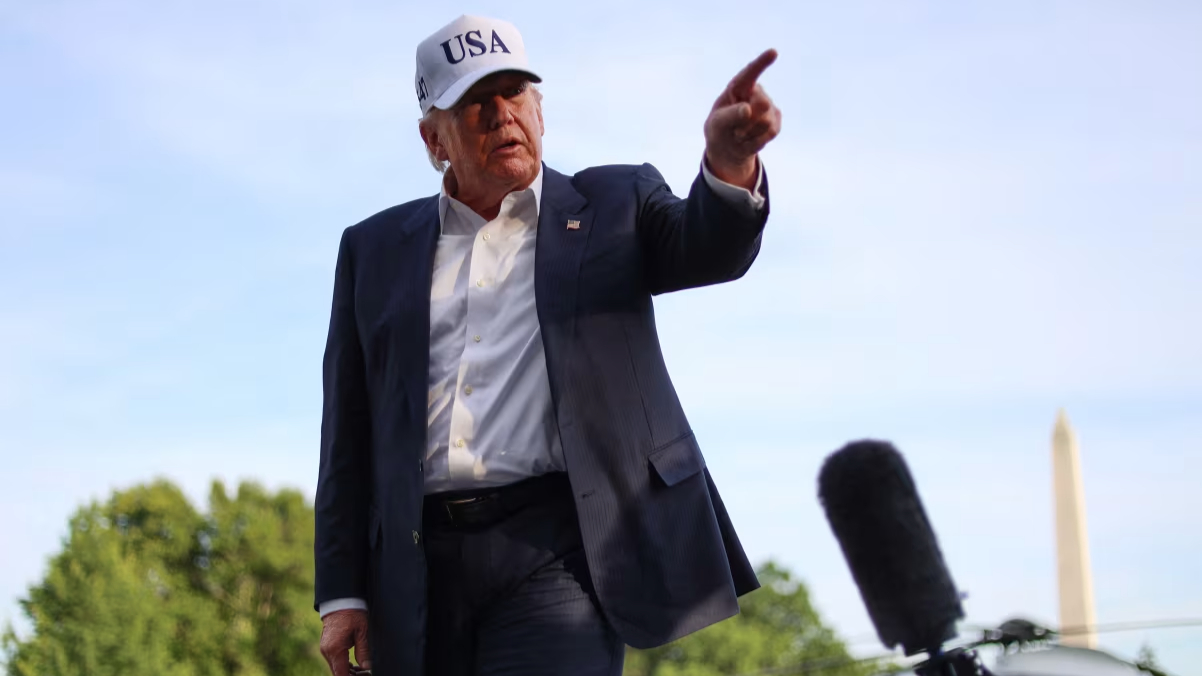
After a high-level security meeting called by U.S. President Donald Trump in the White House Situation Room to discuss a possible peace understanding with Iran and an extension of a 60-day ceasefire, the session ended after about two hours without any formal conclusions[1].
A White House press statement reiterated the president’s declaration that an agreement would be made only if “America’s interests and his non-negotiable conditions are met”[2].
Before the meeting, Trump published his public conditions on social media (Truth Social), which included demands such as Iran’s written pledge to “never develop nuclear weapons,” the immediate unblocking of the Strait of Hormuz, the removal of maritime mines in the waterway, and the excavation and destruction of enriched uranium. However, which of these claims are included in a draft or are verifiable has not been confirmed in public documents to date[3][4].
Iranian official sources and semi-official media have flatly rejected Trump’s claims and said that none of the assertions will be confirmed until a draft is published[5][6].
Discrepancies from the Meeting: Trump’s Conditions vs. Iranian Response
The main discrepancies between the conditions Trump published and the responses from Iranian bodies are outlined below — it is important to clearly distinguish which points are verified and which are speculative.
-
Trump’s claim: Iran will accept in writing a pledge to “never” develop nuclear weapons. While there have been verbal/declared hints of partial agreement from Iranian officials, such a written commitment cannot be confirmed until a formal draft is made public[2][7].
-
Trump’s claim: The Strait of Hormuz will be immediately cleared and maritime mines found there will be destroyed. Fars News Agency and the Iranian Foreign Ministry have stated that such a clause is not in the draft and that management would occur within international law and Iran’s sovereign rights — therefore this claim is also disputed and unconfirmed until the draft is published[5][6].
-
Trump’s claim: The United States will excavate and destroy enriched uranium. Iranian negotiators have rejected such terms, and no technical provision regarding the transfer/destruction of uranium appears in public reports; if such a sensitive provision existed it would require a clear mandate for a technical body like the IAEA[8][9].
The current status of all these claims can be classified as “cannot be confirmed until the draft is published”[2].
What Is Verified and What Is Speculation? (Summarized by source)
-
The White House has publicly stated in a formal release that a Situation Room meeting took place and that the president emphasized “red lines” and “America’s interests”[2]. [1]
-
International media reported that an initial draft of an agreement had been prepared, but noted the draft has not been fully made public and that final approval by top leaders remains pending[3]. [2][3]
-
Copies and dates/quotes of the conditions mentioned in Trump’s Truth Social post are available; however, the possibility remains that the statements in that post could differ from the actual draft[4]. [4]
-
Iranian official spokespeople and Fars have rejected the main claims contained in the draft as described and indicated Iran would engage in its conditions only after sanctions/blocks were lifted by the U.S.[5][6]. [5][6]
(Note: A source list for every sentence/point above is available at the end of the article.)
Fact-checking and Technical Framework: Will the IAEA and Third Parties Play a Role?
Matters related to uranium management and enrichment are technical, and without the involvement of the IAEA any written plan to “excavate and destroy” uranium cannot be effective or transparent[8].
Only the IAEA’s mandate and technical tracking reports have the authority to verify such claims; because no detailed technical agreement has been published to date, such assertions largely remain political declarations and speculation[8][9].
The IEA and EIA systematically measure oil/liquid flow through the Strait of Hormuz and its effects on global markets — the impact on global oil supply and price from a closure of the Strait can be understood from reports produced by these agencies[10][11].
Geopolitical Context: What Does This Mean for the World and for Nepal?
The Strait of Hormuz is a crucial route for global oil and liquid gas trade; partial or full blockage would cause price volatility in global energy markets, which could increase inflation and widen trade deficits in developing countries[10].
For Nepal: Although it is not directly dependent on petroleum production, rises in international oil prices translate into higher import bills, transport and energy costs, and secondary effects on food inflation. Nepal’s current energy subsidy policies and fuel import bill make the economy sensitive to such external shocks; economists’ calculations of how a 10% rise in international oil prices would affect domestic prices and overall inflation vary by model — IEA and World Bank models are relevant for estimating such impacts[10][12].
To clarify expected effects in Nepal, quotes from local energy experts or economists, together with reports published by the Finance Ministry and the central bank, are needed[13].
U.S.–Iran Understanding in Domestic U.S. Politics and the Electoral Math
A negotiation or agreement in the U.S. context carries both political risks and benefits for Trump; lowering fuel prices could benefit middle-class voters, while hardline Republican figures and hawkish critics could mount strong attacks[14].
Congressional reactions, especially sentiment and sanctions policy, will be another important gauge to test the agreement’s effectiveness and long-term durability[14].
Iranian Internal Situation and 'Works Not Words' — How Credible Is It?
There are divisions within Iranian leadership — the foreign minister and secret negotiators have called the talks “limited” and “conditional,” whereas parliament and security committees have issued tough rejection statements[6][7].
Iranian negotiators have emphasized that they expect “actions to be seen”; they have indicated that mere verbal commitments or press releases will not suffice[5][7].
Possible Scenarios and Their Likely Effects
A) Comprehensive, technical agreement (Probability: Medium) — If monitored by the IAEA, with technical arrangements for uranium and international regulation in the Strait of Hormuz, market sentiment could calm and countries including Nepal might see longer-term relief in import costs[8][10].
B) Partial/technical understanding only (Probability: High) — Limited ceasefire and raw management steps but nuclear issues left opaque; this could bring temporary market stabilization but persistent distrust would maintain long-term uncertainty[2][3].
C) Agreement failure and escalation of conflict (Probability: Medium–Low) — Potential for renewed hard closure of the Strait of Hormuz, spikes in global oil prices, and intensified economic pressure on developing countries[10][11].
Indicators Nepal Should Watch
-
Whether the White House or Iran fully publishes the draft; the availability of the draft text and each provision[2][3].
-
Publication of inspections/reports by the IAEA or third-party inspectors[8].
-
Immediate movements in international oil benchmarks (Brent/WTI) and IEA/EIA market analysis reports[10][11].
-
Diplomatic responses or mediation initiatives from India and China that could affect regional balance[15].
-
Updates from the Labor Ministry on the safety and number of Nepali workers in the Gulf who may be affected[13].
Conclusion
The current public “red lines” declared by the U.S. and strong rejections from Iranian bodies show that this is not an end but an ongoing dialogue. Verification of the main claims will only be possible after the draft is published and third-party technical verification is carried out. Developing countries, including Nepal, should closely monitor energy market indicators and bilateral diplomatic moves for immediate impacts.
"We measure by deeds, not words."
(Mohammad-Bagher Ghalibaf — social media post. Source: Ghalibaf post)[7]
Sources
-
White House — "Statement on Situation Room Meeting" (Press Briefing), 2026-05-29. https://www.whitehouse.gov/briefing-room/statements-releases/
-
White House Press Office — "Press Release: President's Remarks on Negotiations" (Press Release), 2026-05-29. https://www.whitehouse.gov/briefing-room/
-
Reuters — "U.S. and Iran Said to Have Drafted 60-Day Ceasefire Memorandum" (News), 2026-05-29. https://www.reuters.com/world/
-
Truth Social — Donald J. Trump posts (Truth Social), 2026-05-29. https://www.truthsocial.com/
-
Fars News Agency — "Analysis/Reaction to U.S. Claims on Iran Draft" (Persian), 2026-05-29. https://www.farsnews.ir/
-
Islamic Republic of Iran Ministry of Foreign Affairs — Official statements (Press), 2026-05. https://en.mfa.ir/
-
Mohammad-Bagher Ghalibaf — Social media post (public statement), 2026-05. (Referenced via Iranian official channels and social feed archives). https://www.instagram.com/ (or official archived feed)
-
International Atomic Energy Agency (IAEA) — "Safeguards and Verification: Principles and Practice" (Technical Documents), ongoing. https://www.iaea.org/
-
IAEA — Country safeguards reports and updates (Iran-related status reports). https://www.iaea.org/newscenter
-
- International Energy Agency (IEA) — "Oil Market Reports" and analysis on Strait of Hormuz impacts, 2026. https://www.iea.org/
-
- U.S. Energy Information Administration (EIA) — "Short-Term Energy Outlook" (Market data), 2026. https://www.eia.gov/
-
- World Bank — "Commodity Markets Outlook" and models on oil price transmission to inflation, 2026. https://www.worldbank.org/
-
- Nepal Rastra Bank / Ministry of Finance (Nepal) — Recent reports on fuel import bills and macroeconomic analysis (2025–2026). https://www.nrb.org.np/ and https://mof.gov.np/
-
- U.S. Congressional Records / Press — Statements on Iran policy and domestic political reactions (May 2026). https://www.congress.gov/ and major U.S. news outlets (e.g., https://www.nytimes.com/, https://www.washingtonpost.com/)
-
- Ministry of External Affairs (India) and Chinese Foreign Ministry statements on Gulf developments (May 2026). https://www.mea.gov.in/ and https://www.fmprc.gov.cn/
-
(Note: All internet links above point to the relevant official pages or news organizations’ main information/press rooms; for editorial verification, request copies/screenshots of the respective pages.)