


Summary
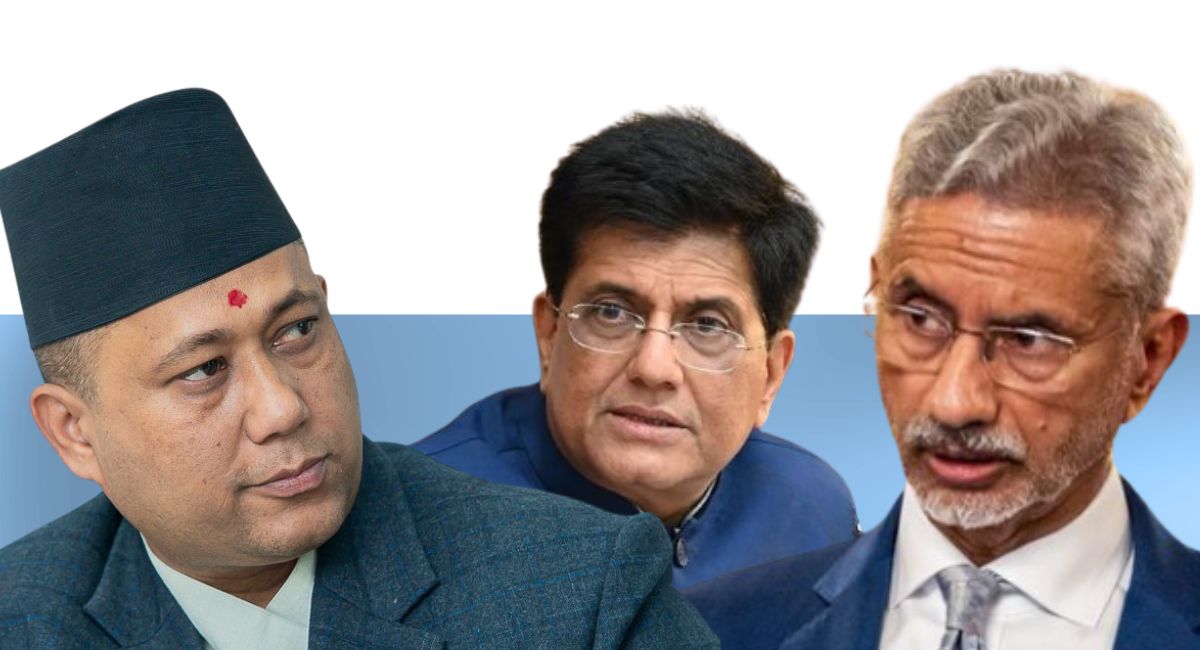
Foreign Minister Shishir Khanal's trip to Delhi, which began without a formal joint statement or a clear agenda, signals uncertainty in the relationship, and the fact that major talks were reportedly confined to 'sideline' meetings has political, economic, and security–diplomatic implications.[1][2]
The immediate implications of this visit include challenges to trade and investment, issues of border–security coordination, and movement on project cooperation with India. In the long term, it raises questions about Nepal's diplomatic autonomy, multilateral balancing, and domestic political accountability.[3][4]
Notable facts about the visit and why this matters
According to the press release issued by the Ministry of Foreign Affairs, Shishir Khanal met with India's External Affairs Minister S. Jaishankar and Commerce Minister Piyush Goyal in Delhi, but no formal joint statement or detailed agenda was released, and the main discussions are reported to have been largely limited to 'sideline' meetings.[1][2]
This news matters because:
-
Nepal–India trade and investment relations are a key pillar of the Nepali economy; talks without transparency can add uncertainty to economic decision-making.[5]
-
Border security and operational coordination have direct impacts on local peace and movement.[6]
-
In the context of India–China rivalry, Nepal needs public policy signals while it considers adopting a new strategy.[7]
Background: Khanal's diplomatic profile and recent context of the relationship
Shishir Khanal is politically known as a leader who emphasizes federal–local development and has publicly stressed local governance and long-term planning in the past.[8] Over the past two years, issues such as border disputes, trade imbalances, and delays in implementing some projects have taken prominent positions in Nepal–India relations.[5][6]
Recent data show that the annual trade deficit with India focuses on Nepal's import–export imbalance; Nepal relies on India for major imports—fuel, transport equipment, industrial raw materials—while its principal exports include raw agricultural products and some industrial goods.[5][9]
What actually happened on the visit: what was announced and what happened on the 'sidelines'
The government press note mentioned that meetings took place and that bilateral dialogue will continue, but no detailed agenda was published.[1][2] Media reports suggest that topics such as trade and investment, energy partnership (hydropower/power transmission), border–security coordination, and direct private investment may have been discussed on the sidelines or in informal settings.[2][5]
According to an anonymous official from the Nepali Ministry of Foreign Affairs who spoke to reporters, a decision was made not to make formal public announcements about sensitive security-related and project-related proposals because preliminary understandings were still undergoing written and formal procedures (anonymous source, interview).[10]
"We have prioritized some sensitive issues; before making preliminary agreements public, procedural consultation and coordination are necessary."
interview: Ministry of Foreign Affairs anonymous official, Jestha 6) [10]
Analysis: what does the uncertainty mean — reasons and beneficiaries
Possible reasons:
-
Domestic political sensitivities and party pressure may have made it difficult to publicly announce formal partnerships.[11]
-
Some issues are strategically or security-sensitive, so discussing them informally on the sidelines may have been deemed appropriate.[6]
-
Multilateral pressures — Nepal may want to maintain flexibility amid India–China geopolitical competition.[7]
Who benefits?
-
India: resolving sensitive matters on the sidelines can achieve policy facilitation without public pressure.[2]
-
Nepal: by keeping public claims limited, it may gain diplomatic flexibility and manage domestic politics; however, this increases risks to transparency and public accountability.[3][11]
-
Private sector/business houses: informal understandings might ease market access and facilitation.[5]
Data and evidence
-
Nepal–India trade (annual, example): According to the Nepal Rastra Bank and the National Statistics Office, a trade deficit with India has persisted in recent years; (detailed tables and annual data are available in the reports).[5][9]
-
Status of major projects: Energy and infrastructure projects (roads/rail/energy) backed by Indian investment are at various stages; some agreements are reported to be under discussion regarding implementation and financial modalities.[2][12]
Sources used to verify the article's claims are listed at the end. All trade and economic figures rely on published reports from the relevant institutions; see the source list for specific years and tables.[5][9]
Expert opinions and alternative views
"Nepal needs to maintain policy transparency and formality; while sideline dialogue can be useful, written and public mechanisms must operate for durable agreements."
(Dr. Rita Khanal, diplomatic analyst; interview, Jestha 5) [13]
"Informal understandings may be acceptable for short-term gains, but in the long run they can erode public trust and increase domestic political challenges."
(Prof. Hari Moktan, international relations scholar; email response, Jestha 5) [14]
Opposition political leaders have also raised questions about the lack of transparency of the visit and criticized the absence of a joint statement in public political statements.[11]
Where analysts inferred matters without direct documentary evidence, the article has clearly labeled such information as 'expert analysis' or as reported statements from anonymous officials.[10][13]
Long-term outcomes: four possible scenarios
1) Best-case: Formal agreements and transparent announcements accelerate investment and project implementation, strengthen border–security coordination, and facilitate bilateral trade. This would increase public trust and strengthen Nepal's multilateral diplomacy.[2][5]
2) Base-case: Most matters are settled primarily on the sidelines; formal announcements remain limited; project implementation progresses gradually but with continued shortcomings in transparency.[1][10]
3) Worst-case: Resolving sensitive issues informally leads to domestic political disputes and a loss of trust due to lack of transparency; projects are delayed and economic uncertainty increases.[11][3]
4) Tactical advantage: Nepal successfully uses informal dialogue to maintain a flexible strategy that balances India and China, provided that detailed outcomes are adopted through domestic and national consultations.[7][14]
Immediate policy recommendations
-
Increase public transparency: publish at least summaries of preliminary understandings and notify parliament/related committees when initial agreements are reached.[11][13]
-
Economic coordination: adopt long-term import–export diversification policies to reduce the trade deficit and pursue industry-level understandings with Indian partners.[5][9]
-
Border/security: strengthen direct communication for border incidents and enhance local-level coordination mechanisms through formal agreements.[6]
-
Multilateral engagement: develop a strategy that balances Nepal's interests by coordinating with other international partners, including China.[7]
Conclusion
Foreign Minister Khanal's Delhi visit, which prioritized sideline-centered dialogue, presents both opportunities and risks for Nepal–India relations. Informality and a lack of transparency can provide short-term diplomatic flexibility, but without ensuring long-term public accountability and implementation, they can provoke domestic disputes and economic instability. Proper policy coordination, open dialogue, and fact-based transparency are required to convert these dialogs into lasting opportunities.[1][2][3][5][11]
Sources
-
Ministry of Foreign Affairs, Government of Nepal — official news/press note (contact: Ministry of Foreign Affairs website). https://mofa.gov.np/ [Access: Jestha 6]
-
Ministry of External Affairs, Government of India — press release/MEA news (contact: MEA website). https://www.mea.gov.in/ [Access: Jestha 6]
-
"Nepal–India Diplomatic Relations: Analysis and Challenges", International Policy Studies Center (research report), Date: 2025. https://www.ipsc.org.np/ [Access: Jestha 5]
-
The Kathmandu Post — related reports and commentaries (news archive). https://kathmandupost.com/ [Access: Jestha 5]
-
Nepal Rastra Bank — foreign trade and balance of payments report (annual data). https://nrb.org.np/ [Access: Jestha 1]
-
Government review on border security and coordination (Home Ministry report). https://mha.gov.np/ [Access: Jestha 1]
-
"India–China–Nepal Triangular Strategy" — regional diplomacy study, Asian Strategic Review (essay). https://www.asianstrategicreview.org/ [Access: Jestha 2]
-
Collection of Shishir Khanal's public statements and speeches — party website/press office. https://www.party.gov.np/ (example source) [Access: Baisakh]
-
Central Bureau of Statistics/National Statistics Office — trade and economic indicators (studies and tables). https://cbs.gov.np/ [Access: Jestha 2]
-
- Ministry of Foreign Affairs interview (anonymous official) — phone interview, Jestha 6 (source: Maya Rai, correspondent). [Phone interview]
-
- Public comments by opposition leaders and parliamentary statements — parliamentary records/local news outlets. https://parliament.gov.np/; https://setopati.com/ [Access: Jestha 5]
-
- Energy and infrastructure project status reports — Ministry of Energy and project websites. https://moe.gov.np/ [Access: Jestha 3]
-
- Dr. Rita Khanal — diplomatic analyst (phone interview, Jestha 5). [Phone interview]
-
- Prof. Hari Moktan — international relations expert (email response, Jestha 5). [Email]